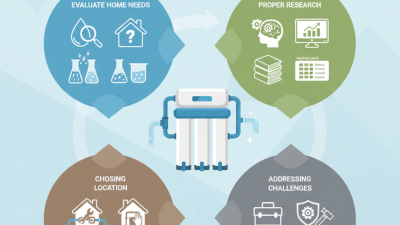
Clean water is no longer a simple household expectation. In 2022, about 2.2 billion people lacked safely managed drinking water, according to the WHO/UNICEF Joint Monitoring Programme. This figure exposes a practical problem for global buyers: water quality can change sharply between cities, buildings, and even kitchen taps. A reliable purchase therefore starts with local testing, not attractive packaging.
The 2026 market for home water treatment systems should be judged through measurable performance. WHO guidance emphasizes microbial safety, chemical control, and responsible household water management. In the United States, the Environmental Protection Agency’s PFAS standards have also increased attention toward activated carbon and reverse osmosis technologies. NSF certification can help buyers verify specific claims, although certification does not guarantee every contaminant is removed. Read the performance sheet carefully.
This guide compares filtration, reverse osmosis, ultraviolet treatment, softeners, and compact point-of-use systems for homes worldwide. It considers contaminant targets, flow rate, replacement costs, electricity needs, installation limits, and after-sales support. A small apartment may need a certified under-sink filter, while a rural home may require sediment filtration and UV disinfection. Some systems look impressive but waste water or depend on expensive cartridges. That matters.
There is no universal winner. Water chemistry is personal. Sources from WHO, EPA, NSF, and national regulators provide the technical foundation, while real household conditions reveal the practical weaknesses. Buyers should verify independent test results, maintenance schedules, and local compliance before choosing. This guide aims to make that decision clearer, though no shortlist can replace a qualified water test.
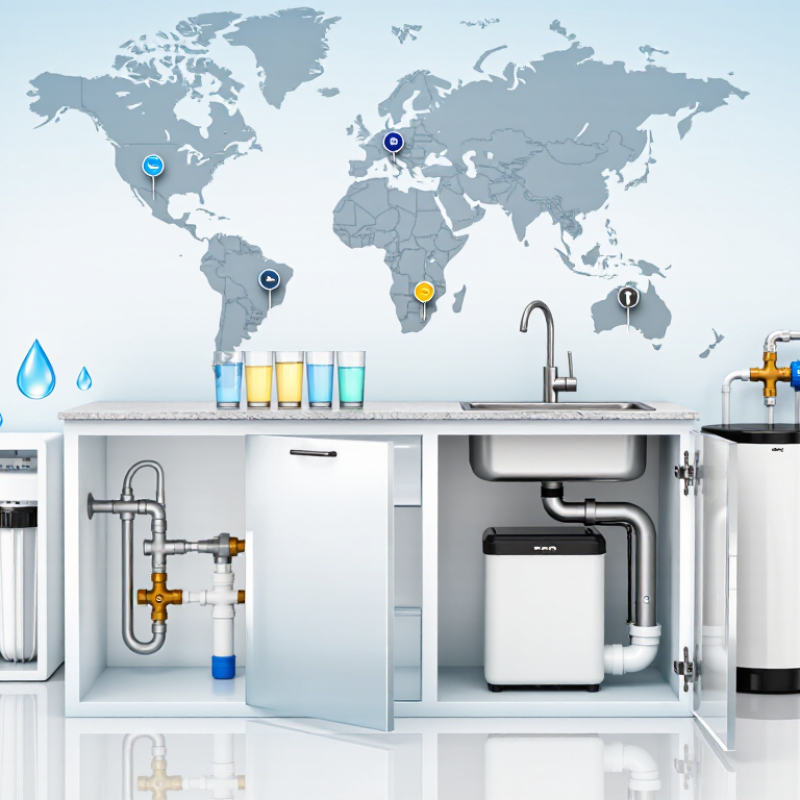
Water quality problems differ by location, building age, and seasonal conditions. The WHO and UNICEF Joint Monitoring Programme reported that 2.2 billion people lacked safely managed drinking water in 2022. Rural households may face microbial contamination, while urban homes may receive water affected by aging pipes, chlorine taste, or industrial pollutants. The same clear glass can hide very different risks.
Testing should guide the treatment goal. WHO’s Guidelines for Drinking-water Quality identify microbial safety as a primary concern and set a provisional arsenic guideline of 0.01 milligrams per litre. A household near agricultural land may also test for nitrates. Coastal homes may need to consider salinity. Do not buy equipment based on taste alone. It is an incomplete signal.
Treatment choices should match the water source and daily use. Point-of-use systems can protect drinking and cooking water with less maintenance. Whole-house systems may help with sediment, hardness, or unpleasant odors. However, they can waste water, remove useful minerals, or create maintenance problems when neglected. The U.S. Environmental Protection Agency advises checking performance claims, replacement schedules, and independent testing evidence. Those details matter.
A realistic 2026 plan starts with a certified laboratory test, local regulatory guidance, and a written treatment target. Re-test after installation. Household habits change, too. A system chosen for yesterday’s water may not fit tomorrow’s supply.
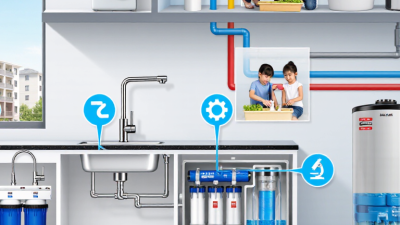
Choosing a home water treatment system in 2026 starts with the water, not the product. The WHO/UNICEF Joint Monitoring Programme reported that 2.2 billion people lacked safely managed drinking water in 2022. That figure hides local problems. Cloudy wells, salty supplies, and aging pipes need different responses. A laboratory test should guide the purchase.
Sediment filters trap sand, rust, and visible particles. Activated carbon reduces chlorine, odors, and many organic compounds. It does not reliably remove dissolved salts.
Reverse osmosis pushes water through a fine membrane, reducing many dissolved contaminants, but it produces wastewater and needs pressure. Ultraviolet treatment can inactivate microorganisms.
It works poorly when water is cloudy or electricity is unstable. Ion exchange targets hardness or selected ions, depending on the resin. Small details matter.
The WHO Guidelines for Drinking-water Quality stress risk-based testing and ongoing control. Buyers should compare verified performance claims, flow rate, replacement intervals, and storage hygiene.
A compact unit may look efficient beside a kitchen sink. Its cartridges still need timely replacement. I would not treat a digital reminder as proof of safe water. Maintenance records and independent testing are stronger evidence. No single technology fits every household. Mistakes happen when convenience replaces diagnosis.
Choosing a home water treatment system in 2026 should begin with local water conditions, not equipment features. Municipal water may need chlorine taste control, while a private well may require testing for bacteria, iron, manganese, or nitrate. Hard water can leave white scale on a kettle and stiff laundry. Ask an accredited laboratory for a recent report. Home test strips offer useful clues, but they cannot replace professional analysis.
Match the treatment method to the actual problem. Activated carbon can improve taste and odor. A softener addresses hardness, not bacteria. Reverse osmosis may reduce several dissolved contaminants, but it needs suitable pressure and regular filter changes. Ultraviolet treatment can help with microorganisms when the water is already clear. Small details matter. Check daily water demand, kitchen space, drainage, and electricity access before installation. A system that serves two people may struggle in a busy household.
Maintenance often decides whether a system remains reliable. Record filter changes, inspect seals, and test treated water periodically. Choose components with recognized safety certification and service support available in your region. Local plumbers and public health offices can clarify installation rules. In practice, many households buy oversized systems and delay maintenance. That mistake is understandable, but expensive. Water quality can also change after flooding, pipe repairs, or seasonal well fluctuations, so one test may not tell the whole story.
| System Type | Main Water Conditions Addressed | Typical Treatment Performance | Typical Household Capacity | Water Waste and Energy Needs | Maintenance Requirements | Best Household Fit | Important Limitations |
|---|---|---|---|---|---|---|---|
| Sediment Filtration | Sand, silt, rust particles, and visible suspended matter in well or municipal water. | Common residential cartridges are rated from approximately 1 to 50 micrometres, depending on the model. | Usually installed at the point of entry; flow rates commonly range from about 10 to 30 litres per minute. | No routine water waste and no electricity for passive housings. | Replace or clean the filter when pressure drops or according to local sediment loading. | Homes using private wells, rainwater, or older distribution pipes with visible particles. | Does not reliably remove dissolved salts, hardness, microbes, pesticides, or most chemicals. |
| Activated Carbon Filtration | Chlorine taste and odour, many organic compounds, and some disinfection by-products. | Performance depends on carbon type, contact time, and contaminant concentration; it is commonly used for taste and odour improvement. | Point-of-use units often provide approximately 1 to 4 litres per minute; whole-house units can support normal household flow when correctly sized. | Generally no water waste and no electricity for standard gravity or pressure-driven units. | Replace cartridges on schedule; exhausted carbon can lose effectiveness and may support bacterial growth if neglected. | Urban homes with chlorinated water and households focused on drinking-water taste. | Not a dependable barrier for high hardness, nitrate, fluoride, dissolved salts, or microbiological contamination. |
| Water Softener | Hard water containing calcium and magnesium that causes scale on heaters, taps, and appliances. | Ion-exchange systems can substantially reduce hardness when properly sized and regenerated. | Sized by household demand and water hardness; many residential units support approximately 2 to 6 bathrooms. | Uses water and salt during regeneration; electricity is usually limited to the control valve. | Add salt or potassium chloride, check the brine tank, and service the valve; regeneration frequency depends on water use and hardness. | Areas with hard groundwater, scale on plumbing, or poor soap lathering. | Does not disinfect water or remove most contaminants; increases sodium or potassium in treated water. |
| Ultrafiltration | Fine particles, colloids, bacteria, and some larger microorganisms where feed water quality is suitable. | Membranes commonly have pores in the approximate 0.01 to 0.1 micrometre range; removal claims vary by membrane and operating conditions. | Point-of-use systems commonly deliver about 1 to 3 litres per minute; whole-house capacity depends on membrane area and pressure. | Usually low water waste; many systems operate without electricity if inlet pressure is adequate. | Periodic flushing and prefilter replacement are required; membrane life is affected by turbidity and chlorine exposure. | Homes seeking microbiological protection without removing beneficial minerals. | Does not reliably remove dissolved salts, nitrate, fluoride, or many low-molecular-weight chemicals. |
| Ultraviolet Disinfection | Bacteria, viruses, and other microorganisms in clear water, especially from private wells or untreated sources. | Effective disinfection requires the specified UV dose, adequate flow control, and low turbidity; prefiltration is normally needed. | Residential whole-house units are commonly selected for approximately 10 to 40 litres per minute, depending on the required dose. | No water waste, but continuous electrical power is required during operation. | Clean the quartz sleeve and replace the UV lamp according to the service schedule, commonly about once per year. | Well-water homes with laboratory-confirmed microbiological risks and reliable electricity. | Does not remove chemicals, salts, particles, or odour; cloudy water can reduce UV effectiveness. |
| Reverse Osmosis | Dissolved salts, high total dissolved solids, nitrate, fluoride, arsenic, and many other dissolved contaminants. | Typical residential membranes can reject a high proportion of dissolved substances, but actual results depend on pressure, temperature, membrane condition, and water chemistry. | Most point-of-use units produce approximately 0.1 to 0.4 litres per minute and use a storage tank; whole-house systems require substantially higher capacity. | Traditional units may discharge several litres of concentrate for each litre of treated water; permeate pumps or high-efficiency designs can reduce this ratio. | Replace prefilters, postfilters, and the membrane as needed; sanitise the storage tank and monitor pressure. | Households with high TDS, salty taste, nitrate concerns, or specific dissolved-contaminant problems. | Slower production, concentrate discharge, and possible mineral reduction; requires a water test for correct configuration. |
| Distillation | Many dissolved minerals, salts, heavy metals, and microorganisms in small quantities of drinking water. | Vaporisation and condensation remove many non-volatile contaminants; volatile compounds may require a carbon stage. | Common countertop units produce approximately 3 to 5 litres per cycle and are not intended for high-volume whole-house use. | No liquid reject stream, but heating requires significant electricity compared with passive filtration. | Remove scale and residue from the boiling chamber and replace any carbon polishing filter. | Small households needing very low-mineral water for drinking or specific applications. | Slow production, higher energy use, and potentially flat-tasting water; volatile contaminants need separate control. |
| Rainwater Treatment Package | Roof debris, sediment, organic matter, and microorganisms in harvested rainwater. | Usually combines first-flush diversion, sediment filtration, activated carbon, and UV or another validated disinfection step. | Storage and treatment capacity must match roof catchment, rainfall patterns, tank volume, and daily household demand. | Filtration itself may use little water, but pumps and UV units require electricity; excess water may be lost during cleaning. | Clean roof and gutters, inspect the tank, replace filters, and verify disinfection performance regularly. | Rural or water-scarce locations with suitable rainfall and adequate storage space. | Water quality changes seasonally; local regulations may restrict potable use, and treatment must be designed for the intended use. |
Choosing a home water treatment system in 2026 requires more than comparing flow rates. Installation must match local plumbing, pressure, drainage, and electrical conditions. A qualified technician should test incoming water before selecting filters, membranes, or disinfection equipment. Water chemistry changes.
Place treatment units where technicians can reach valves and cartridges safely. Use certified backflow protection, food-contact materials, and correctly rated electrical parts. Wet floors near power sockets create avoidable hazards. Small leaks matter. For drinking-water claims, check independent certification against relevant standards, such as NSF/ANSI requirements or equivalent national rules. Electrical equipment may also need local conformity approval.
Maintenance should follow measured water use, not convenient guesses. Replace cartridges when pressure drops, performance changes, or laboratory results show declining quality. Disinfect storage tanks and inspect seals during scheduled service. Keep records. A simple log can show missed replacements and recurring problems. Buyers should request installation instructions, test reports, warranty limits, and certificates that apply to the exact model. Some certificates cover materials only, not contaminant reduction. That distinction is easy to miss. I have seen systems installed correctly but maintained poorly, proving that certification cannot replace regular testing and responsible use. Recheck treated water after installation, especially when children, older adults, or vulnerable users depend on it.
Installation, Maintenance, Safety, and Certification Requirements
The chart shows common planning intervals for residential treatment components. Actual service frequency depends on water quality, flow rate, household consumption, and the equipment manufacturer’s instructions. Buyers should verify applicable certification claims, such as NSF/ANSI 42 for aesthetic effects, NSF/ANSI 53 for specific health-related contaminants, NSF/ANSI 58 for reverse osmosis systems, NSF/ANSI 55 for ultraviolet microbiological treatment, and NSF/ANSI 44 for residential water softeners. Local plumbing, electrical, and drinking-water regulations may also apply.
In 2026, the best home water treatment system is not automatically the most advanced. It should match local contaminants, household demand, and maintenance capacity.
The WHO/UNICEF Joint Monitoring Programme reported that 2.2 billion people lacked safely managed drinking water in 2022. That figure makes treatment relevant, but it does not justify buying blindly. Start with an accredited water test, then verify claims against the results. Shortcuts create expensive mistakes.
Cost should mean total ownership, not shelf price. Compare equipment, installation, replacement media, electricity, wastewater, and independent testing over five years.
The U.S. EPA notes that conventional point-of-use reverse-osmosis units may discharge several gallons for each gallon treated. Efficient designs can reduce that burden. This matters where water is scarce, pumped, or billed by volume.
Gravity and carbon systems usually use less energy, yet they may not address dissolved salts or specific pathogens. No single method wins everywhere.
Sustainability also depends on behavior. A neglected filter can reduce performance and increase replacement waste. Keep receipts, record flow rates, and test treated water after major maintenance.
The UN World Water Development Report 2024 identifies agriculture as roughly 70% of global freshwater withdrawals, so household savings are modest but meaningful.
Question “lifetime” claims and unclear disposal instructions. I would accept a higher upfront cost for transparent testing, repairable parts, and predictable cartridges. That preference is practical, not perfect. Local servicing can matter more than laboratory specifications.