For global buyers, choosing the best Marble Slab in 2026 means more than comparing color and price. Origin, structure, finish, documentation, and shipping performance all matter. A white slab may look perfect online, yet show grey veining, open pores, or fragile edges under warehouse lighting.
Grand View Research valued the global natural stone market at approximately USD 33.9 billion in 2023. Its report also expects continued growth through 2030. Meanwhile, the Natural Stone Institute provides technical guidance on stone selection, fabrication, installation, and maintenance. These sources point toward a more careful buying culture. Appearance still leads decisions. Performance should lead contracts.
Jim Hieb, former CEO of the Natural Stone Institute, has emphasized, “Natural stone is a product of nature, and no two pieces are alike.” That principle shapes this guide. Calacatta, Carrara, Emperador, Crema Marfil, and locally quarried marbles each offer different visual and technical qualities. Buyers should request quarry details, slab photographs, test data, and packing specifications. Water absorption and flexural strength deserve attention. So does resin repair.
The perfect slab rarely exists.
This overview compares leading Marble Slab types for residential, hospitality, commercial, and premium retail projects. It considers veining, color stability, fabrication risk, maintenance needs, availability, and total landed cost. Some conclusions remain subjective. Market prices change quickly, and regional quality can vary between blocks. That uncertainty deserves honest discussion, not polished sales language. A responsible buyer leaves room for inspection, rejected pieces, and occasional disappointment. That is not pessimism. It is practical sourcing.
2026 Best Marble Slab Types for Global Buyers
What Marble Slabs Are and How They Are Classified
Marble slabs are large, flat panels cut from quarried stone blocks. Workers saw the blocks into sheets, then hone or polish the surfaces. A slab may show veins, crystals, clouds, or small natural pits. These details are not manufacturing defects.
Marble is commonly classified by geological appearance, background color, veining, thickness, and surface finish. White marble often has soft gray veins, while darker varieties may contain stronger mineral patterns. Classification also considers whether the stone is crystalline, brecciated, or uniformly colored. However, trade terms are not fully standardized worldwide. A “premium” grade in one market may differ elsewhere. Check the actual slab.
Finish changes both appearance and performance. Polished marble reflects light and highlights color, but it can reveal scratches more clearly. Honed marble feels softer and hides minor wear better. Brushed or leathered finishes add texture, though cleaning may require more attention. Thickness commonly varies by supplier and project requirements, so buyers should confirm measurements before fabrication.
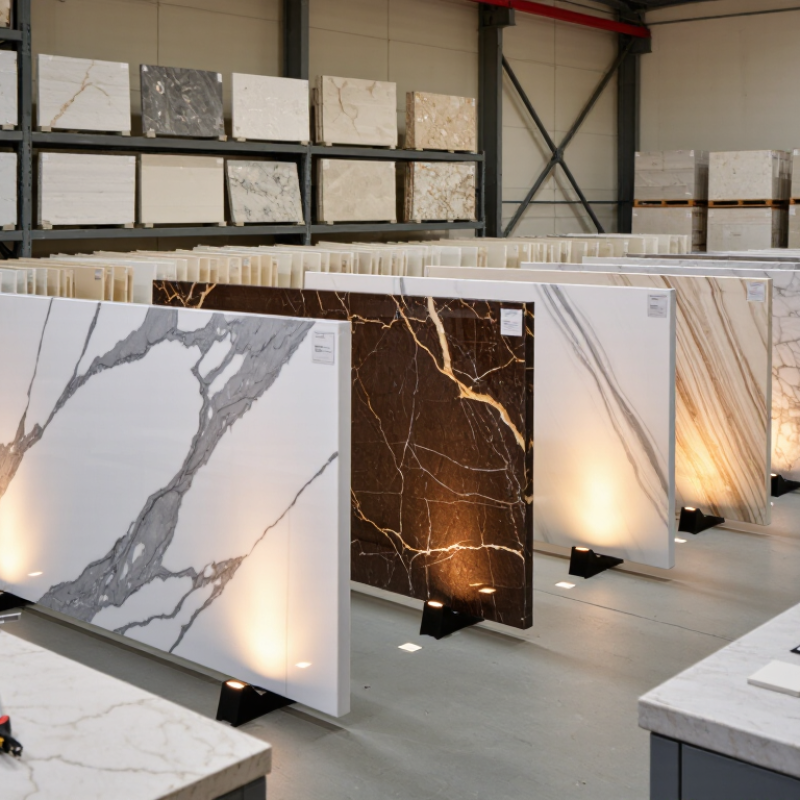
Experienced inspectors examine slabs under natural and artificial light. They also check resin repairs, edge cracks, water absorption, and batch consistency. A digital image can mislead. Veins may look quieter on a screen than in person. I have found that sample pieces sometimes fail to represent the full block. Measure twice. Request inspection records, technical data, and clear photos of every selected slab. Weight, packaging, and destination regulations also deserve careful review.
For residential projects, marble slabs remain valued for natural veining, cool surfaces, and visual depth. White marble suits bright kitchens, bathrooms, and compact apartments. Calacatta-style slabs create bold movement, while Carrara-type slabs offer quieter gray veining. Green, beige, and dark marble can shape dramatic feature walls. They need sealing and careful cleaning. Acidic spills can etch the surface quickly.
Commercial projects require a stricter selection process. Commercial-grade marble slabs with consistent thickness support hotel lobbies, reception desks, staircases, and retail interiors. Dense varieties generally perform better in busy areas, although marble is rarely maintenance-free. For floors, slip resistance and finish matter more than dramatic patterning. Honed surfaces often hide wear better than polished ones. That trade-off is easy to underestimate.
Market evidence supports continued material diversity. Grand View Research estimated the global natural stone market at approximately USD 50 billion in 2023 and projected continued growth through 2030. The U.S. Geological Survey’s 2024 Mineral Commodity Summaries also identifies dimension stone as an established construction material category. However, market growth does not guarantee the right slab choice. Buyers should request petrographic data, water-absorption results, thickness tolerances, and batch photographs. One sample can mislead. Veining, shade, and fissures may change substantially across a shipment. Experienced specifiers inspect full slabs before approving residential or commercial orders.
Choosing marble slabs requires more than matching a color chart. Inspect the actual slab under neutral light. Look closely. Check the background tone, vein direction, pits, cracks, and filled areas. A strong slab usually shows consistent thickness and careful edge finishing. However, natural stone is never perfectly uniform.
Ask for technical records, including water absorption, density, and flexural strength. These figures help compare materials from different regions. They also reveal whether a slab suits walls, countertops, flooring, or heavy-use areas. Lower absorption can improve stain resistance, but it does not make marble maintenance-free. Acidic liquids may still etch polished surfaces.
Finish changes both appearance and daily performance. Polished marble reflects light and highlights veining, yet scratches and etching can become more visible. Honed surfaces feel softer and hide minor wear better, though they may absorb spills faster. Brushed or textured finishes offer grip, but their uneven surface can collect dust. Always review a large sample, not only a small tile.
Experienced buyers should examine the back of each slab and confirm repair methods. Resin-filled fissures may be acceptable when disclosed and professionally reinforced. Still, acceptance standards should be written before purchase. I would not rely on photographs alone. Color can shift between screens and warehouses. A small mistake here can affect an entire installation. Ask for packing details, inspection images, and replacement terms before shipment.
2026 Best Marble Slab Types for Global Buyers
Choosing marble by appearance alone is risky. The best slab depends on design style, application, and climate. IMARC Group’s 2024 Marble Market report estimated the global market at about USD 22 billion in 2023, showing strong demand across residential and commercial projects. Yet demand does not make every stone suitable.
For minimalist interiors, pale Carrara-style marble creates soft veining and reflects daylight. Bold breccia patterns suit feature walls, reception desks, and low-traffic bathrooms. For kitchen islands, dense, well-sealed slabs are practical, but marble still scratches and reacts to acids. Honesty matters here. It is not maintenance-free.
Climate changes the specification. In humid coastal regions, review water absorption, edge sealing, and ventilation behind wall panels. In freeze-thaw zones, exterior marble needs certified resistance testing, not visual confidence. The U.S. Geological Survey’s 2024 Mineral Commodity Summaries reported roughly 1.7 million metric tons of U.S. dimension-stone output in 2023, while also noting fragmented material reporting. Buyers should request quarry origin, ASTM test results, batch photos, and digital slab matching. Natural Stone Institute guidance also recommends checking absorption, flexural strength, and finish suitability before fabrication. A polished surface may become slippery near pools. Honed stone can show stains sooner. Small details matter.
| Marble Slab Type | Typical Appearance | Best-Matched Design Styles | Recommended Applications | Climate and Location Guidance | Indicative Technical Characteristics | Care and Selection Priorities |
|---|---|---|---|---|---|---|
| Classic White Calcitic Marble | White to off-white background with soft gray clouds or fine linear veining. | Minimalist Modern Scandinavian Classic | Kitchen and bathroom walls, vanity tops, backsplashes, fireplace surrounds, flooring in low-to-medium traffic areas, and feature walls. | Suitable for interior use in most climates. In humid regions, use a properly specified sealer and maintain ventilation. Generally not the first choice for exposed freeze-thaw locations. | Calcite-rich stone; typical Mohs hardness is about 3. Water absorption and flexural strength vary substantially by quarry and fabrication batch. | Inspect for fissures, resin repairs, and consistent veining. Use cutting boards and trivets because acids and heat can etch or dull the surface. |
| Dolomitic White Marble | White or light gray base with stronger gray, taupe, or warm veining and a slightly denser visual character. | Contemporary Luxury Transitional Hotel | Kitchen countertops with careful maintenance, premium vanities, islands, wall cladding, reception desks, and fireplace applications. | Often a better choice than softer calcitic marble for demanding interiors, but it still requires project-specific testing. Use caution in wet exterior or freeze-thaw environments. | Contains a significant proportion of dolomite; dolomite is harder than calcite, commonly around 3.5–4 on the Mohs scale. Performance differs among deposits. | Confirm stain resistance, water absorption, and acid sensitivity using a sample. Bookmatch large slabs only after reviewing the full vein layout. |
| Gray Veined Marble | Light, medium, or charcoal gray background with white, silver, or darker linear veining. | Industrial Modern Urban Minimalist | Feature walls, bathroom walls, flooring, stair risers, fireplace surrounds, commercial interiors, and furniture tops. | Performs well indoors in dry, temperate, humid, and cold climates when correctly sealed. Exterior use should be limited to stones with verified weathering and freeze-thaw test results. | Usually calcitic or mixed calcitic-dolomitic; hardness is commonly near the calcite range. Darker veining may emphasize natural fissures or mineral boundaries. | Check slab direction, veining continuity, and surface finish. Honed finishes can reduce the visual impact of etching but may require more frequent sealing. |
| Black Marble | Deep black, charcoal, or near-black background with white, gold, gray, or irregular mineral veining. | Dramatic Luxury Art Deco Contemporary High-Contrast | Statement islands, bar counters, powder rooms, fireplace surrounds, wall panels, hotel lobbies, and decorative furniture surfaces. | Best suited to interiors. In high-sunlight areas, confirm color stability and resin or filler performance. Avoid untested outdoor use in regions with severe rain, frost, or rapid temperature changes. | Composition can be calcitic, dolomitic, or mixed; dark color often results from carbonaceous or other mineral content. Physical properties vary widely. | Use low-acid cleaners and avoid abrasive powders. View samples under the intended lighting because polished black surfaces can show fingerprints, dust, and micro-scratches. |
| Green Marble | Light to dark green tones with white, gray, black, or brown veining and occasionally clouded or brecciated patterns. | Biophilic Eclectic Resort Statement | Vanity tops, wall panels, powder rooms, bar fronts, decorative tables, fireplace surrounds, and low-traffic floors. | Composition varies greatly; some green stones contain serpentine or other minerals and should not be assumed to perform like conventional calcitic marble. Exterior and wet-area use require project-specific testing. | Mineralogy, hardness, porosity, and water sensitivity can differ significantly between deposits marketed as green marble. | Request petrographic information and absorption data. Test the selected sealer because some green stones can darken or react with certain treatments. |
| Brecciated Marble | Angular fragments in contrasting colors joined by natural mineral veins or a fine matrix. | Artistic Maximalist Classic Luxury Boutique | Feature walls, reception desks, vanity fronts, decorative floors, fireplace surrounds, tabletops, and bookmatched panels. | Recommended mainly for interior applications. Areas exposed to moisture, impact, or temperature cycling require careful testing because natural boundaries may affect durability. | Brecciation can create variable strength and absorption within one slab. Resin reinforcement is common in some commercial products but should be disclosed and evaluated. | Review the entire slab rather than a small sample. Specify edge protection and professional fabrication for cutouts, sink areas, and large panels. |
| Beige and Cream Marble | Warm ivory, cream, sand, or light beige background with subtle clouds, fossils, or soft veins. | Mediterranean Traditional Warm Minimalism Transitional | Flooring, staircases, bathroom walls, vanities, kitchen backsplashes, hotel interiors, and large-format wall cladding. | Works well in warm, dry, humid, and temperate interiors. For cold climates, verify frost resistance before considering exterior paving or façade applications. | Usually calcitic or mixed carbonate stone; porosity, hardness, and abrasion resistance depend on grain structure and geological origin. | Choose a slip-conscious finish for floors. Seal before use and establish a cleaning routine to prevent oils and colored liquids from causing visible staining. |
| Pink and Rose Marble | Pink, rose, blush, or salmon tones with white, gray, or darker mineral markings. | Retro Soft Luxury Residential Decorative | Bathroom vanities, powder rooms, wall cladding, decorative flooring, tabletops, fireplace surrounds, and hospitality interiors. | Most suitable for interior use. In strong sunlight, inspect a sample under UV exposure where possible because natural pigments and resin treatments may respond differently. | Typically carbonate-based with color influenced by iron-bearing or other trace minerals; physical properties vary by quarry. | Coordinate slab color with artificial lighting and adjacent materials. Use a penetrating sealer where appropriate and avoid acidic cleaning products. |
| Fossil-Bearing Marble | Light beige, gray, or cream background containing visible shell, fossil, or sedimentary patterns. | Naturalistic Rustic Luxury Organic Modern Classic | Wall panels, bathroom surfaces, vanity tops, low-traffic floors, fireplace surrounds, and decorative architectural elements. | Well suited to indoor applications across global climates. Use caution for exterior installations because fossil-rich zones may have variable porosity and weathering behavior. | Fossil content can create local differences in density, absorption, and polish response. Testing should be based on the actual slab or batch. | Prefer honed or leathered finishes where a softer, natural appearance is desired. Plan vein and fossil orientation during cutting. |
| Translucent Marble | Light-colored marble with enough translucency for backlighting, often with clouds, veins, or layered mineral patterns. | Hospitality Ultra-Luxury Contemporary Decorative | Backlit feature walls, bar fronts, reception counters, decorative screens, furniture panels, and premium bathroom interiors. | Best for protected interiors. Avoid direct exterior exposure and locations with extreme thermal movement unless the specific material and installation system are engineered and tested. | Translucency depends on mineral composition, thickness, slab structure, and surface finish. It does not automatically indicate higher mechanical strength. | Use experienced fabricators, concealed reinforcement where needed, low-heat LED lighting, and a full-size mock-up to verify color uniformity. |
Technical values and climate recommendations are indicative because marble performance varies by geological deposit, slab thickness, finish, reinforcement, installation method, and local standards. For exterior, wet-area, flooring, or high-traffic projects, request independent test data for the selected batch, including water absorption, flexural strength, abrasion resistance, and freeze-thaw performance where applicable.
Choosing the right marble slab starts with the project’s real conditions, not only its appearance. White marble offers bright veining, while darker varieties can hide small stains more effectively. Some slabs suit walls and vanities, but softer stone may demand greater care on busy counters. Always request recent quarry photos, slab dimensions, thickness, finish, and technical data before negotiating.
Tips: Ask for a wet-surface video. Veins often change under water. Request one full-slab inspection, not only polished samples. Check cracks, resin repairs, edge damage, color variation, and flatness. A small sample can look perfect while the full block appears uneven. I have seen buyers overlook this gap.
Shipping requires practical planning. Confirm crate materials, moisture protection, loading photographs, and container weight limits. Slabs should be separated with suitable padding and secured against movement. Port delays can affect installation schedules, especially when customs documents contain inconsistent descriptions. Use clear invoices, packing lists, certificates, and agreed inspection terms. Independent inspection before shipment is usually cheaper than replacing damaged stone overseas.
Cost involves more than the quoted slab price. Include cutting, polishing, packaging, inland transport, ocean freight, insurance, duties, handling, and possible breakage. Compare landed cost per usable square meter, not only price per slab. Currency changes can also disturb a carefully planned budget. My practical preference is to keep a modest contingency allowance. It feels inefficient, but marble rarely rewards optimistic calculations.