What Is the Best Mechanical Fixture Supplier in China?

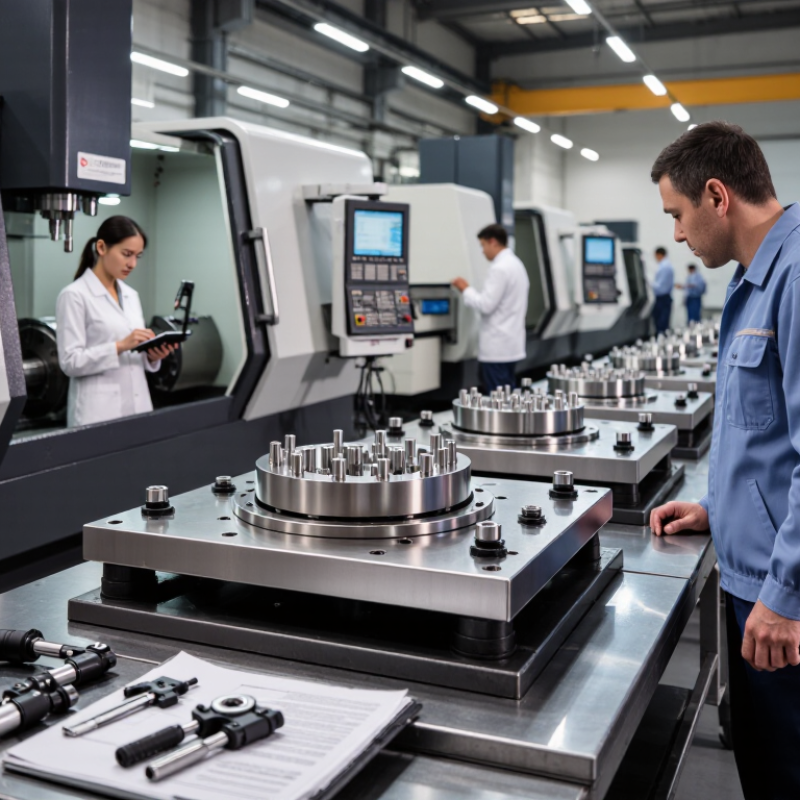
Choosing the best Mechanical Fixture supplier in China requires more than comparing prices or polished factory photographs. The right partner must understand how a fixture behaves beside a CNC machine, under repeated clamping, heat, vibration, and operator pressure.

A practical evaluation begins with application experience. Can the supplier read your drawings, identify datum requirements, and recommend suitable locating pins, clamps, materials, and surface treatments? A reliable manufacturer should provide inspection records, dimensional reports, material certificates, and clear revision control. Factory capability matters too. Look for CNC machining capacity, quality inspection equipment, skilled assembly technicians, and documented process controls. Small details often reveal the truth. A loose locating pin can ruin an entire production batch.

Manufacturing engineer Shigeo Shingo offered a useful warning: “The most dangerous kind of waste is the waste we do not recognize.” Poorly designed fixtures create hidden waste through setup delays, rework, damaged surfaces, and inconsistent accuracy. This is easy to underestimate.

The best supplier is not always the largest one. It is the company that asks precise questions before quoting, tests critical interfaces, and accepts reasonable design feedback. Request a prototype or sample inspection whenever possible. Check communication speed, replacement support, and production consistency after the first order. One weakness remains: online supplier reviews rarely show long-term fixture performance. Factory audits and reference projects provide stronger evidence.

This guide examines how to compare Chinese Mechanical Fixture suppliers through engineering competence, quality assurance, customization ability, delivery reliability, and total operating value. The goal is not merely to find a low-cost vendor. It is to find a dependable manufacturing partner.

What Is the Best Mechanical Fixture Supplier in China?

Defining a Mechanical Fixture Supplier’s Role in China

A mechanical fixture supplier in China does more than machine a part from a drawing. The supplier helps turn a production need into a workable tool. That may include reviewing clamping points, locating surfaces, material choices, and access for operators. A good discussion often starts with the actual workpiece, not a catalogue. Photos and sample parts can reveal details that a two-dimensional drawing misses.

The supplier’s role also includes coordinating machining, assembly, and inspection. For a fixture with several locating pins, for example, small position errors can affect repeatability across an entire batch.

The supplier should explain how critical dimensions will be checked and what inspection records are available. Clear communication matters, especially when specifications, time zones, or terminology differ. Not every drawing is complete. An experienced team will ask questions before cutting material, though some assumptions may still need revisiting.

A reliable partner is transparent about capability and limits. Ask who reviews the design, how changes are documented, and whether a trial fit can be arranged. A lower quotation may omit useful checks or leave responsibilities unclear. That trade-off deserves attention. In practice, share the fixture’s operating conditions, expected cycle, and maintenance needs early. A supplier can only make sound recommendations when the real production context is visible.

Key Types of Mechanical Fixtures and Their Applications

Mechanical fixtures hold parts in a repeatable position during machining, welding, assembly, or inspection. Their design depends on the workpiece, required accuracy, production volume, and operator access. Small details matter: a clamp can obstruct a cutting path, while uneven support may distort a thin plate.

Machining fixtures locate components against fixed stops and support them as tools remove material. Welding fixtures use clamps and heat-resistant locating surfaces to limit movement, though heat can still cause distortion. Assembly fixtures guide parts into position for drilling, fastening, or bonding. Inspection Fixtures hold components steady so gauges or sensors can check critical dimensions. Fit matters.

Modular fixtures use adjustable plates, pins, and clamps for changing jobs; they can reduce setup time, but may be less rigid than dedicated tooling. For a supplier in China, buyers should share drawings, tolerances, materials, and expected production quantities, then review proposed locating points and clamping methods. A sample trial can reveal access problems that drawings miss. In practice, drawings are not always enough. Even a well-made fixture may need adjustment after the first real production run.

Criteria for Evaluating Chinese Fixture Manufacturers

What Is the Best Mechanical Fixture Supplier in China?

Criteria for Evaluating Chinese Fixture Manufacturers

A capable fixture manufacturer should show how its designs control repeatability, clamping force, and workpiece movement. Ask for drawings with tolerances, material certificates, and calibration records for inspection tools. Request a sample inspection report, too. It should identify the datum surfaces and measurement method, not just list pass results. Ask for raw evidence. A polished brochure proves little.

Digital traceability matters when jobs involve frequent revisions. Deloitte and MAPI’s 2019 Smart Factory study found that 86% of surveyed manufacturers expected smart-factory initiatives to be a primary driver of competitiveness within five years. That does not prove a fixture shop is capable. It does support checking whether revision history, inspection results, and corrective actions are recorded and retrievable. The World Bank’s 2023 Logistics Performance Index gave China an overall score of 3.7 out of 5. Treat this as a country-level logistics indicator, not a rating of any individual factory.

During an audit, observe a real setup: how operators locate the part, tighten clamps, and respond to an out-of-tolerance reading. Ask about lead-time assumptions, spare components, and engineering-change handling. Then test one fixture against your own part and acceptance criteria before placing a larger order. A checklist can still miss practical issues, such as awkward loading or operator fatigue. That is worth admitting. A technically correct fixture may be frustrating to use.

How to Compare Quality, Pricing, and Production Capabilities

What Is the Best Mechanical Fixture Supplier in China?

How to Compare Quality, Pricing, and Production Capabilities

A strong supplier comparison starts with the part, not the quote. Send the same drawing, tolerance requirements, material grade, and inspection plan to every candidate. Ask how they control datum surfaces, clamp force, and repeatability. Request sample inspection reports, such as CMM results, and check whether measurements match your critical features. Small details matter. A polished sample alone cannot prove stable production.

ISO’s Survey 2022 recorded more than 1.26 million valid ISO 9001 certificates worldwide. Certification indicates a documented quality-management system, but it does not guarantee fixture accuracy. Ask for recent defect rates, corrective-action records, and inspection frequency. Compare prices line by line: tooling, materials, finishing, inspection, packaging, and shipping. A low unit price may hide setup costs or limited rework support.

Production capability needs evidence, too. Check available machining processes, monthly capacity, typical lead times, and how urgent changes affect the schedule. The World Bank’s 2023 Logistics Performance Index assessed logistics across 139 economies; use it as context for shipment planning, not as a rating of an individual factory. Ask for that factory’s own on-time delivery history. One limitation: sample parts may not expose every issue in a long production run. Request a pilot batch before committing to larger volumes.

Selecting the Best Supplier for Your Manufacturing Needs

What Is the Best Mechanical Fixture Supplier in China?

Selecting the Best Supplier for Your Manufacturing Needs

Choosing a mechanical fixture supplier requires more than comparing prices. Your supplier must understand tolerances, production volume, materials, and assembly conditions. A reliable team studies your drawings before quoting. They should also ask about clamping force, repeatability, and machine access.

In practical projects, small details often decide fixture performance. Check whether the supplier uses calibrated inspection tools, such as height gauges or coordinate measuring machines. Request material certificates, dimensional reports, and sample photographs. Clear engineering communication matters too. A delayed answer can become a delayed production line. I once underestimated packaging requirements for heavy fixtures. The parts arrived safely, but handling became unnecessarily difficult. That mistake changed how I review suppliers.

Tips: Ask for a trial fixture before placing a large order. Confirm tolerance capability with real inspection data. Review welding quality, surface treatment, and spare-part access. Discuss revision control for every drawing. Also, verify lead times under normal production conditions, not only during sales discussions. A supplier may offer excellent machining but weak project management. Another may communicate well but lack complex fixture experience. Compare both sides carefully. Price is only one variable. Your best choice should combine technical skill, stable quality, responsive communication, and practical after-sales support.

What Is the Best Mechanical Fixture Supplier in China? — Selecting the Best Supplier for Your Manufacturing Needs

Use this scorecard to compare shortlisted suppliers against your own part, process, quality, and delivery requirements. The suggested weights are a starting point, not a universal industry standard.

Evaluation Dimension What to Assess Evidence to Request or Verify Suggested Weight Supplier Score (1–5)
Application and engineering fit Whether the supplier understands the workpiece, datum scheme, locating and clamping needs, machine interface, and production process. Design review notes, proposed fixture concept, interface drawings, and documented assumptions or open questions. 15% Enter score
Technical capability Relevant design, machining, assembly, and measurement capabilities for the fixture type and required tolerances. Capability list, sample drawings, process flow, equipment details, and inspection records relevant to the project. 14% Enter score
Quality management and inspection How requirements are translated into checks, how nonconformities are handled, and how design or process changes are controlled. Quality procedures, inspection plans, sample measurement reports, corrective-action records, and applicable certifications for verification. 14% Enter score
Material and component traceability Ability to identify and document materials and purchased components when traceability is required by the application. Material certificates, component records, lot or serial identification method, and traceability examples from comparable work. 9% Enter score
Prototype and validation support Support for design reviews, trial fitting, functional checks, and corrective changes before production release. Validation plan, trial or acceptance checklist, sample run records, and proposed approval criteria. 10% Enter score
Delivery and project control Clarity of the schedule, milestone ownership, progress reporting, and response to schedule risks. Milestone plan, quoted lead time, capacity confirmation, reporting cadence, and documented delivery performance where available. 10% Enter score
Customization and change handling Ability to adapt the fixture to part revisions, process changes, maintenance needs, or future production requirements. Change-control process, revision management method, spare-part recommendations, and examples of engineering change support. 8% Enter score
Communication and documentation Technical communication, response ownership, drawing clarity, and completeness of handover documents. Communication plan, sample technical documents, named project contacts, and agreed language and response expectations. 7% Enter score
Total cost of ownership Quoted price alongside installation, commissioning, maintenance, spare parts, shipping, and potential downtime considerations. Itemized quotation, exclusions, warranty terms, maintenance guidance, spare-part pricing, and shipping terms. 8% Enter score
After-sales and service support Availability of troubleshooting, repair, replacement parts, and support after installation. Support process, response commitments, warranty coverage, service scope, and spare-part availability information. 5% Enter score
Total suggested weighting 100% Calculate weighted score

Scoring guide: 1 = does not meet the stated requirement; 3 = meets the requirement with some gaps to resolve; 5 = clearly meets or exceeds the requirement with verifiable evidence. Calculate each weighted score as (supplier score ÷ 5) × criterion weight, then add the results. Confirm all critical requirements directly with the supplier before making a purchasing decision.