Who Are the Best Mineral Wool Suppliers in China?
China’s mineral wool suppliers serve construction, industrial, and infrastructure projects, but supplier claims deserve careful checking. Product names alone reveal little. Buyers should compare declared density, thickness, thermal conductivity, fire performance, and test documentation.
Grand View Research estimated the global mineral wool market at about USD 14.36 billion in 2023 and projected continued growth through 2030. The International Energy Agency also identifies building efficiency as a major energy priority. IEA Executive Director Fatih Birol has described energy efficiency as “the first fuel.” Mineral Wools can support that goal when products are correctly specified and installed. Yet insulation performance depends on the full wall or roof assembly, not one catalogue number.
This guide examines Chinese suppliers through practical evidence: manufacturing capability, product range, quality controls, export experience, and the clarity of technical documents. Look for consistent batch records, traceable test reports, and samples that match the quoted specification. A neat datasheet is useful. It is not proof by itself. Factory visits, independent testing, and project references can strengthen confidence, though each has limits. No supplier is automatically the best for every project. A low price may conceal differences in density, tolerances, or support after delivery. The comparison ahead aims to make those trade-offs visible, while recognizing that public information is sometimes incomplete.
What Mineral Wool Covers: Rock Wool, Slag Wool, and Glass Wool
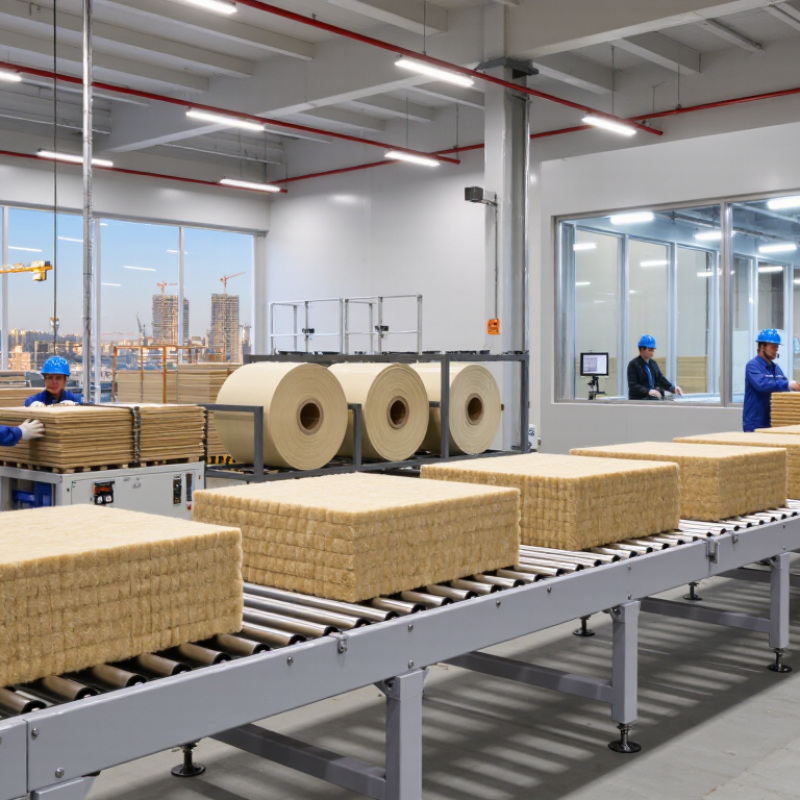
Mineral wool is not one material. The term usually covers rock wool, slag wool, and glass wool, each made from different mineral-based feedstocks. Rock wool is produced from volcanic rock and can suit walls, roofs, and industrial equipment where fire resistance and thermal performance matter. Slag wool uses processed ironmaking slag, often blended with other raw materials. Its consistency depends on the feedstock and manufacturing controls. Glass wool is made largely from recycled glass and sand. Its fine, flexible fibers make it common in building cavities and duct insulation.
The differences matter at the job site. A dense rock-wool board feels firm when handled; a glass-wool batt is lighter and easier to fit between studs. Slag-wool products vary, so check the exact product data rather than relying on the category name. Small details count. Look for declared density, thermal conductivity, water absorption, fire-test results, and dimensional tolerances. Ask suppliers for current test reports and samples from the intended production line. A neat sample is useful, but it cannot prove batch consistency.
For buyers comparing suppliers in China, clarify whether a quote covers boards, blankets, or loose-fill material. Confirm thickness, facing, packaging, and delivery conditions in writing. Also ask how the supplier controls fiber diameter and product dimensions. These checks take time. They may still miss issues that appear during installation, so trialing a small shipment can reveal handling problems before a larger order.
How China Classifies Insulation: GB 8624 Fire Ratings and GB/T 11835
China’s insulation classification relies on two different standards. GB 8624 evaluates how a building material reacts to fire, while GB/T 11835 sets technical requirements for rock wool, slag wool, and related products. They answer different questions. One concerns fire behavior; the other addresses product performance and quality.
Under GB 8624, materials receive fire classifications such as A, B1, B2, or B3, with subdivisions in some categories. A mineral wool product should not be assumed to achieve a particular rating just because of its fiber type. Facings, binders, thickness, and the tested assembly can affect results. Check the classification report and confirm that its product description matches the material being purchased. Small details matter.
GB/T 11835 helps buyers assess properties such as dimensions, density, thermal performance, and water-related characteristics, depending on the product and applicable edition. A dense board in a sample room may feel reassuring, but density alone does not prove suitability. Compare the test documentation with the project specification, including intended use and installation conditions. Paperwork can be imperfect, too; mismatched product names or outdated reports deserve a closer look.
Reading the chart: GB 8624-2012 classifies building-material products by reaction to fire, from A1 (highest) through F (lowest). The bar lengths show class order only; they are not test scores or a measure of mineral-wool supplier performance. GB/T 11835-2016 specifies requirements and test methods for mineral wool and slag wool insulation products.
Supplier Benchmarks: Thermal Conductivity ≤0.044 W/(m·K), Density, and Strength
When comparing mineral wool suppliers in China, treat thermal conductivity of ≤0.044 W/(m·K) as a screening benchmark, not a complete quality verdict. Ask for test reports that identify the product, temperature, and test method. A value measured under different conditions may not predict performance in your wall or pipe system. Small details matter.
Check density and compressive or tensile strength against the intended use. For a partition, handling strength and fit may matter more than a high density. For insulated equipment, compression resistance can help prevent gaps under cladding. Request samples and inspect fiber uniformity, edge condition, and thickness. Then compare declared values with independent test results where available. A dense board is not automatically a better board.
Supplier documentation should connect each reported figure to a specific product grade and production batch. Ask how density is controlled, how strength is tested, and whether moisture or facing materials affect the figures. Confirm delivery tolerances, too. A few millimeters can complicate installation. I would also check whether the supplier can explain differences between laboratory results and site performance. Not every answer will be perfect; vague explanations deserve follow-up, not an immediate rejection. A careful comparison is more useful than choosing by one impressive number.
Who Are the Best Mineral Wool Suppliers in China? - Supplier Benchmarks: Thermal Conductivity ≤0.044 W/(m·K), Density, and Strength
| Benchmark | Indicative Product Range or Target | What to Check When Comparing Suppliers |
| Thermal conductivity | ≤0.044 W/(m·K); many insulation products are specified within approximately 0.034–0.044 W/(m·K). | Compare results at the same declared mean temperature and test method. Request the product-specific test report rather than relying on a general catalogue value. |
| Bulk density | Common product categories span approximately 40–200 kg/m³, depending on whether the material is a blanket, pipe section, or rigid board. | Density is application-dependent and is not a stand-alone measure of insulation quality. Match the declared density and tolerance to the intended product and installation. |
| Compressive strength | For rigid boards, compare the declared stress at a specified deformation; values around 20–80 kPa are commonly encountered across different board grades. | Check the test deformation, specimen thickness, and test method. Do not compare figures reported at different deformation levels as if they were equivalent. |
| Tensile strength perpendicular to faces | For external-wall board applications, product specifications may use minimum values such as 7.5 kPa or higher, depending on the system and grade. | Confirm that the result applies to the intended board type and system. The project specification or applicable product standard takes precedence over a general benchmark. |
| Dimensional stability | Look for declared limits on changes in length, width, and thickness after conditioning or exposure to specified temperature and humidity. | Request the relevant test conditions and measured results. Stability requirements vary with the product’s use and the applicable standard. |
| Water absorption | Compare short-term or long-term water-absorption results only when the test method and exposure period are the same. | Ask for the exact test method and report. Water-repellent treatment and water absorption are product-specific and should not be assumed from density alone. |
| Reaction to fire | Verify the declared fire classification against the relevant Chinese requirements and the project specification. | Request a current classification or test report for the exact product and facing. Do not infer classification solely from the mineral-wool material type. |
| Quality documentation | Product data sheet, batch traceability, inspection records, and third-party test reports for the specified properties. | Check that documents identify the same product, thickness, density, facing, and manufacturing specification as the goods being purchased. |
Note: These are indicative comparison benchmarks, not guarantees for every mineral-wool product or a ranking of individual suppliers. Actual properties depend on product type, grade, test method, and declared service conditions. Confirm all acceptance limits against the applicable Chinese standard and project specification.
Who Are China’s Leading Mineral Wool Suppliers? Compare Products and Markets
Who Are China’s Leading Mineral Wool Suppliers? Compare Products and Markets
China’s mineral wool market includes manufacturers serving construction, industrial insulation, and equipment markets. Their product ranges may include rock wool boards, glass wool rolls, pipe sections, and acoustic panels. These products are not interchangeable. Density, thickness, facing, and thermal performance affect how well each suits a wall, roof, pipe, or mechanical room. A supplier focused on building insulation may offer different formats from one serving factories and power facilities. Compare product specifications with the conditions at your project site, not just catalog descriptions.
Market reach also matters. Some suppliers mainly serve domestic construction projects, while others have experience supplying overseas distributors or industrial buyers. Ask for current test reports, production details, packaging dimensions, and sample availability. Check whether the proposed product can meet your required temperature range and installation method. Clear answers are useful. Vague claims are not. I would avoid calling any supplier “best” without matching its product range and service capacity to a real project; that judgment can be imperfect, too.
Tips: Request a sample and inspect fiber consistency, edge condition, and packaging. Confirm delivery lead times and minimum order quantities in writing. Compare like with like. A low price means little if the specification differs.