A good Shower Head can make a rushed weekday rinse feel calmer, but the right choice depends on more than spray settings. Water pressure, connection size, cleaning needs, and budget all matter. A heavy rainfall model may look inviting in a showroom, yet feel underpowered in a home with modest pressure. Small details count.
Plumbing expert Richard Trethewey, known for his work on This Old House, offers a useful perspective. A fair paraphrase of his plumbing-first approach is: “Check the system and the fit before paying for extra features.” This is a paraphrase, not a verbatim quotation. It captures a practical point: a showerhead should work well with the plumbing you already have, not just look impressive online.
This guide compares ten options across price ranges, from simple fixed models to adjustable handheld designs. It considers spray comfort, installation, cleaning, materials, and water use, while noting where a low price may mean fewer conveniences. Some differences are subtle. Others are obvious the first morning you use the fixture. A model with easy-to-clean nozzles can save time when mineral buildup appears; a handheld hose can help rinse a tiled shower, but it may add clutter. No single pick suits every bathroom. The best value is the one that fits your space, pressure, and daily routine—with no features you will never use.
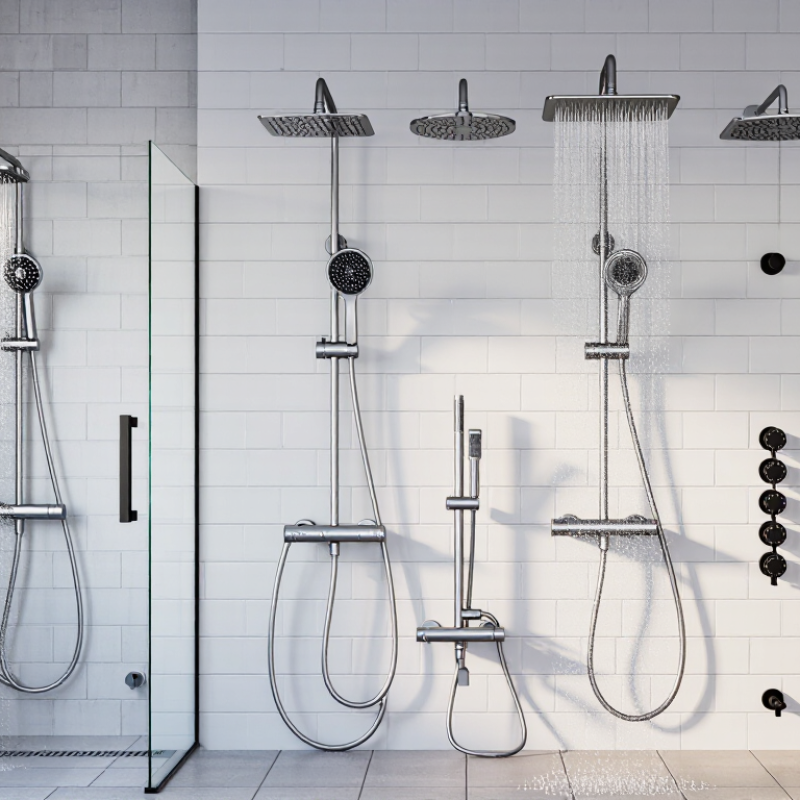
Shower-head design changes how water feels, even when the measured flow rate is similar. Wide rain-style plates spread water across more nozzles, creating a softer, more even curtain. Smaller spray faces often concentrate streams, which can feel sharper on the shoulders. Massage settings pulse or alternate jets. They do not necessarily use more water. Feel is not flow. Nozzle spacing, spray angle, and household water pressure all affect the experience, so a showroom setting may not match your bathroom.
Flow rate is measured in gallons per minute, not by how forceful a spray feels. The U.S. EPA’s WaterSense program sets a maximum of 2.0 gallons per minute for labeled showerheads, compared with 2.5 gallons per minute for standard models. EPA estimates an average family can save about 2,700 gallons of water and 330 kilowatt-hours of electricity annually by switching. Those figures are useful benchmarks, not a guarantee for every household. A lower-flow head may feel comfortable when its nozzles distribute water well, but some designs can feel thin. Check the flow rating and spray pattern together; one number rarely tells the whole story.
Comfort depends on more than a strong stream. A broad spray can feel relaxing, while a focused setting helps rinse thick hair. Look for easy-to-change settings and controls that work with wet hands. A handheld head and flexible hose can make rinsing easier, though extra parts may mean more cleaning. Small detail. Flow rate matters too: the U.S. EPA’s WaterSense program sets a limit of 2.0 gallons per minute, compared with the federal standard of 2.5.
Efficiency matters because heating shower water uses energy. The U.S. Department of Energy’s Energy Saver estimates water heating accounts for about 18% of household energy use. Lower flow can reduce water and heating costs, but a weak-feeling spray may frustrate users and shorten showers—or lead them to run the water longer.
That trade-off is easy to miss. Compare spray quality, flow rate, and temperature stability rather than choosing by the lowest price alone. Hard water can also leave mineral deposits around nozzles, so consider whether the spray face is easy to wipe clean.
Published savings are estimates, not a promise for every home. Actual results depend on shower length, local utility rates, and the water heater.
Start with the shower you have, not the features you wish you had. Check your water pressure, the shower arm’s connection, and whether you want a handheld model or a fixed head. These details can rule out unsuitable options before you spend money. A simple shower head may work well if you mainly want a steady spray and easy cleaning. Look for removable nozzles, which make mineral buildup easier to clear.
Mid-range models often add adjustable spray patterns or a handheld attachment. Decide which feature you will actually use; extra settings can look appealing but sit untouched. Higher-priced models may offer more durable finishes or broader spray coverage, but price alone does not guarantee a better fit. Read the care instructions and warranty terms, and check whether replacement parts are available. It’s easy to overvalue a polished finish. I’d give comfort and maintenance more weight.
Tips: Measure before ordering. Keep the old shower head until the new one is installed. If possible, test the spray in a store, and check return terms in case the pressure feels weak at home.
Comparing ten shower heads across different price ranges reveals trade-offs, not a single winner. Entry-level models often offer a straightforward spray and simple controls. They can suit a guest bathroom or a tight budget, though plastic fittings may feel less sturdy. Mid-priced options commonly add several spray settings, a flexible hose, or a wider face. These features are useful, but extra settings matter less if you always choose the same spray. Higher-priced designs may offer metal components, easier-to-clean nozzles, or more even coverage. A premium price does not guarantee better pressure; household plumbing and water flow affect the experience, too.
Tips: Check the connection size and measure your existing shower arm before buying. If possible, read the installation steps; a “tool-free” fit can still be awkward in a cramped stall. Keep the receipt.
When comparing models, look beyond the number of spray modes. Check whether controls are easy to turn with wet hands, and whether the hose reaches the floor for rinsing. A broad spray can feel soothing, yet it may use more water than a focused setting. Product descriptions rarely show how a shower feels in your own home. That part is hard to predict. Be willing to reconsider a feature you thought you needed.
Comparison of common shower-head types, rather than branded products. Prices are approximate U.S. retail ranges and can vary by retailer, materials, and included parts. Flow rates and spray settings depend on the specific model.
| Rank | Shower-Head Type | Typical Price (USD) | Common Configuration | Typical Flow-Rate Range | Best For | Things to Consider |
|---|---|---|---|---|---|---|
| 1 | Basic Fixed Shower Head | $10–$25 | Wall-mounted; usually one spray setting | About 1.5–2.5 GPM | Low-cost replacements and simple bathrooms | Basic finishes and fewer adjustment options are common. |
| 2 | Multi-Spray Fixed Shower Head | $20–$50 | Wall-mounted; selector for several spray patterns | About 1.5–2.5 GPM | People who want spray options without a handheld hose | Spray patterns and selector controls vary by design. |
| 3 | Handheld Shower Head | $25–$70 | Detachable head, flexible hose, and wall bracket | About 1.5–2.5 GPM | Rinsing, bathing children, and cleaning the shower | Check hose length, bracket position, and included fittings. |
| 4 | Water-Efficient Fixed Shower Head | $25–$70 | Fixed head designed for reduced water use | Often 1.5–2.0 GPM | Households looking to reduce shower water use | Look for independently verified efficiency labeling where available. |
| 5 | High-Pressure-Style Shower Head | $25–$80 | Fixed head shaped to concentrate or direct the spray | About 1.5–2.5 GPM | Users who prefer a more focused-feeling spray | A shower head cannot increase the home's incoming water pressure. |
| 6 | Handheld Head with Pause Control | $30–$90 | Detachable head with a hose and reduced-flow pause setting | About 1.5–2.5 GPM when running | Rinsing and temporarily reducing water flow during a shower | A pause control may reduce flow but may not shut water off completely. |
| 7 | Rain-Style Shower Head | $40–$120 | Broad fixed face; wall- or ceiling-mounted designs | About 1.5–2.5 GPM | A broad, overhead-style shower experience | A larger head may need a compatible arm and suitable water pressure. |
| 8 | Fixed-and-Handheld Combo | $50–$150 | Fixed head plus detachable handheld head, often with a diverter | About 1.5–2.5 GPM per active outlet; check product specifications | Households wanting overhead and handheld use | Using both outlets at once can divide available flow. |
| 9 | Metal-Finish Premium Fixed Head | $80–$200 | Fixed design with upgraded finish and construction details | About 1.5–2.5 GPM | Bathroom updates where finish and appearance matter | Confirm the finish-care requirements and connection compatibility. |
| 10 | Large Rainfall or Multi-Outlet System | $150–$500+ | Large overhead head, multiple outlets, or a more involved installation | Varies by outlet and installation; check rated flow for each mode | Bathroom renovations and feature-focused showers | Some systems require plumbing changes or professional installation. |
Note: In the United States, many shower heads are rated at up to 2.5 gallons per minute (GPM), while some efficient models are rated at 2.0 GPM or lower. Local rules and product standards can differ, so check the specifications and applicable requirements before buying.
A shower head’s price matters, but installation can change the real cost. Check the existing shower arm’s thread and the new head’s fitting before buying. Many connections are common sizes, but older plumbing may differ. Check before buying. For a handheld model, measure the hose reach and make sure its bracket clears nearby shelves or glass.
Most simple replacements need only careful hand tightening. Turn the faucet off, remove the old head, and clear grit from the exposed threads. Follow the manufacturer’s instructions; overtightening can damage fittings or cause leaks. If using a wrench, protect the finish with a soft cloth. A persistent drip may point to worn threads or a washer, not a faulty new head. Small details matter.
Maintenance affects performance over time. Mineral deposits can narrow spray openings, especially in hard-water areas. Clean removable parts as directed, and use vinegar only if the care instructions allow it; some finishes can be damaged. Rinse the inlet screen when water flow drops. I would not assume every low-flow head feels weak: spray design and household pressure both matter, and results vary between homes. Check for a slow leak again after the first shower.