What Are the China Top 10 Boys Leather Shoes Manufacturers?
Choosing a dependable source for Boys Leather Shoes takes more than comparing polished product photos. Manufacturers can differ in leather selection, stitching consistency, sizing control, and capacity for repeat orders. A shoe may look sturdy online yet feel stiff at the toe or show uneven seams on close inspection. Small details matter. This guide introduces ten China-based manufacturers and outlines practical points buyers can verify before making contact. A ranking is a starting point, not a guarantee. Product ranges, production capabilities, minimum order quantities, and export experience may change over time.
Readers can compare material specifications, construction methods, available sizes, customization options, and quality-control procedures. Ask for recent product information and, where possible, assess a sample for comfort, finish, flexibility, and fit. Clear answers about lead times and order requirements also help set realistic expectations. Experience counts. Still, no checklist catches everything; supplier claims should be checked rather than accepted at face value. Public company information may be incomplete, and a strong catalog does not prove consistent production. That is worth remembering. The manufacturers discussed here should be evaluated against each buyer’s needs, budget, target age group, and quality standards. Careful comparison can make supplier conversations more focused and help buyers spot unanswered questions early.
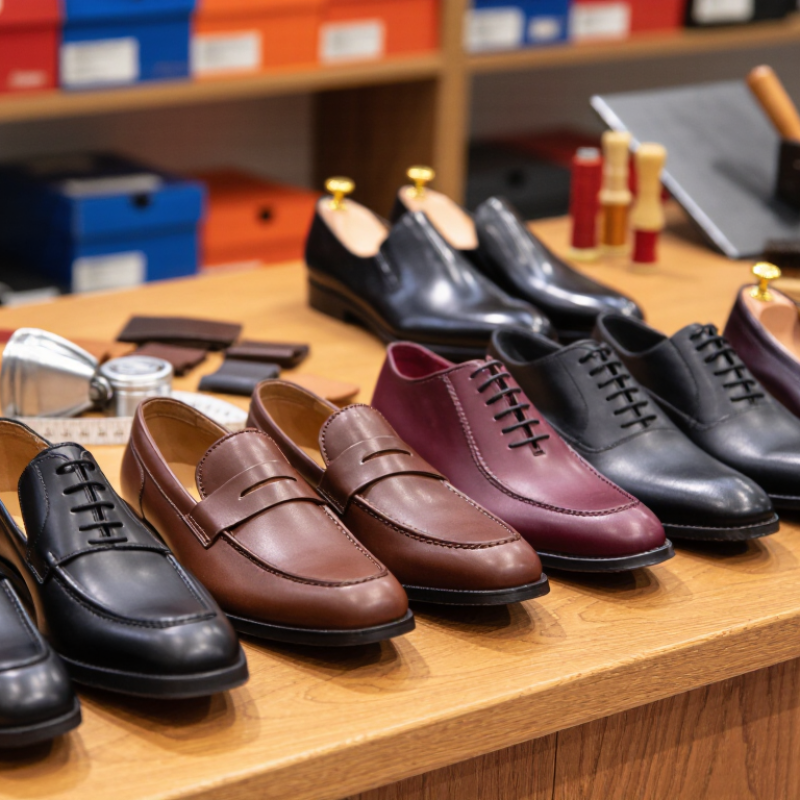
Understanding China's Boys' Leather Shoe Manufacturing Industry
What Are the China Top 10 Boys Leather Shoes Manufacturers?
Understanding China's Boys' Leather Shoe Manufacturing Industry
China’s boys’ leather shoe industry is part of a vast footwear supply network. The World Footwear Yearbook 2023 reports that China produced about 13.1 billion pairs of footwear in 2022, representing 54.6% of global output. This figure covers all footwear, not just children’s leather shoes. It shows manufacturing scale, but not the capabilities of any individual factory.
Production often involves several linked steps: leather selection, cutting, stitching, lasting, sole attachment, and final inspection. For children’s shoes, buyers should look closely at fit, toe-room, heel support, lining, and outsole flexibility. A neat sample is useful, but it cannot guarantee consistent quality across a full order. Factory audits and checks on production samples can reveal gaps that product photos miss. Sizing also deserves care; age labels alone may not match children’s actual foot measurements.
Tips: Ask for a size chart, material specifications, and samples from more than one size. Confirm how the factory checks stitching, bonding, and finished dimensions. One detail is easy to overlook: children outgrow shoes quickly, so comfort and fit matter more than decorative features.
Criteria for Ranking Leading Boys' Leather Shoe Manufacturers
Ranking China’s boys’ leather shoe manufacturers requires more than comparing catalog photos or quoted prices. A useful assessment starts with the shoe itself: leather consistency, neat stitching, smooth edges, secure sole bonding, and size accuracy across several pairs. Small details matter. Inspect a sample under bright light, bend it repeatedly, and check whether seams pull or the finish cracks. For children’s footwear, reviewers should also examine lining comfort, toe room, weight, and whether the size chart matches measured insoles. One attractive sample cannot prove consistent production.
Manufacturing evidence deserves equal weight. Buyers can compare documented inspection steps, defect records, material sourcing information, monthly capacity, and procedures for handling rejected goods. Ask whether the factory can reproduce an approved sample without changing leather thickness, color, or construction. Proof matters. Communication speed and clear technical answers are useful signals, but they should not outweigh physical checks. Export experience and relevant quality documents may support confidence when independently verified. A factory visit or third-party inspection can reveal storage conditions and workflows that brochures omit. Still, ranking has limits: a small workshop may offer careful workmanship, while a large plant may provide steadier volume. No single score captures both. Compare evidence with the buyer’s needs, and record unanswered questions before placing an order.
Criteria for Ranking Leading Boys' Leather Shoe Manufacturers
Proposed evaluation weights for comparing manufacturers—not company rankings or reported market statistics.
The weights total 100%. Assess each factor using verifiable evidence such as product specifications, audit records, capacity documentation, delivery history, and export records.
Profiles of 10 Top Boys' Leather Shoe Manufacturers in China
The following ten profiles highlight different capabilities found among Chinese boys’ leather shoe manufacturers; they are not a verified ranking.
Profile 1: a school-shoe workshop focused on reinforced toes and scuff-resistant finishes.
Profile 2: a comfort-led producer using padded collars and cushioned insoles.
Profile 3: a small-batch maker suited to trial orders.
Profile 4: a factory experienced in uniform styles and repeat sizing.
Each capability should be confirmed directly with the supplier.
Tips: Request a size run, material specifications, and an inspection sample. Check stitching around the toe and heel. Small details matter.
Profile 5: a maker offering several leather grades for different price points.
Profile 6: a producer with flexible sole options for indoor and outdoor use.
Profile 7: a workshop specializing in hand-finished details, though output may be slower.
Profile 8: a larger operation with documented quality checks.
Profile 9: a supplier able to adjust lasts for fit requirements.
Profile 10: a manufacturer offering coordinated production, packing, and export support.
Ask how each handles rejected pairs and production changes. A polished sample is useful, but it does not guarantee every pair will match. Dialogue can be imperfect; clarify specifications in writing.
Comparing Product Quality, Range, Capacity, and Certifications
When comparing China’s top boys’ leather shoe manufacturers, inspect construction, not just polished samples. Check leather thickness, lining contact, seam consistency, sole bonding, and flexibility across several sizes. Ask for test records on abrasion, color transfer, and repeated flexing. A strong sample matters. So does repeatability. APICCAPPS’s World Footwear Yearbook 2024 estimates that China produced about 54.6% of the world’s footwear in 2023. That scale shows industrial depth, but it does not prove that one factory can meet your quality requirements.
Range and capacity need separate checks. Some suppliers offer school shoes, dress styles, and casual designs, yet rely on shared production lines. Request a current style list, sample lead times, monthly output by category, and peak-season capacity. Match those figures against your order size and delivery calendar. A large stated capacity can be misleading if skilled stitching labor or leather supply becomes a bottleneck. Factory visits help, but production records and recent inspection results provide firmer evidence.
Certifications should be verified by scope, site, and validity date. ISO 9001 concerns quality management systems; it is not a product-safety certificate. Ask whether the certificate covers the actual manufacturing site and whether children’s footwear materials receive appropriate chemical and physical testing. Independent laboratory reports can clarify what was tested, when, and against which method. Paperwork can look complete. It may still leave gaps. Compare the documents with the exact leather, lining, sole, and styles you plan to buy.
How to Choose and Verify a Suitable Manufacturer
Choosing among China’s boys’ leather-shoe manufacturers takes more than comparing prices. The World Footwear Yearbook 2024 estimated global production at 22.4 billion pairs in 2023, with Asia accounting for about 88 percent. That scale makes capacity claims easy to hear—and important to verify. Ask each factory for its registered address, recent audit records, and a live walkthrough of cutting, stitching, lasting, and finishing. Compare claimed monthly output with visible production lines, staffing, and promised lead times. Ask for leather specifications, lining details, outsole-bonding records, and size-grading charts. Details matter.
Request a pre-production sample in several sizes, not just one display pair. Check seam spacing, edge finishing, heel support, and flex points; then inspect the shoes again after packaging. A polished sample can still flatter. Confirm that the factory—not an undisclosed subcontractor—will make the order, and put inspection criteria, defect limits, and delivery dates in writing. The ISO Survey tracks management-system certifications, but certification alone does not prove a shoe’s durability or consistent sizing. Ask for recent test reports tied to the actual materials and styles being quoted. If a supplier hesitates to share basic records, pause. It may be a false alarm, but verify before paying a deposit.