How to Choose the Best Hard Water Softener for Your Home?
Choosing the right hard water softener is essential for home comfort. Hard water can cause buildup in pipes, reduce appliance efficiency, and affect the quality of your laundry. With various options on the market, finding the best softener requires careful consideration.
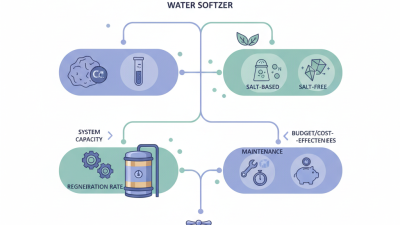
Consider your household's water usage and specific needs. Some softeners use salt, while others are salt-free. A salt-free option may appeal to those concerned about sodium intake. Installation can also vary. Complex systems may require professional help, while simpler ones can be managed by homeowners.
Budget is another vital factor. Hard water softeners come at different price points. Higher-priced units may offer advanced features. However, evaluate if these features align with your lifestyle. Sometimes, a basic model can suffice. Reflecting on your water usage and personal preferences can lead to a more satisfying choice.
Understanding Hard Water and Its Effects on Home Appliances
Hard water affects millions of households. It contains high levels of calcium and magnesium. These minerals can lead to significant issues in home appliances. Studies show that hard water can reduce appliance efficiency by up to 30%. This means higher energy costs and lower longevity for machines.
The buildup of limescale in pipes and heaters is a common problem. Over time, this can cause clogs and reduce water flow. Dishwashers and washing machines can suffer too. Consumers report decreased effectiveness of detergents when using hard water. This leads to the need for more cleaning products and increased spending.
Testing your water is essential. A simple test can reveal hardness levels. Most households should aim for water hardness below 7 grains per gallon. Despite knowing this, many overlook the importance of softening systems. Reflecting on the choices we make could improve our home’s efficiency. Choosing the right hard water softener helps mitigate these issues effectively.
Effects of Hard Water on Home Appliances
This chart illustrates the impact of hard water on various home appliances, rated on a scale from 1 to 10, where 10 indicates a high level of impact. This helps in understanding why a hard water softener may be necessary for maintaining your home appliances.
Types of Water Softeners: Which One is Right for You?
When selecting a water softener, it’s essential to understand the different types available.
Ion-exchange softeners are popular. They replace hard minerals with sodium ions. This system can be efficient for most households.
However, it can also lead to increased sodium levels in water, which might not be ideal for everyone.
Salt-free systems are another option. They don't remove minerals but rather condition water to prevent scaling.
These systems can be less effective in areas with extremely hard water.
Additionally, they often require less maintenance. Nevertheless, users may find themselves dealing with some mineral buildup over time.
Reverse osmosis systems can treat hard water effectively but are typically more complex.
They filter water and reduce impurities. These systems use a multi-stage process, which is great but can be overwhelming for some homeowners.
Each type has its pros and cons, and the right choice depends on your unique household needs and lifestyle. Be sure to weigh the options carefully.
Key Features to Consider When Choosing a Water Softener
Choosing the right water softener involves understanding essential features. Hard water can cause mineral buildup, leading to plumbing issues. According to a study by the Water Quality Association, over 85% of U.S. homes have hard water, highlighting the need for effective solutions.
When selecting a water softener, consider capacity. Smaller units may work for apartments, while larger households often need more extensive systems. A softener that handles 30,000 grains per cycle may suffice for a small family, but a home with multiple bathrooms and heavy water use could require a model capable of 80,000 grains.
Water efficiency is another important feature. Look for systems with metered regeneration, which saves salt and water. Some models can use nearly 50% less water compared to traditional systems. On the flip side, if a unit is overly efficient, it may not regenerate enough to handle peak demand. It's crucial to find a balance. Also, check for certifications. Products meeting industry standards ensure effective performance. However, not all manufacturers disclose their test results fully, leaving room for uncertainty.
Sizing Your Water Softener: How to Calculate the Right Capacity
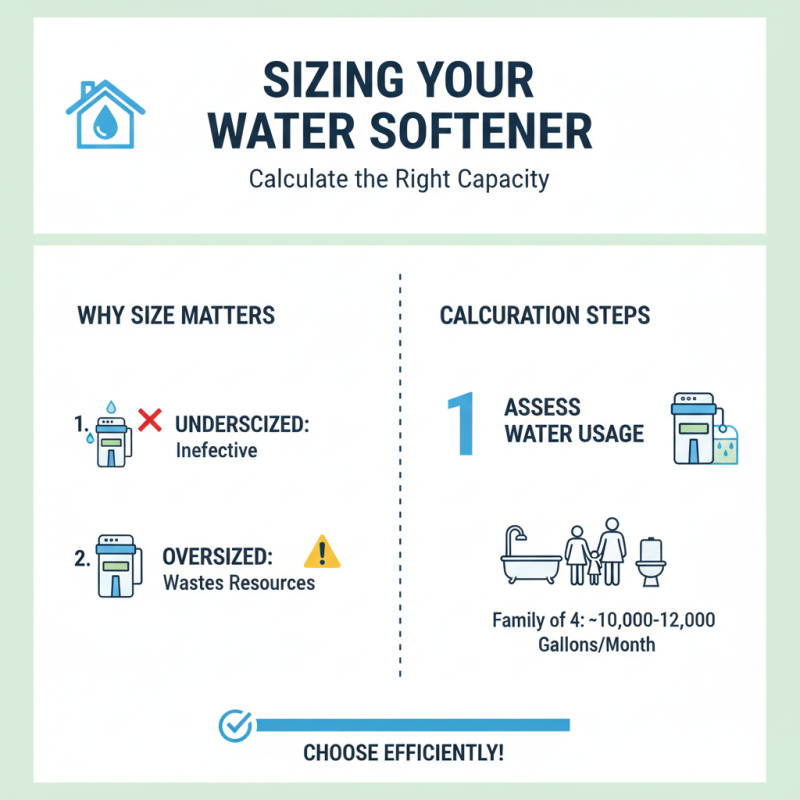
Choosing the right size for your water softener is crucial. An undersized unit will struggle to function effectively, while an oversized one may waste resources. To calculate the correct capacity, start by assessing your household's water usage. On average, a family of four uses about 10,000 to 12,000 gallons of water each month.
The formula for sizing is relatively simple. Determine the hardness of your water in grains per gallon (gpg). Many households have water hardness between 10 to 20 gpg. Multiply your daily water consumption by the hardness level, and then factor in a safety margin of about 25%. For example, a family using 400 gallons daily at 15 gpg requires a softener capable of handling approximately 15,000 grains.
It’s also important to consider peak usage times. For instance, if everyone showers in the morning, your system might have trouble keeping up. Take into account how many people live in your home and their usage patterns. Many bypass important details here, risking inefficient performance from their softener. Regularly reassessing these factors can ensure your softener meets your household's evolving needs.
Installation and Maintenance Tips for Optimal Performance
When installing a hard water softener, it’s crucial to consider water usage patterns in your home. Identify where the water enters your house. Choose a location close to this point for installation. Ensure there’s enough space around the unit for maintenance. Tight spots can lead to future headaches. Keep in mind that every installation is unique; not all setups are straightforward. Sometimes, you might need to adjust plumbing.
Regular maintenance is key. Check the salt levels every month. Too little salt can hinder performance. Additionally, clean the brine tank at least once a year. This helps prevent buildup that can affect efficiency. However, over-cleaning can also create issues. Keep an eye out for unusual noises or leaks. These may indicate a need for repair. It’s important to strike a balance between usage and care.
Don’t overlook the importance of water testing. Test your water quality at least once a year. Adjust settings based on the results. Ignoring this might lead to inefficient softening. Always refer to the user manual for specific guidelines related to your setup. While these steps seem simple, small oversights can lead to big problems down the line.