How to Choose the Best Sleeping Bag Blanket?
Choosing the best Sleeping Bag Blanket begins with understanding how, where, and why you sleep outdoors. A calm summer campsite needs different protection than a windy mountain shelter. Your body shape, sleeping position, and cold sensitivity matter too. Small details can change the entire night.
John Gookin, a longtime NOLS instructor and outdoor educator, offers a useful principle: “Insulation works only when it stays dry and lofted.” This idea should guide every Sleeping Bag Blanket decision. A blanket filled with down may feel wonderfully light, but moisture can reduce its warmth. Synthetic insulation often handles damp weather better, although it may weigh more. There is no perfect choice.
Check the temperature rating carefully. A rating is not a promise for every sleeper. It depends on clothing, a sleeping pad, wind exposure, and personal comfort. Look for a blanket with secure foot coverage, adjustable snaps, and enough width for natural movement. A narrow design can trap warmth, but it may feel restrictive. A wide design feels comfortable, yet cold air can enter around the edges.
Touch the fabric before buying, if possible. Notice the zipper quality. Imagine packing it into a wet vehicle or carrying it through a long trail. These practical moments reveal more than attractive product photos. Some recommendations will still be imperfect. Your first choice may feel too warm, too bulky, or surprisingly slippery. Treat that experience as useful evidence, then refine your next Sleeping Bag Blanket selection with care.
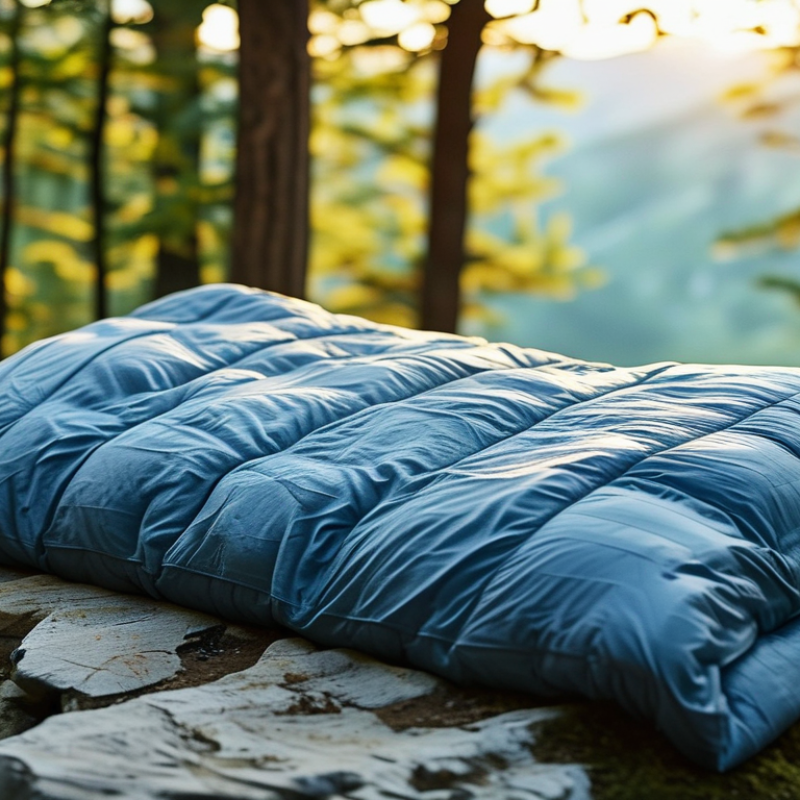
Define Sleeping Conditions with EN ISO 23537 Comfort and Limit Ratings
How to Choose the Best Sleeping Bag Blanket?
A sleeping bag blanket should match your real sleeping conditions, not just a summer trip. EN ISO 23537 provides tested temperature ratings for sleeping bags. The Comfort rating describes a relaxed sleeper who feels neither cold nor overheated. The Limit rating describes a standard adult curled slightly to reduce heat loss. These values are not promises. They are useful comparison points from controlled testing.
Choose the Comfort rating when you sleep lightly, feel cold easily, or wear minimal clothing. The Limit rating may suit experienced sleepers who tolerate cooler nights. A blanket-style bag often leaves more room around the shoulders. That comfort can also create small gaps where warm air escapes. Windy campsites make this problem worse. A fitted hood and secure foot area still matter.
Your sleeping pad affects warmth more than many buyers expect. Cold ground can drain heat through a thin pad, even inside a well-rated bag. Check the forecast, campsite elevation, humidity, and expected wind. Add dry base layers, but avoid tight clothing that restricts insulation. I once judged warmth from the bag alone and ignored the damp ground. That was a poor assumption. Ratings cannot measure every body shape, sleeping habit, or wet campsite. Choose a rating with a sensible margin, especially when temperatures may fall unexpectedly.
Match Blanket Width, Draft Control, and ASTM F3340 Pad R-Value
Choosing a sleeping bag blanket starts with the sleeping pad, not the advertised comfort temperature. ASTM F3340/F3340M-18 measures camping-mattress thermal resistance under controlled laboratory conditions. Its R-value compares insulation performance, but it does not guarantee personal comfort. An R 4 pad provides roughly twice the tested resistance of an R 2 pad. That difference matters when cold ground drains heat from your back. ASTM does not assign one universal R-value for every air temperature. Consider weather, clothing, metabolism, and moisture together.
Match blanket width to your pad and sleeping position. For a 55-centimetre pad, a 120-centimetre blanket offers substantial side coverage. A restless sleeper may need more. Aim for fabric reaching below the shoulders and closing near the hips. Open edges create a cold channel. A practical field guideline is 15–25 centimetres of overlap on each side, though it is not an ASTM requirement. Measure the blanket with your thickest sleep layers on. Product dimensions can mislead.
Draft control often matters more than extra fill. Look for a footbox, snaps, or a tuckable lower edge. Seal the shoulder area without compressing insulation. Compression reduces loft. In colder conditions, many experienced testers choose pads around R 4 or higher, then verify comfort outdoors. That approach is useful, not universal. I would recheck the fit at home, because one loose corner can expose the pad. ASTM values improve comparison; they cannot replace a cautious overnight test.
Evaluate Weight, Pack Volume, and Warmth-to-Weight Performance
How to Choose the Best Sleeping Bag Blanket?
Weight matters most when every kilometer adds fatigue. A sleeping bag blanket should feel light in your pack, not merely on a product scale. I usually weigh the blanket, sack, and straps together. That combined number reflects the real trail load.
Pack volume deserves equal attention. A bulky blanket can consume valuable space beside food, water, and rain gear. Check its compressed size before buying. A small pack does not always mean better insulation. Over-compression may also reduce loft, especially with down-filled insulation. I once chose a lighter blanket that filled half my pack. It saved grams, but it created an annoying packing problem.
Warmth-to-weight performance is the practical measure. Compare the comfort temperature with the total packed weight. A blanket offering reliable warmth at 700 grams may outperform a colder 500-gram option. Read standardized temperature testing when available, but treat ratings as guidance. Sleep position, clothing, wind, and ground insulation change the result. A warm sleeping pad can improve the whole system. Test the blanket indoors on a cool night first. Too warm is inconvenient; too cold can ruin sleep. My own judgment has been wrong before, particularly when I trusted impressive numbers without checking the shape and draft control. A good choice balances measured warmth, compact storage, and honest personal comfort.
How to Choose the Best Sleeping Bag Blanket?
Compare representative sleeping bag blanket profiles by total weight, packed volume, and estimated warmth-to-weight performance. Lower weight and volume improve portability, while a higher CLO/kg value indicates more insulation efficiency for each kilogram carried.
The figures represent realistic, non-brand reference profiles based on common sleeping bag and insulated blanket specifications. CLO/kg is an approximate insulation-efficiency indicator rather than a universal comfort-rating standard.
Check Shell Durability, Water Resistance, and Responsible Material Standards
How to Choose the Best Sleeping Bag Blanket?
A sleeping bag blanket often meets damp grass before your body feels cold. Choose a tightly woven shell that resists abrasion from tent floors, zippers, and rough ground. Nylon and polyester can both work, but fabric density, seam quality, and ripstop construction matter more than fiber names. Check the denier, though higher denier is not automatically better. A heavier shell may feel noisy and less packable. Inspect stitching around corners and foot areas. Weak seams fail first.
Water resistance needs evidence, not vague words like “weatherproof.” ISO 811 hydrostatic-pressure testing measures how much water pressure fabric withstands before leakage. Ask whether the rating applies to the finished shell, not untreated fabric. A durable water-repellent finish can shed drizzle, but it cannot replace a waterproof shelter. This distinction is easy to miss.
Material responsibility deserves equal attention. Textile Exchange’s Materials Market Report 2024 reports global fiber production reached 124 million tonnes in 2023. It projects production could approach 160 million tonnes by 2030. Look for credible chain-of-custody standards, such as GRS for recycled fibers, RDS for down, and RWS for wool. Certification improves traceability, but it does not make a product impact-free. Read the certificate scope. I sometimes overvalue recycled percentages. A durable shell, repairable stitching, and careful washing may matter more over years.