How to Choose the Best Hard Water Treatment System for Your Home?
Hard water can be a significant challenge for homeowners. The minerals in hard water can cause scale buildup, affecting plumbing and appliances. According to the Water Quality Association, approximately 85% of U.S. households face hard water issues. Choosing the right hard water treatment system is vital for ensuring the longevity of your home's plumbing.
Expert opinions shed light on this topic. Dr. Michael S. Cramer, a water quality expert, emphasizes, "Selecting an appropriate hard water treatment system can literally save homeowners thousands in repair costs." His experience highlights the importance of understanding local water conditions.
When evaluating options, consider factors like water hardness, system efficiency, and maintenance requirements. Each home has unique needs, making one size not fit all. Many consumers might overlook the long-term savings that a quality treatment system can offer. It's clear that careful selection can lead to both better water quality and financial benefits.
Understanding Hard Water: Definition and Sources
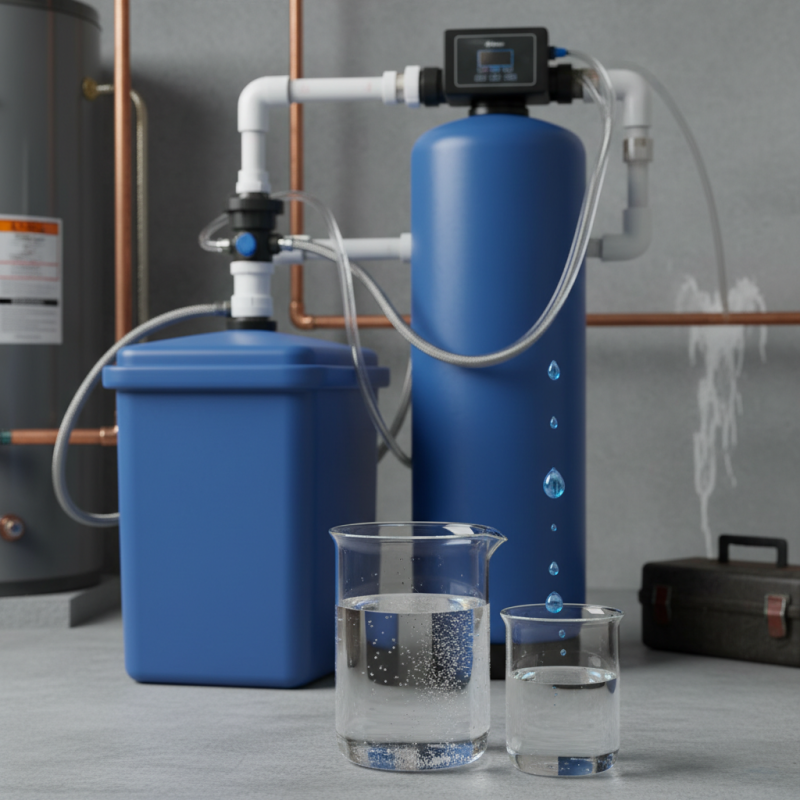
Hard water is water that contains high levels of minerals. Typically, calcium and magnesium are the main culprits. Over 85% of the U.S. has hard water to some extent. This can lead to several issues in your home. Mineral buildup can affect plumbing, appliances, and even your skin.
Sources of hard water vary widely. Groundwater is a primary source. As water travels through soil and rocks, it dissolves minerals. Urban areas might experience higher hardness levels due to old pipes. Reports indicate that over 60 million Americans face household challenges due to hard water. This includes soap scum, scale buildup, and even dry skin from bathing.
Households often overlook the consequences of hard water. Many don't realize these minerals can damage appliances like dishwashers. It can also cause laundry to feel stiff and dull. Awareness is the first step in addressing hard water issues. Monitoring local water quality reports can provide insights into your water hardness level. Each situation is unique, and understanding your water source is crucial for effective treatment solutions.
Identifying the Symptoms of Hard Water in Your Home
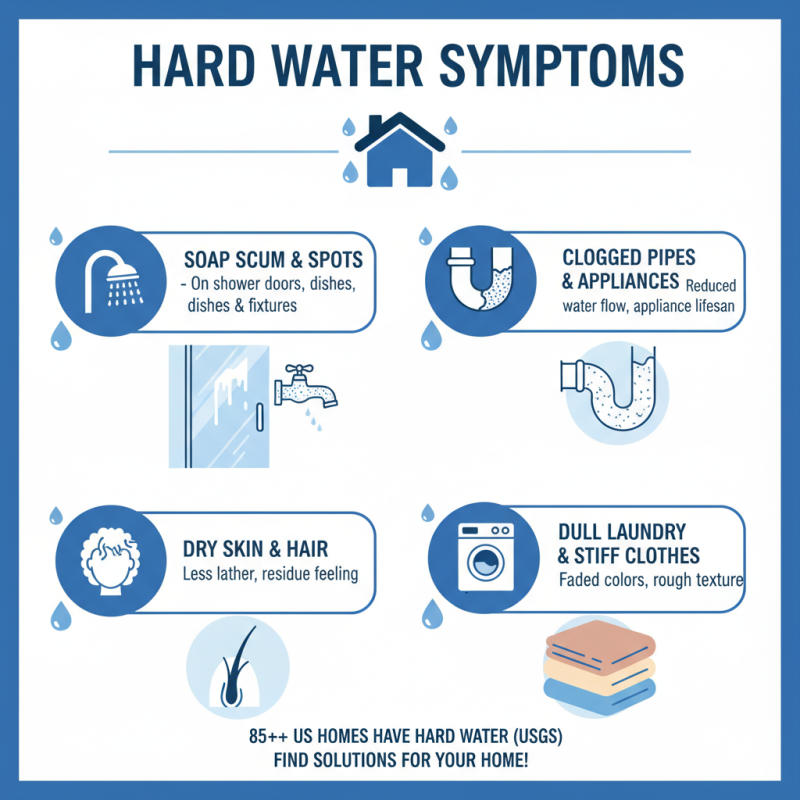
Identifying the symptoms of hard water in your home is crucial for choosing an effective treatment system. Hard water, which contains high levels of calcium and magnesium, can lead to various household issues. According to the U.S. Geological Survey, over 85% of water in the United States is considered hard. This is a significant concern for homeowners.
One clear sign of hard water is the presence of limescale. This white, chalky buildup often appears on faucets and showerheads, making them less attractive. Additionally, hard water can decrease the effectiveness of soaps and detergents, leaving clothes and dishes feeling grimy. A report by the Water Quality Association found that households with hard water may need 20-30% more soap to achieve the desired clean. It’s frustrating, especially when you expect sparkling dishes but end up with cloudy results.
Another indicator is dry skin and hair. If you notice your skin feels tight or your hair looks dull, hard water could be the culprit. The minerals in hard water may strip moisture, causing irritation. Research indicates that many people underestimate the impact of hard water on personal care. Considering these symptoms can save you time and money by alerting you to potential treatment needs.
Evaluating Different Types of Hard Water Treatment Systems
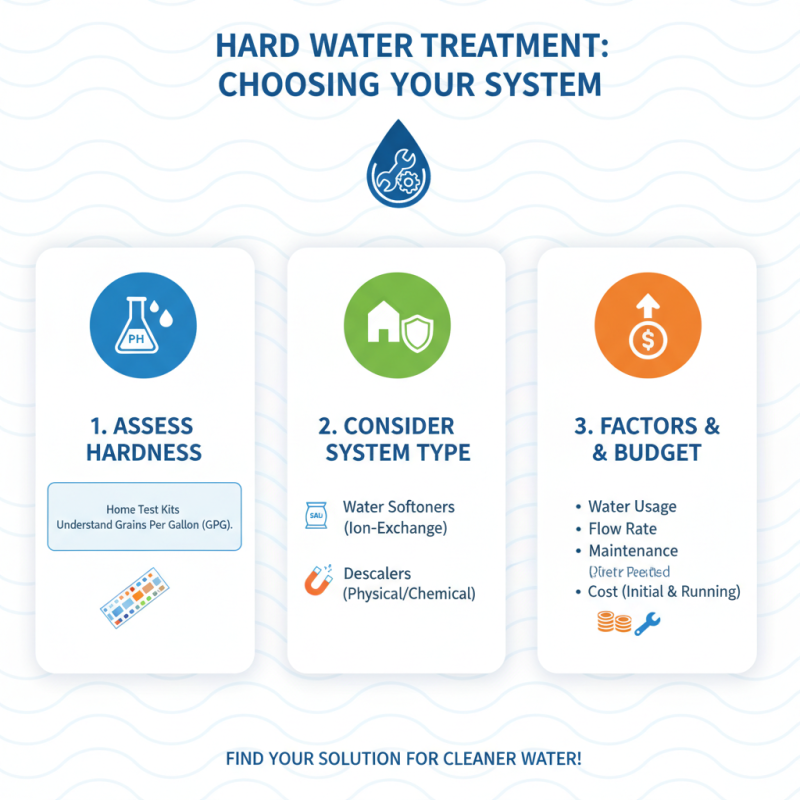
When evaluating hard water treatment systems, it's crucial to understand their different types. These systems can be broadly categorized into water softeners, reverse osmosis units, and descaling devices. Water softeners replace calcium and magnesium ions with sodium ions, effectively reducing hardness. According to the Water Quality Association, nearly 85% of homes in the U.S. face hard water issues, impacting plumbing and appliances.
Reverse osmosis systems work by pushing water through a semipermeable membrane, filtering out contaminants along with hardness minerals. This method can remove up to 95% of total dissolved solids, but it often requires regular filter replacements. Descaling devices, on the other hand, change the structure of hard minerals to reduce scaling without removing them. Their efficacy can vary widely, and they may not suit every household.
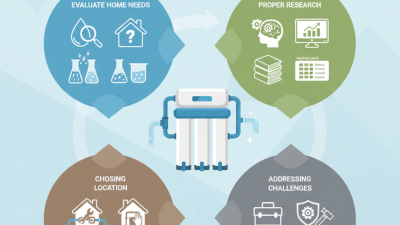
Choosing the right system also involves evaluating your household needs. Are your water usage levels high? Installing a larger capacity unit could be necessary. Also, consider the initial cost versus long-term savings. You might get tempted to go for the cheapest option upfront but think about the potential maintenance costs. Sometimes, these “savings” can lead to more significant issues down the line, such as inefficient operation or a shorter lifespan for appliances.
How to Choose the Best Hard Water Treatment System for Your Home?
| System Type |
Efficiency |
Cost |
Maintenance Frequency |
Lifespan |
| Water Softener |
High |
$$$ |
Monthly |
10-15 years |
| Reverse Osmosis |
Very High |
$$$$ |
Quarterly |
5-10 years |
| Salt-Free Conditioner |
Moderate |
$$ |
Annual |
5-10 years |
| Magnetic Descaler |
Low |
$ |
None |
Indefinite |
Factors to Consider When Choosing a Hard Water Treatment System
Choosing the right hard water treatment system requires careful consideration. One of the main factors to think about is the hardness level of your water. You can test your water at home with simple kits. This helps you understand how much treatment is needed.
Another important aspect is the installation process. Some systems are easy to install, while others may require professional help. Do you have the skills to do it yourself? If not, consider the costs involved. Think about maintenance, too. Some systems need more regular upkeep than others.
Tips: Look for systems that are efficient in water and salt usage. This can save you money over time. Also, check for certifications that ensure safety and quality. This makes a difference in your system's performance.
Lastly, consider the size of your household. A small family may not need a large system. But, bigger families will require more capacity. Reflection on your needs is crucial. Choose wisely to avoid future disappointments.
Budgeting for Installation and Maintenance of Treatment Systems
When budgeting for a hard water treatment system, it’s essential to consider installation and ongoing maintenance. Installation costs can vary significantly. Location, type of system, and local regulations all play a role. Typically, you might spend anywhere from a few hundred to several thousand dollars. It can feel overwhelming, especially if you're working with a tight budget.
Maintenance expenses are another critical factor. Many systems require regular upkeep to function correctly. This could include filter replacements or repairs. You might think you’re saving money by opting for a cheaper system. However, the ongoing costs can add up quickly. Frequent repairs or replacements might outweigh any initial savings.
Consider also the water quality in your area. If it has high mineral content, more advanced systems may be necessary. You could face higher initial costs. But, investing wisely often leads to long-term savings. Assess your usage and needs. Reflect on whether a more expensive setup is worth it for your situation. It's a balancing act between upfront costs and future benefits.
Cost Comparison of Hard Water Treatment Systems
This chart illustrates the average installation costs for various hard water treatment systems. Choosing the right system involves evaluating initial costs alongside maintenance and operational expenses for long-term affordability.