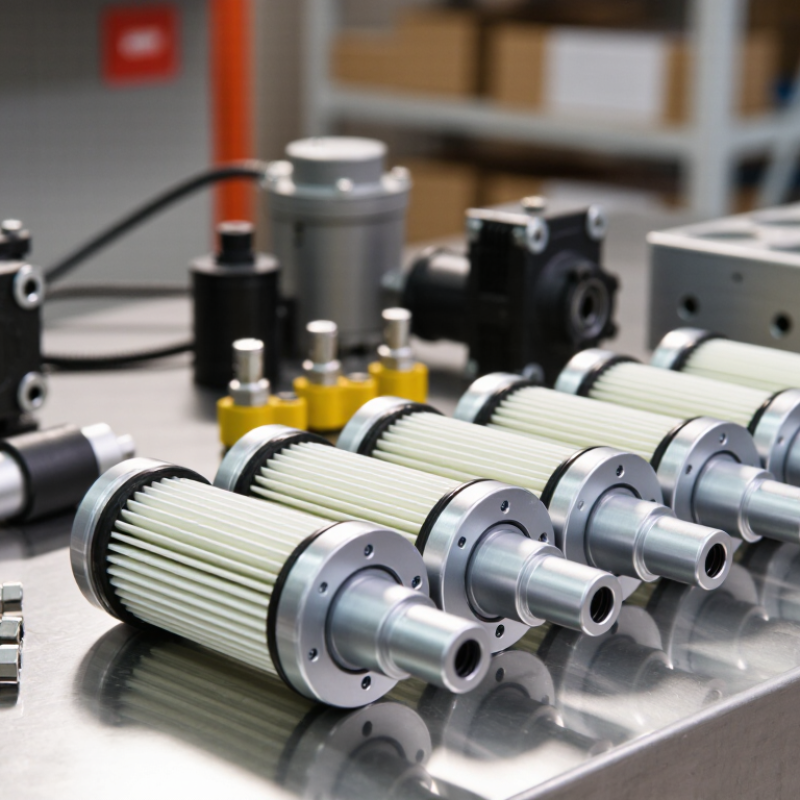
China Top 10 Hydraulic Oil Filter Element Suppliers?

Choosing the China Top 10 Hydraulic Oil Filter Element Suppliers requires more than comparing factory prices. Hydraulic systems depend on clean oil, stable pressure, and consistent filtration. A small defect in a filter element can damage pumps, valves, and precision actuators. This makes supplier evaluation a technical decision, not a simple purchasing exercise.

This guide examines suppliers through practical and verifiable criteria. These include manufacturing experience, filter media quality, micron ratings, pressure resistance, sealing materials, and production capacity. It also considers ISO-based quality systems, laboratory testing, traceability, and customer support. Real-world details matter. For example, a reliable supplier should explain how each element handles cold starts, vibration, and contaminated hydraulic oil. Clear test reports are valuable. Vague promises are not.

The list may include manufacturers serving construction equipment, industrial machinery, agriculture, energy, and mobile hydraulics. Product compatibility remains essential, because a visually similar element may have different bypass settings or dimensions. Buyers should confirm model numbers, flow rates, operating temperatures, and installation requirements before ordering.

No ranking is permanently correct. Supplier performance can change with materials, management, and quality controls. This is worth remembering. Our evaluation therefore aims to provide a balanced starting point rather than an absolute verdict. Readers should request current samples, inspect documentation, and test products under suitable operating conditions. A thoughtful comparison can reduce maintenance costs, prevent unexpected downtime, and support safer hydraulic system performance.

China Top 10 Hydraulic Oil Filter Element Suppliers?

Hydraulic Oil Filter Elements: ISO 16889 Ratings and Industry Standards

China Top 10 Hydraulic Oil Filter Element Suppliers?

When comparing Chinese hydraulic oil filter element suppliers, ISO 16889 should guide the technical review. This standard uses a multi-pass test to measure particle removal under controlled conditions. Its beta ratio shows how many particles enter compared with those leaving. For example, β5(c) 1000 means roughly one particle passes for every 1000 entering at the stated size. It is a useful indicator, but not a complete performance promise.

A reliable supplier should provide test conditions, fluid viscosity, flow rate, pressure drop, and contaminant details. Ask whether the rating uses the current ISO 16889 method, not an unclear “absolute rating.” Other standards also matter. ISO 2941 evaluates collapse and burst resistance, while ISO 2943 examines material compatibility. ISO 3968 helps assess pressure-drop behavior.

A filter that performs well in a laboratory may struggle with cold oil, water contamination, or unstable flow. That gap deserves attention.

Tips: Request a traceable test report and confirm the element’s beta rating at your actual flow rate. Check seal materials against the hydraulic fluid. Inspect pleat spacing and end-cap bonding, not only the efficiency number. A lower pressure drop can reduce energy loss, but it may also reflect weaker media. This is where supplier claims need careful questioning. Filters are small components, yet one overlooked specification can damage a large hydraulic system.

How China’s Top 10 Suppliers Compare by Beta Ratio, Micron Rating, and Flow

China’s top ten hydraulic oil filter element suppliers differ sharply in beta ratio, micron rating, and flow capacity. A beta ratio of 2 means limited separation, while 1,000 indicates stronger particle capture at the stated micron size. Buyers should check the test standard, not only the printed number.

Across current supplier comparisons, nominal ratings often range from 10 to 25 microns. More demanding hydraulic systems may require a verified absolute rating near 5 microns. Flow claims commonly span 20 to 300 liters per minute, depending on media area, oil viscosity, and pressure loss. Higher flow is not automatically better. A compact element may pass oil quickly but lose efficiency as contamination builds.

Ask each supplier for laboratory data, pressure-drop curves, collapse pressure, and material specifications. Confirm whether the beta ratio applies to new or loaded elements. Field experience shows that this detail changes purchasing decisions. Some suppliers provide clear test reports. Others offer attractive figures without enough operating context. That gap deserves caution.

A practical comparison should test identical elements under the same oil temperature and contamination level. Record initial pressure loss, terminal pressure, and particle counts. Small differences matter. One overlooked issue is seal compatibility. Nitrile, fluorocarbon, and polyurethane seals can behave differently in heat and synthetic fluids. The ranking may change after real-world testing, so a spreadsheet alone cannot represent every supplier’s performance.

Supplier Profiles: Product Range, Materials, Certifications, and Market Coverage

China’s top ten hydraulic oil filter element suppliers differ in range, material control, and export experience. Most offer return-line, suction, pressure-line, and pilot-system elements. Common media include glass fiber, cellulose, stainless steel mesh, and wire-supported synthetic layers. Experienced suppliers can match dimensions, filtration ratings, collapse pressure, and seal materials to specific equipment.

Supplier profiles should show more than a product catalogue. Check whether factories provide ISO 9001 certification, batch traceability, material reports, and documented inspection procedures. Some suppliers serve construction, agriculture, mining, marine, and industrial markets. Others focus on replacement elements for global distributors. Export coverage may include Europe, Southeast Asia, North America, and the Middle East, but coverage claims need verification. A clear datasheet matters more than a polished website.

Tips: Request samples, test reports, and cross-reference details before placing a large order. Confirm micron ratings under the correct test standard. Ask how suppliers control fiber shedding, adhesive quality, and end-cap alignment. Real-world experience shows that two elements with similar dimensions may perform very differently. No supplier is perfect. Even strong manufacturers can have uneven communication or delayed custom tooling. That weakness should be discussed early, not hidden behind certification documents.

Evaluating Filter Life Through ISO 4406 Cleanliness Codes and Pressure Loss

When comparing China’s hydraulic oil filter element suppliers, filter life should be judged beyond catalog claims. ISO 4406 cleanliness codes show particle levels above 4, 6, and 14 microns. A reading of 18/16/13, for example, indicates cleaner oil than 21/19/16. Track these codes before installation and during operation.

Pressure loss adds practical evidence. Install gauges before and after the element, then record the differential pressure at the same oil temperature and flow rate. A new element may show low resistance, while a loaded element creates a clear pressure rise. If cleanliness improves but pressure loss increases quickly, the element may be efficient yet poorly matched to the system. That matters.

Tips: Test with clean sampling bottles. Keep sampling points consistent. Check viscosity changes. Replace the element before bypass activation, not after. Record operating hours and pressure readings. Small records help.

Field evaluation is rarely perfect. Temperature, water contamination, and unstable flow can distort results. I would not compare suppliers using one laboratory number alone. Repeated tests under similar conditions provide stronger evidence. A reliable supplier should share test methods, pressure-drop curves, filtration ratings, and material details. Ask whether the reported performance applies to your actual flow rate. Marketing data can look precise. Reality is less tidy.

China Top 10 Hydraulic Oil Filter Element Suppliers: ISO 4406 Cleanliness vs. Pressure Loss

Anonymous benchmark positions using ISO 4406 particle codes and initial pressure loss measured at 10 L/min.

Lower ISO 4406 codes indicate cleaner hydraulic oil, while lower pressure loss indicates better flow efficiency. The ISO 4406 values represent particles ≥4, ≥6, and ≥14 μm(c), respectively. Actual filter life also depends on contaminant loading, fluid viscosity, operating temperature, flow rate, and bypass-valve settings.

A Buyer’s Checklist for China Hydraulic Filter Element Suppliers

When comparing China’s top hydraulic oil filter element suppliers, start with the application, not the catalog. Record the filter’s outer diameter, length, thread, seal material, flow direction, and operating pressure. Ask for the filter medium, nominal or absolute micron rating, and beta ratio at a stated test condition. Numbers without test conditions can mislead. Request a dimensional drawing and one production sample before approving a large order. A sample may expose a weak gasket or an incorrect bypass setting.

A dependable supplier should provide batch traceability, inspection records, and a clear conformity statement. Check whether testing covers collapse pressure, bubble point, cleanliness, and flow resistance. For high-cycle equipment, ask how pleat spacing remains stable after repeated pressure pulses. I prefer suppliers that explain failures openly, even when the answer is inconvenient. A polished certificate is not proof of consistent production. Review recent reports, not only old documents. Can they send photographs of inspection equipment and packaging?

Evaluate communication during a technical exchange. A capable engineer should clarify unclear specifications instead of guessing. Confirm minimum order quantities, lead time, replacement policy, packaging moisture protection, and labeling. For a trial order, compare actual dimensions, weight, media appearance, and pressure-drop data against the approved sample. Keep acceptance criteria written. One overlooked detail matters. I have seen buyers focus on price and later absorb stoppages, freight, and emergency replacements. The lowest quote may be the least predictable choice.

China Top 10 Hydraulic Oil Filter Element Suppliers? - A Buyer’s Checklist for China Hydraulic Filter Element Suppliers
An anonymized comparison of common Chinese hydraulic filter-element supplier profiles. Specifications represent standard market offerings and should be verified through drawings, samples, test reports, and commercial quotations before purchase.
Rank Supplier Profile Typical Product Scope Filter Media Options Common Filtration Ratings Typical Operating Pressure Efficiency & Cleanliness Evidence Materials & Sealing Quality System & Documents Typical MOQ Typical Lead Time Best Buyer Fit
1 Profile 01
★★★★★
Replacement elements for return-line, pressure-line, suction-line, and offline filtration systems MicroglassCelluloseStainless mesh 3, 5, 10, 20, and 25 µm nominal or absolute, depending on media Up to approximately 210–420 bar for high-pressure designs Beta ratio data available for selected products; ISO 16889 multipass testing should be requested Stainless steel support tubes; carbon-steel or stainless end caps; NBR, FKM, or EPDM seals ISO 9001-type quality system; dimensional drawings, material certificates, and inspection reports commonly available 10–50 pieces for standard models; custom tooling may require more 7–20 working days for standard items; 20–45 days for custom elements Industrial equipment manufacturers and distributors requiring broad model coverage
2 Profile 02
★★★★★
High-pressure hydraulic elements for mobile machinery, injection molding, and industrial power units Glass fiberWire meshStainless fiber 5–20 µm commonly offered; finer grades available for pilot and servo circuits Approximately 250–350 bar, subject to element geometry and support design Pressure-drop curves and collapse-pressure testing should be included in the technical file Aluminum or steel components; NBR standard, FKM for higher-temperature or chemical resistance Batch traceability, inspection records, and product drawings typically available on request 20–100 pieces depending on part number 10–25 working days OEM buyers needing pressure-rated replacement elements
3 Profile 03
★★★★☆
Return-line and tank-top filter elements for standard hydraulic power packs Pleated celluloseMicroglass 10 and 25 µm are common; 3–6 µm options may be available in microglass Usually up to 10–25 bar on return-line applications Particle-count and filtration-efficiency data may be available by batch or product series Galvanized or stainless support structures; standard NBR sealing Basic certificate of conformity, dimensional inspection, and raw-material records 50–200 pieces for regular models 7–18 working days Cost-sensitive maintenance distributors and general industrial users
4 Profile 04
★★★★☆
Strainers and suction-line filter elements for pumps and hydraulic reservoirs Stainless meshPerforated metalWire cloth 25–250 µm, with coarse filtration typically selected for suction protection Generally low-pressure service; final rating depends on housing and flow conditions Mesh opening, wire diameter, and open-area data should be confirmed on the drawing 304 or 316 stainless steel for corrosive environments; welded or bonded construction Material certificates and mesh inspection reports commonly available 25–100 pieces 10–25 working days Pump manufacturers and users requiring washable or reusable strainers
5 Profile 05
★★★★☆
Return and pressure filter replacements for construction and agricultural machinery MicroglassCelluloseComposite media 5, 10, and 20 µm; absolute ratings must be confirmed by test method Approximately 100–315 bar depending on the application Beta ratio, dirt-holding capacity, and initial pressure-drop data may be supplied for selected models Steel end caps and support tubes; NBR standard, FKM optional ISO 9001-type procedures, first-article inspection, and packing photos often available 20–100 pieces 12–30 working days Aftermarket importers needing private-label-compatible dimensions without brand display
6 Profile 06
★★★★☆
Hydraulic filter elements for steel mills, presses, machine tools, and factory automation High-strength microglassStainless mesh 3–10 µm for contamination-sensitive circuits; 20 µm for general service Up to approximately 250–420 bar for suitable pressure elements ISO 16889 multipass results should be requested together with collapse and burst data Stainless or coated steel construction; FKM available for elevated-temperature fluids Technical data sheets, pressure-drop curves, and batch identification are commonly requested 10–50 pieces 15–35 working days Industrial users with strict cleanliness and reliability requirements
7 Profile 07
★★★☆☆
Standard-size replacement elements for hydraulic power units and maintenance programs CelluloseGlass fiber 10–25 µm for general hydraulic oil filtration Usually 10–160 bar, depending on return-line or pressure-line use Basic efficiency information may be provided; independent validation is recommended Carbon-steel supports and NBR seals are typical; other materials by request Certificate of conformity and basic dimensional inspection commonly available 50–300 pieces 7–20 working days Small and medium buyers prioritizing price and standard availability
8 Profile 08
★★★☆☆
Custom-dimension filter elements for obsolete, imported, or discontinued housings MicroglassCelluloseMesh Customer-specified ratings from approximately 5–100 µm Designed to match the original element’s pressure and flow requirements Prototype testing, dimensional reports, and pressure-drop verification should be part of approval Material selection based on fluid compatibility; NBR and FKM commonly available 2D drawings, samples, inspection plans, and change-control records should be requested 5–30 pieces for prototypes; 30–100 pieces for repeat orders 15–40 working days Engineering companies and buyers replacing hard-to-source legacy elements
9 Profile 09
★★★☆☆
High-flow elements for lubrication systems, turbine auxiliaries, and offline oil cleaners MicroglassSynthetic fiber 5–20 µm; high-flow designs require confirmation of rated flow and pressure drop Often 10–100 bar in offline or lubrication applications Flow-versus-pressure-drop curves and dirt-holding capacity are key approval documents Steel or stainless supports; seal material selected according to oil temperature and chemistry Performance test reports, material declarations, and lot traceability may be available 10–50 pieces 15–30 working days Buyers balancing high flow, low pressure drop, and contamination control
10 Profile 10
★★★☆☆
Small-batch and export-oriented supplier profile for general replacement applications CelluloseMicroglassMesh 10–25 µm is common; special ratings subject to material availability Application-specific; commonly used in low- to medium-pressure circuits Sample approval and buyer-specified inspection plans are recommended before mass production Standard steel construction with NBR seals; FKM and stainless options may be quoted Commercial invoice, packing list, certificate of origin, and certificate of conformity can typically be requested 10–100 pieces 10–25 working days plus international transit Trial orders, regional distributors, and buyers testing new supply sources

Buyer checklist: confirm fluid type, viscosity, operating temperature, rated flow, filtration rating method, pressure-drop limit, collapse pressure, seal compatibility, dimensions, end-cap configuration, packaging, traceability, sample approval, and applicable import documentation before placing a production order.