Choosing a Range Exhaust in 2026 means balancing capture performance, kitchen layout, noise, and installation limits. A powerful-looking hood is not automatically the right one. Duct route matters.
Grand View Research’s Range Hood Market Size, Share & Trends Analysis Report tracks product and market segments, offering useful context for comparing hood styles. It does not rank models by real-world cooking performance. For measurable specifications, the Home Ventilating Institute’s certified-products directory lists tested airflow and sound ratings for participating ventilation equipment. These details help readers compare claims more carefully, though installation and cooking habits still affect results.
This guide examines the main options: wall-mounted, under-cabinet, island, insert, and downdraft hoods, alongside ducted and recirculating configurations. Each has trade-offs. A wall hood may suit a range against a wall, while an island hood must capture rising fumes from several directions. A recirculating model can simplify installation, but it returns filtered air to the room rather than exhausting it outdoors. That distinction is easy to overlook.
We will compare how each type fits different kitchens, what specifications deserve attention, and where compromises appear. Airflow numbers alone can mislead. A quiet hood that gets used may prove more practical than a louder, stronger unit that stays switched off. Still, there is no universal winner; cabinet depth, ductwork, and cooking style change the answer. That is worth questioning.
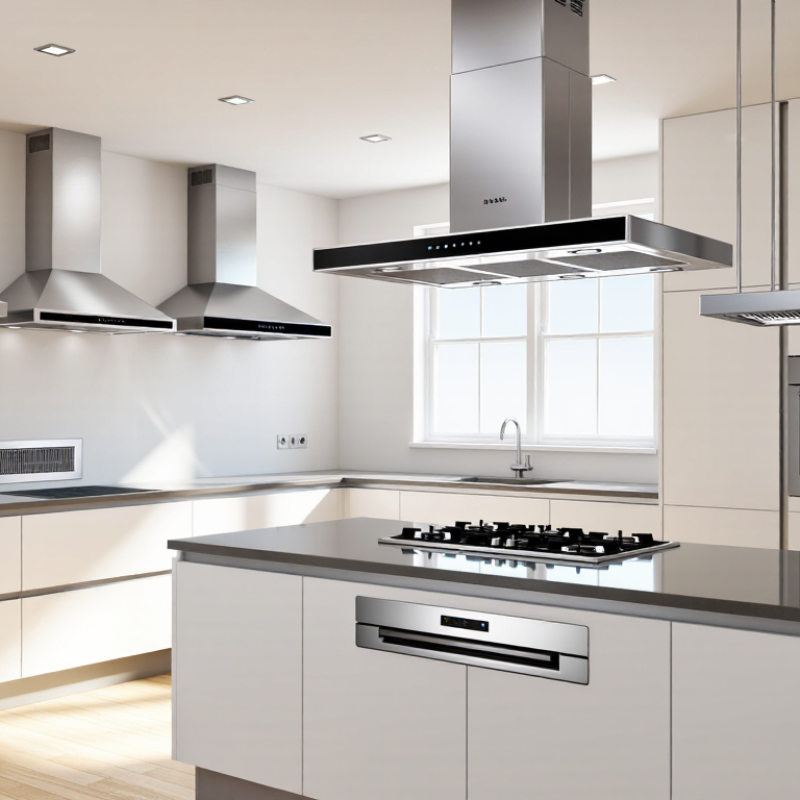
Range exhaust systems are classified by where they sit and where their air goes. Common formats include under-cabinet, wall-mounted, island, insert, and downdraft units. Their core job is the same: pull cooking fumes, moisture, grease, and heat away from the cooktop. A fan creates suction; metal mesh or baffle filters trap grease before air enters the duct. Ducted systems carry exhaust outdoors, while recirculating models pass it through filters and return air to the room. Carbon filters can reduce some odors, but they do not remove moisture or combustion gases from the home.
Placement matters. A hood that covers the front burners can capture rising smoke more effectively than a shallow unit set too high. In a study of 15 homes, Lawrence Berkeley National Laboratory researchers found installed hood capture efficiencies ranging from 15% to 98 (Singer et al., Indoor Air, 2012). The wide spread shows why design alone does not guarantee performance. Installation, airflow, and cooking habits all matter. A hood may look powerful and still miss a plume.
Performance reports commonly describe airflow in cubic feet per minute and sound in sones. The Home Ventilating Institute’s certified ratings help compare these measures under standardized test conditions. Yet higher airflow can mean more noise and may require suitable ductwork. Small detail, big effect. For a real kitchen, check the hood’s capture area, filter access, duct route, and rated sound—not just its headline airflow.
Ducted range hoods carry cooking air through a duct and release it outdoors. This removes smoke, excess moisture, and lingering odors instead of filtering air and returning it to the kitchen. During a quick sear, the hood can capture the visible plume before it spreads toward cabinets or curtains. Small detail. Use the hood before cooking starts, then leave it running briefly afterward.
Performance depends on more than fan power. A hood should cover the cooking surface, and its duct should follow a short, direct route when possible. Smooth, correctly sized ductwork helps air move with less resistance; unnecessary bends can reduce airflow and add noise. The outdoor outlet also needs a clear path, not an accidental route into an attic or enclosed space. Installation conditions vary, so a qualified professional can assess duct routing and any need for replacement air.
Maintenance still matters. Wash the grease filters regularly, and check that the exterior vent flap opens freely. A strong fan is not automatically the best choice if it sounds so loud that nobody uses it. Airflow ratings offer a useful comparison, but they do not capture every real-world installation issue. There is no perfect setup. Measure carefully, and reconsider the plan if the duct route becomes long or cramped.
Ductless Range Hoods: Filtering and Recirculating Indoor Air
A ductless range hood draws cooking air through grease mesh and a replaceable carbon filter, then returns it to the kitchen. The mesh catches droplets; carbon helps reduce some odors. Check the filter regularly: a saturated, greasy filter can restrict airflow and perform poorly. A paper filter schedule is easy to forget.
Lawrence Berkeley National Laboratory’s 2012 field study of 15 installed cooking exhaust devices reported capture efficiencies ranging from below 15% to above 98%. That wide spread shows how much design and installation matter. It does not mean a ductless hood removes the same share of pollutants: recirculating filters trap some particles and odors, but do not vent cooking moisture or heat outdoors, and standard carbon filters cannot be relied on to remove combustion gases such as nitrogen dioxide.
A practical check is to hold a tissue near the intake while the fan runs; noticeable pull suggests airflow, not pollutant removal. Still, ductless models can help where a duct cannot be installed, especially for light cooking. Use the rear burners when possible, run the fan during cooking, and leave it on briefly afterward. The room may smell fresher. That is not proof that every contaminant is gone.
Common guidance for keeping grease and odor filters working effectively.
Washable grease filters are commonly cleaned every 1–2 months, while activated-carbon filters are often replaced every 3–6 months. Actual intervals vary with cooking frequency and the hood manufacturer’s instructions.
Convertible range exhaust systems offer two installation paths: ducted venting outdoors or recirculation through filters. In a ducted setup, warm air, smoke, and cooking moisture leave the home. Recirculating models pass air through grease and odor filters, then return it to the kitchen; they do not remove humidity. That matters.
A convertible hood can suit kitchens where exterior ducting is difficult, but filter care affects performance. Check the cooking surface width, hood depth, and recommended mounting height before choosing one. A hood mounted too high may capture less smoke, especially from a front burner.
Downdraft designs draw cooking fumes downward through vents near the cooktop, often rising from the counter when needed. Their low profile keeps sightlines open on an island, yet tall pots can send steam above the intake. A strong cross-draft may also pull fumes away. Duct routes beneath cabinets or floors need careful planning, and tight bends can limit airflow. For an island with frequent searing or tall stockpots, compare the actual vent position and airflow guidance with your cooking habits. I would not assume a sleek design will handle every meal equally well.
The best range exhaust type depends on your cooktop location, cooking habits, and duct route. Under-cabinet hoods suit many standard kitchens and fit beneath existing cupboards. Wall-mounted hoods work above a range on an open wall. Island models need overhead clearance and often demand careful positioning because air moves freely around them. Measure first.
Compare hood width with the cooking surface, then check the manufacturer’s recommended capture area and airflow for your layout. A hood that is too narrow may miss steam from the outer burners. Ducted models vent outdoors, while recirculating models pass air through filters and return it indoors. That difference matters. Recirculation can reduce odors, but it does not remove indoor moisture as effectively as outdoor venting.
Listen to the sound rating at the speed you expect to use, not only at maximum power. Strong airflow is less useful if the hood feels too loud to run during dinner. Look for accessible grease filters; metal filters usually need regular washing. An insert can blend into custom cabinetry, but installation details can be easy to underestimate. Check cabinet depth, duct size, and clearance before choosing. A small mismatch can complicate the project.
| Exhaust Type | Typical Installation | Main Advantages | Points to Consider | Best Suited For |
|---|---|---|---|---|
| Under-Cabinet Hood | Mounted beneath a wall cabinet above the range; may be ducted outdoors or recirculating. | Space-efficient, widely available, and often straightforward to install when a suitable cabinet and duct route already exist. | May take up cabinet space. Capture performance depends on hood width, depth, airflow, and how well the hood covers the cooking area. | Kitchens with wall-mounted ranges and cabinets above them. |
| Wall-Mount Chimney Hood | Attached to the wall above a range, with a visible vertical flue; commonly ducted outdoors. | Does not require an overhead cabinet and can provide a broad capture area above the cooktop. | Needs clear wall space and a compatible route for ductwork if vented outdoors. Installation height must follow the appliance instructions. | Wall-mounted ranges without cabinets directly overhead. |
| Island Hood | Suspended from the ceiling above a range or cooktop located in a kitchen island. | Provides ventilation without a wall behind the cooking surface and can be accessible from several sides. | Requires ceiling support and a duct route through the ceiling or attic for outdoor venting. Air movement around an island can make effective capture more challenging. | Island cooking areas where a ceiling-mounted hood is practical. |
| Range Hood Insert or Liner | Fitted inside a custom hood enclosure or cabinet structure above the range. | Allows the enclosure to match the kitchen design while the insert provides the exhaust fan and filters. | The enclosure must be designed to fit the insert and provide adequate capture space. Confirm dimensions, clearances, and duct requirements before construction. | Custom kitchens or remodels that call for a built-in appearance. |
| Downdraft Vent | Installed behind or beside the cooking surface, or integrated into a compatible cooktop; pulls air downward. | Can preserve an open sightline and may suit layouts where an overhead hood is not wanted or feasible. | Air must travel downward before it is exhausted, so capture may be less effective for rising heat and smoke than a properly sized overhead hood. Duct routing can be difficult. | Some islands or kitchens with limited overhead clearance, where compatible equipment and duct routing are available. |
| Over-the-Range Microwave Hood | A microwave mounted above the range, with a built-in fan that may vent outdoors or recirculate. | Combines two appliances and saves counter space. | Ventilation performance and capture area vary by model. Recirculating configurations filter air and return it to the room rather than exhausting it outdoors. | Kitchens where microwave placement and space-saving are priorities. |
Comparison tip: For any type, check the manufacturer’s airflow rating, noise information, hood width and depth, filter access, and installation clearances. A ducted hood exhausts air outdoors; a recirculating hood returns filtered air to the kitchen and does not remove cooking moisture or heat from the room. Actual suitability depends on the appliance, cooking habits, kitchen layout, and local installation requirements.