What Is the Best China Top Water Filtration System for Home?

Choosing the best China top water filtration system for home is not simply a matter of brand popularity. Water quality changes between cities, buildings, and even individual apartments. A system suitable for treated municipal water may perform poorly with well water or aging pipes. The right choice begins with a water test, not an attractive product description.

This guide examines reverse osmosis, ultrafiltration, activated carbon, and countertop systems available in China. It considers filtration performance, replacement costs, installation space, water waste, noise, and daily convenience. A kitchen cabinet may look spacious online, yet the pipes underneath can leave little room. Small details matter.

Certification also deserves careful attention. Buyers should check test reports, material safety information, and applicable Chinese standards. International claims should be verified through recognized certification bodies, rather than trusted blindly. A filter cannot remove every possible contaminant. Not always.

Reliable selection requires matching the system to measured needs. Reverse osmosis can reduce many dissolved substances, but it may waste water and require electricity. Carbon filtration can improve taste and odor, but it has clear limits. Maintenance is equally important. An expensive purifier with an overdue cartridge may provide false confidence. This review compares leading options with practical evidence, while acknowledging an uncomfortable truth: there is no universal winner for every Chinese household.
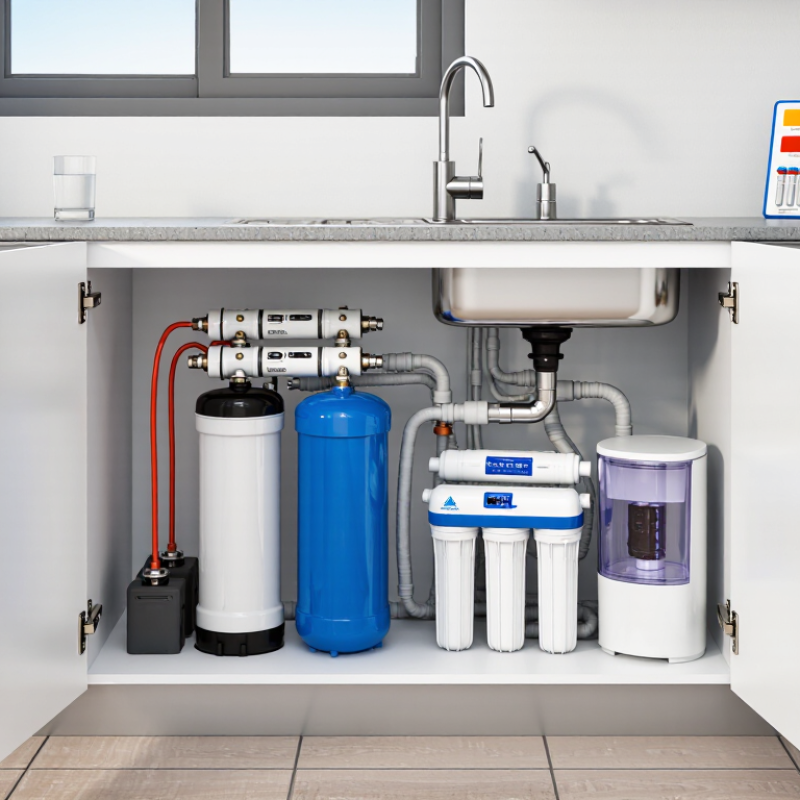
What Is the Best China Top Water Filtration System for Home?

Define Home Water Risks Using GB 5749-2022 Limits and Local Contaminants

What Is the Best China Top Water Filtration System for Home?

The best home filtration system depends on measured risk, not advertising claims. GB 5749-2022, China’s drinking water standard, provides limits for microbiological, toxicological, chemical, sensory, and radioactive indicators. Start with a recent municipal water report or an accredited laboratory test. Compare results with the standard, using the correct units and sampling date. A tap sample from an old apartment may differ from water leaving the treatment plant.

Local conditions matter. Northern cities may have hardness and scale. Coastal areas can face salinity concerns. Older buildings may add lead, copper, or sediment through internal pipes. Chlorine odor suggests disinfection residue, but it does not prove unsafe water. Microbial indicators require careful testing. Lead and arsenic each have a GB 5749-2022 limit of 0.01 mg/L. Nitrate, fluoride, turbidity, and total dissolved solids also need context, not guesswork.

Choose treatment by the failed indicator. Sediment filters protect appliances, while activated carbon can reduce chlorine taste and some organic compounds. Reverse osmosis can reduce many dissolved contaminants, but it needs pressure, regular replacement, and wastewater management. Boiling helps with microbes, but it does not remove lead, arsenic, or nitrate. I once considered clear water a reassuring sign; that was a weak assumption. Testing and maintenance records are more reliable than appearance. A filter without timely cartridge changes can become part of the problem.
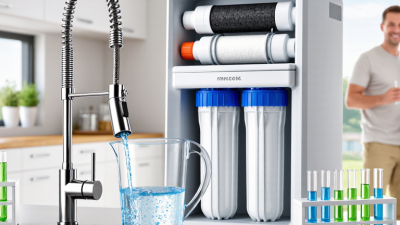
What Is the Best China Top Water Filtration System for Home?

GB 5749-2022 drinking-water quality limits for selected contaminants that may be relevant to household water-risk assessment.

The chart uses a logarithmic scale because the limits range from 0.001 to 10 mg/L. Lower limits indicate stricter regulatory control, not necessarily higher occurrence. Nitrate is expressed as nitrogen (N). Actual household risk depends on local source water, plumbing, seasonal conditions, and laboratory testing.

Reference: GB 5749-2022, drinking-water quality limits.

Compare RO, UF, Carbon, and UV by Pore Size, Rejection, and Flow Rate

What Is the Best China Top Water Filtration System for Home?

For most homes, the best system depends on water quality, pressure, and daily demand.

Reverse osmosis (RO) uses a membrane near 0.0001 micron. It can reject many dissolved salts, metals, fluoride, and other small contaminants.

However, RO usually produces 1–3 liters of wastewater for each liter treated. Its flow may feel slow without a storage tank.

Ultrafiltration (UF) has pores around 0.01 micron. It reduces sediment, bacteria, and larger particles, while retaining useful minerals.

UF often delivers a faster flow than RO, commonly around 1–3 liters per minute in household units.

Carbon filters work differently. They adsorb chlorine, odors, and many organic compounds. Their effective pore structure varies, so pore size alone cannot measure performance.

A carbon cartridge may clog quickly when the inlet water looks cloudy.

Ultraviolet (UV) treatment uses light, not pores. It can inactivate microorganisms when the water is clear and the lamp receives enough energy.

UV does not remove salt, sediment, or chemical pollutants.

In a home check, I would measure inlet pressure, test chlorine, and inspect the filter after several weeks.

A laboratory report is more reliable than a sales chart.

Real flow also drops as cartridges collect dirt. This is easy to overlook.

For uncertain source water, combining sediment filtration, carbon, and UV or RO may work better, but maintenance schedules still need honest review.

Verify Chinese Systems Through NSF/ANSI 42, 53, 55, and 58 Certifications

What Is the Best China Top Water Filtration System for Home?

Choosing a Chinese home water filtration system requires more than comparing flow rates and prices. The key question is whether its performance is independently verified. Look for NSF/ANSI certification linked to the exact model number, not only a factory brochure or seller statement.

NSF/ANSI 42 usually covers chlorine taste, odor, and visible particles. NSF/ANSI 53 addresses specific health-related contaminants, such as lead, but the tested claims must be listed clearly. NSF/ANSI 55 applies to ultraviolet systems. Class A is intended for microbiologically unsafe water, while Class B generally supports supplemental treatment. NSF/ANSI 58 covers reverse osmosis systems and may include claims for dissolved solids, lead, arsenic, or fluoride.

Read the certification scope carefully.

A practical check includes the test standard, product model, contaminant reduction claim, and replacement-filter requirements. A certificate may cover one cartridge, not the complete system. Installation also matters. Poor sealing, incorrect tubing, or overdue filter changes can reduce real performance under the kitchen sink. I would also compare wastewater volume, storage-tank hygiene, pressure needs, and local water conditions. A system certified for chlorine may not address nitrate or microbial concerns. This is an easy mistake. Certification does not mean every contaminant is removed. Keep the laboratory report and maintenance instructions. Water quality can change, and a confident purchase still deserves periodic testing.

What Is the Best China Top Water Filtration System for Home? - Verify Chinese Systems Through NSF/ANSI 42, 53, 55, and 58 Certifications

Evaluation Dimension NSF/ANSI 42 NSF/ANSI 53 NSF/ANSI 55 NSF/ANSI 58
Primary purpose Aesthetic effects such as chlorine taste and odor, and particulate reduction claims when specifically certified. Health-related contaminant reduction claims, such as lead or certain cysts, only when listed in the product performance data. Ultraviolet microbiological treatment systems intended for drinking-water applications. Reverse osmosis drinking-water treatment systems, including system performance and material-safety requirements.
What certification does not mean It does not prove removal of every chemical or microorganism. It does not mean the product reduces every health contaminant; each reduction claim must be verified separately. It does not replace proper source-water testing, maintenance, or safe storage after treatment. It does not automatically certify the faucet, tank, tubing, or every replacement cartridge as a complete system.
Best household use Municipal tap water where taste, odor, or visible sediment is the main concern. Homes concerned about specific health contaminants identified in the water supply or laboratory report. Private wells or other supplies requiring ultraviolet treatment after appropriate pretreatment and testing. Homes needing broader dissolved-contaminant reduction, subject to water pressure, wastewater, and maintenance requirements.
Typical technologies used Activated carbon, sediment filtration, or other media designed for aesthetic claims. Specialized carbon, ion exchange, membrane, or other media matched to a stated contaminant claim. UV lamp and reactor chamber, normally installed after appropriate particulate pretreatment. Sediment and carbon pretreatment followed by a semipermeable RO membrane and post-treatment components.
Important verification evidence Certification listing, exact model number, rated capacity, and the specific aesthetic claims. Certification listing and performance data naming the exact contaminant, reduction percentage, capacity, and operating conditions. Certification listing, UV system class where applicable, flow rate, lamp-life assumptions, and installation requirements. Certification listing, tested contaminant claims, rated production capacity, recovery information, and required inlet pressure.
Main limitation Usually insufficient by itself for dissolved salts, many health contaminants, or microbiological treatment. Performance depends on the exact certified claim, water chemistry, cartridge condition, and flow rate. UV does not generally remove dissolved chemicals, metals, salts, taste, or odor; clear water and pretreatment are important. Produces reject water, requires regular filter and membrane replacement, and may need adequate pressure or a pump.
Most suitable system direction A certified carbon or sediment system when the goal is improved taste and appearance. A targeted point-of-use system whose certified claims match the laboratory results or local water-quality report. A properly sized UV system with prefiltration for microbiological risks in an appropriate water source. A certified RO system when dissolved contaminants are the primary concern and reject-water management is acceptable.

Home Water Filtration Selection Checklist

Check Item What to Confirm Acceptance Guidance
Exact model identity The model number on the product matches the model number in the certification listing. Reject listings that show only a similar series, factory certificate, or unspecified product family.
Standard and scope The listing identifies NSF/ANSI 42, 53, 55, or 58 and states the applicable product type. A general statement such as “NSF certified” is not sufficient without the standard number.
Contaminant claim The performance data names the contaminant and provides the tested reduction claim. Choose claims that correspond to an independent water test or current water-quality report.
Capacity and flow Rated capacity, service flow, daily production, and operating pressure are clearly specified. The rating should meet household demand without exceeding the certified operating conditions.
Replacement parts Replacement cartridges, UV lamps, membranes, seals, and compatible parts are identifiable and available. Do not assume an unlisted replacement cartridge retains the original system certification.
Installation and maintenance The manual specifies installation position, sanitization, filter replacement, and maintenance intervals. A certified system still requires installation and maintenance according to the manufacturer’s instructions.
Independent verification The certification can be checked through the certifier’s public product database or official documentation. Give preference to verifiable certification records rather than marketing images or self-issued test reports.
Practical conclusion: The best home system is the one whose exact model, applicable NSF/ANSI standard, and certified contaminant claims match the household’s water test, flow demand, installation conditions, and maintenance capacity.

Size Capacity with Daily Demand, 2–4 L/min Flow, and RO Waste Ratios

What Is the Best China Top Water Filtration System for Home?

Choosing a home water filtration system starts with daily demand, not appearance. A two-person household may use 6–10 liters of drinking and cooking water daily. A larger family may need 15 liters or more. Measure real use for three days. My first estimate was too optimistic.

A flow rate of 2–4 L/min suits most kitchen tasks. At 2 L/min, filling a two-liter bottle takes about one minute. That feels practical during cooking. However, stated flow may reflect ideal laboratory conditions. Cold water temperature, pressure, and clogged filters can reduce performance. Check the rated flow at normal household pressure. Small details matter.

Reverse osmosis systems also produce wastewater. A 1:1 ratio means one liter of purified water creates one liter of reject water. A 1:2 ratio creates two liters of reject water. Actual results depend on pressure, temperature, membrane condition, and water quality. Reuse reject water for floor cleaning when appropriate. Do not assume every “high recovery” claim applies at home. Review independent test data, replacement intervals, and filter capacity before buying. A system with a large tank may hide slow production. A compact unit may require frequent refilling. Neither option is automatically better.

Rank Total Cost by Filter Life, Energy Use, Maintenance, and Service Coverage

For most Chinese homes, total cost should rank before purchase price. Tier one is gravity or ultrafiltration, because energy use is nearly zero and cartridges often last six to twelve months. Tier two is direct-flow reverse osmosis, offering stronger dissolved-salt reduction but adding pump electricity and membrane replacement. Tank-based RO usually ranks third for lifetime cost. It may waste more water and require tank sanitation. EPA WaterSense guidance reports that conventional RO systems can discharge three to five gallons for each gallon produced. China’s GB 34914-2021 also emphasizes water-efficiency labeling.

Filter life changes the ranking. A longer cartridge life lowers annual cost, but only when incoming water is reasonably clean. WHO’s Guidelines for Drinking-water Quality recommend assessing both microbial protection and chemical risks. Therefore, a low-cost UF unit may not suit water with high dissolved solids. Service coverage matters too. A nearby technician, transparent labor fees, and locally stocked parts can prevent one expensive failure. Coverage outside major cities is often weaker.

Tips: Calculate five-year cost, not the checkout price. Add filters, electricity, wastewater, cleaning, and service visits. Photograph the meter and rejection-water flow for one week. That small test exposes waste quickly. Ask for verified filter-life data under Chinese water conditions. Marketing numbers can be optimistic. A useful compromise may be an efficient RO system with a long-life prefilter, but the final choice still depends on test results, household volume, and maintenance discipline.