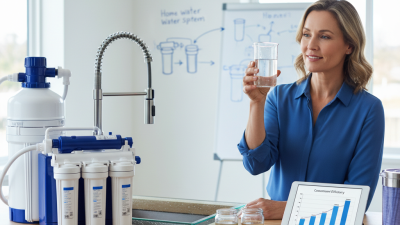
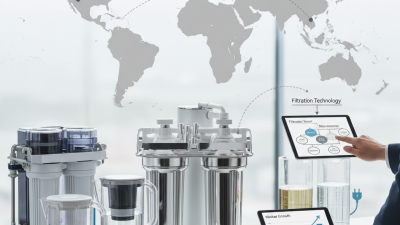
Choosing among China’s top house water filter system manufacturers requires more than comparing prices or polished product photos. A reliable decision begins with the water itself. Municipal supplies may contain chlorine, sediment, lead, or unpleasant odors. Well water can bring iron, hardness, or microbial concerns. Each problem needs a different treatment method.
Rick Andrew, a water treatment specialist formerly associated with NSF International, states, “A treatment system must be certified for the contaminant it claims to reduce.” This principle should guide every manufacturer review. Look for relevant NSF/ANSI certifications, transparent test reports, replacement-filter data, and clearly stated flow rates. A system certified for chlorine reduction may not reduce lead. It is an easy detail to miss.
Real performance also depends on installation and maintenance. A compact under-sink unit may suit a small apartment, while a whole-house system needs careful sizing. Check housing materials, pressure limits, service access, and annual operating costs. Ask whether the manufacturer provides responsive technical support and stable replacement cartridges. That matters later.
Some suppliers present impressive laboratory figures without explaining field conditions. That should invite questions, not immediate trust. A manufacturer with export experience, traceable quality control, and documented warranty procedures deserves closer attention. Still, no supplier is perfect. Even a well-certified house water filter system can perform poorly when filters are neglected or water chemistry changes. This guide examines leading Chinese manufacturers through product capability, certification, manufacturing experience, customization, and after-sales reliability. The goal is practical judgment, not a careless ranking.
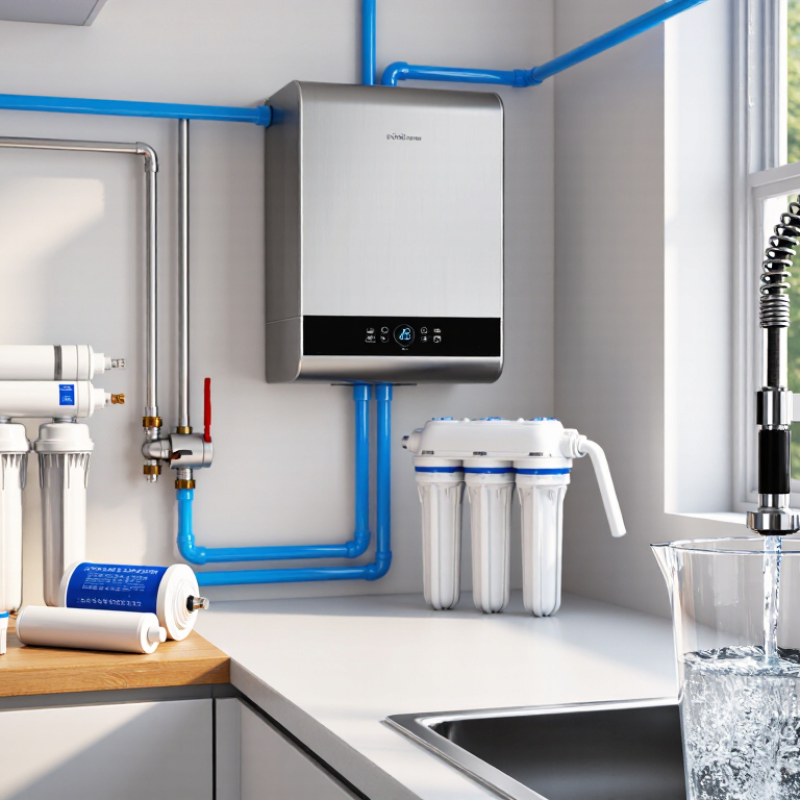
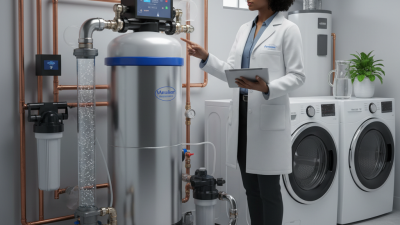
A whole-house water filter system treats water at the main entry point. It connects to the incoming pipe before water reaches faucets, showers, and appliances. This setup helps reduce sediment, chlorine, unpleasant odors, and selected chemical contaminants. Every outlet receives treated water.
The system usually contains several stages. A sediment filter catches sand, rust, and visible particles. An activated carbon filter can improve taste and reduce chlorine. Some homes need specialized media for iron, hardness, or specific contaminants. A professional water test should guide the design. Guesswork can waste money.
Size matters. A small cartridge may restrict flow when several showers run together. A larger housing may cost more, but it can reduce pressure loss. Filters also need regular replacement. Neglecting maintenance can create hygiene problems instead of solving them. That detail is easy to miss.
Installation should include shutoff valves, a pressure gauge, and enough clearance for cartridge changes. Local plumbing conditions may require different connections or protective devices. Whole-house filtration does not automatically remove every pollutant. That assumption is risky. For drinking water, additional treatment may still be appropriate. Clear performance claims, test data, replacement guidance, and responsive technical support are important when evaluating a manufacturer. These details often reveal reliability better than attractive specifications.
China Top House Water Filter System Manufacturers?
China’s house water filter industry has changed from basic assembly to specialized water treatment production. Early factories mainly supplied simple sediment cartridges and plastic housings. Today, many manufacturers develop complete systems for kitchens, apartments, and small commercial buildings. Their processes may include injection molding, membrane production, pump assembly, and automated leak testing. This wider capability has improved delivery speed and product customization.
Experience on factory visits shows a practical shift. Engineers now test flow rate, pressure loss, filter life, and material safety more carefully. Some facilities use digital tracking during assembly, which helps identify defects before shipment. Certification and independent laboratory testing also support buyer confidence. However, quality is not perfectly uniform across the market. A polished showroom does not always prove stable production. I have seen specifications that looked impressive but lacked clear test conditions. That weakness deserves honest attention.
Tips: Ask for complete test reports, replacement filter data, and installation instructions. Check whether the stated capacity matches real household water pressure. Request production samples before placing a large order. Review after-sales support, because filter replacement is a long-term need. Do not choose only by price. A cheaper system may create higher maintenance costs. Suppliers should explain their limits clearly, even when the answer is not convenient.
China’s expanding urban population has increased demand for safer, more convenient, and point-of-use drinking-water solutions. The chart uses official urbanization data as an objective market-development indicator rather than company or brand sales data.
Data source: National Bureau of Statistics of China, China Statistical Yearbook and national economic and social development statistical bulletins. Urban population figures are shown in millions; urbanization is the share of the permanent population living in urban areas.
China’s top house water filter system manufacturers are increasingly judged by testing evidence, not catalog size. The WHO/UNICEF Joint Monitoring Programme reported that 2.2 billion people lacked safely managed drinking water in 2022. This need strengthens demand for reliable household filtration in apartments, villas, and rural homes.
Leading Chinese manufacturers usually provide multi-stage systems, including sediment cartridges, activated carbon, and reverse osmosis membranes. Serious suppliers publish flow rates, recovery ratios, replacement cycles, and contaminant reduction results. They also support testing against Chinese GB standards and international references, such as NSF/ANSI 42, 53, and 58. Independent laboratory reports matter more than polished product photographs.
Look for traceable raw materials, stable assembly lines, and documented quality control. Factory audits should check membrane storage, leak testing, electrical safety, and batch records. Small details matter.
Some suppliers still present laboratory data without explaining test conditions, which makes comparisons difficult. Buyers should request source-water assumptions, certified performance limits, and after-sales response times.
A 2024 global market analysis by Grand View Research identified rising demand for point-of-use purification, driven by urbanization and consumer health concerns. China’s strongest manufacturers combine export experience with practical installation support, but capability can vary sharply between factories.
Choosing among whole-house water filter types begins with the water problem, not the manufacturer.
The WHO and UNICEF Joint Monitoring Programme reported that 2.2 billion people lacked safely managed drinking water in 2022. This figure highlights why household treatment still matters.
Sediment filters capture sand, rust, and pipe particles. Activated carbon reduces chlorine, odors, and many organic chemicals. These systems suit municipal supplies with visible particles or unpleasant taste.
Hard water needs a different solution. Water softeners exchange calcium and magnesium ions, protecting heaters, faucets, and shower screens. Iron and manganese filters target metallic staining, but they require water testing before selection. UV systems can deactivate microorganisms after proper prefiltration.
Whole-house reverse osmosis offers deeper contaminant reduction, yet it uses more water and demands careful maintenance. The U.S. EPA notes that treatment effectiveness depends on the contaminant, equipment performance, and upkeep.
One device cannot solve every problem. That is often overlooked.
Tips: Test the source water first, including hardness, iron, turbidity, and microbial indicators. Check independent certification standards, replacement intervals, flow rate, and pressure loss. The Water Quality Association advises matching treatment to verified water conditions. A larger filter is not automatically better. Poor sizing can cause weak showers, early cartridge failure, or bypassed treatment. Recheck performance after installation. Small mistakes remain expensive.
Selecting a Chinese manufacturer for a whole-house water filter requires more than comparing prices. Start by checking factory experience, production capacity, and the actual products being made. Ask for business registration, quality-management records, material specifications, and recent third-party test reports. Do not rely on polished brochures alone.
Request a sample unit before signing a large order. Inspect the housing, seals, fittings, filter media, and connection threads by hand. Test water flow, pressure resistance, leakage, and cartridge replacement. A reliable manufacturer should explain test methods and provide traceable batch records. I once found that a strong-looking housing used inconsistent internal parts. The sample passed, but production quality needed closer supervision.
Visit the facility when possible, or arrange a live video audit. Observe incoming-material checks, assembly lines, warehouse labeling, and final inspection. Ask how defects are recorded and corrected. Confirm packaging strength, spare-part availability, lead times, warranty terms, and communication procedures. Certifications can support trust, but they must match the exact model and intended market. No checklist is perfect. A small pilot order may reveal problems that documents hide. Choose a supplier willing to discuss limitations, improve processes, and share clear evidence instead of making broad promises.
| No. | Evaluation Dimension | What to Verify | Recommended Evidence | Practical Selection Benchmark | Warning Signs |
|---|---|---|---|---|---|
| 1 | Product Application | Confirm whether the system is designed for point-of-use drinking water, whole-house filtration, or both. | Product specification sheet, installation diagram, flow-path description, and intended-use statement. | The manufacturer clearly defines treated-water use, untreated-water limitations, inlet pressure, temperature, and installation conditions. | The same model is presented as suitable for every household application without technical limitations. |
| 2 | Filtration Technology | Identify each treatment stage, such as sediment filtration, activated carbon, ultrafiltration, reverse osmosis, ultraviolet treatment, or remineralization. | Bill of materials, cartridge datasheets, membrane specifications, and process-flow diagram. | Every stage has a defined purpose, rated performance, replacement interval, and compatible spare part. | Marketing focuses on the number of stages rather than contaminant reduction data. |
| 3 | Contaminant-Reduction Claims | Match claimed reductions to the actual feed-water contaminants and the selected certification or test method. | Independent laboratory report identifying the model, test conditions, influent concentration, effluent result, and test duration. | Claims are expressed with test conditions and do not exceed the scope of the supporting report. | Unqualified statements such as “removes all contaminants” or “100% purification.” |
| 4 | Applicable Standards | Check whether the product is evaluated against standards relevant to its function and destination market. | Current certificates, complete scope pages, certificate holder details, model numbers, and issuing-body verification. | For relevant products, documentation may include NSF/ANSI 42 for aesthetic effects, NSF/ANSI 53 for health-related contaminants, NSF/ANSI 58 for reverse-osmosis systems, or NSF/ANSI 401 for certain emerging contaminants. | A factory certificate is presented as proof that the finished filter has been certified for contaminant reduction. |
| 5 | Material Safety | Assess materials that contact drinking water, including plastics, sealants, tubing, adhesives, carbon media, and membrane components. | Material declarations, migration or extraction test reports, food-contact documentation, and supplier traceability records. | All wetted materials are identified and controlled through documented incoming inspection and batch records. | Material descriptions use vague terms such as “food grade” without a standard, test report, or traceable specification. |
| 6 | Water-Quality Compatibility | Determine whether the system is compatible with local hardness, turbidity, chlorine, iron, manganese, microbial risk, and pressure conditions. | Feed-water analysis, pretreatment recommendation, operating envelope, and commissioning checklist. | The supplier requests a water analysis before recommending membrane type, cartridge configuration, or pretreatment. | A standard configuration is recommended without asking for source-water data. |
| 7 | Flow Rate and Capacity | Review rated flow, peak flow, pressure drop, daily production, tank volume, and capacity at the specified conditions. | Performance curve, test records, pressure and temperature conditions, and a capacity calculation for the intended household. | Published capacity includes the test water quality, operating pressure, temperature, recovery rate, and end-of-life limit. | Maximum flow is quoted without pressure-drop data or without explaining whether it is instantaneous or continuous flow. |
| 8 | Quality Management | Evaluate production controls, inspection procedures, corrective actions, and traceability. | Quality-management certificate, process-control plan, incoming and final inspection records, and nonconformance procedure. | The manufacturer can trace finished units to component lots, production dates, inspection results, and responsible personnel. | Quality is described only through visual inspection or a general statement of “strict control.” |
| 9 | Factory Capability | Confirm which processes are performed in-house and which are outsourced, including molding, assembly, testing, and packaging. | Factory audit, equipment list, process map, production-area photographs or video, and subcontractor-control records. | The facility has capacity and equipment appropriate for the ordered product and maintains documented control over outsourced processes. | The trading entity cannot identify the actual production site or refuses a reasonable audit. |
| 10 | Product Customization | Assess the ability to customize housing, ports, voltage, control panels, packaging, labels, and cartridge specifications without compromising compliance. | Approved drawings, change-control procedure, engineering validation, sample approval, and revised compliance documents. | Any material or design change is documented, approved, tested, and linked to the correct production version. | The supplier changes wetted materials or components without updating test reports or certificates. |
| 11 | Testing and Inspection | Verify leak testing, electrical safety where applicable, flow testing, pressure testing, microbial-control procedures, and final inspection. | Test equipment calibration records, inspection standards, batch test reports, and pre-shipment inspection plan. | Critical safety and performance tests are defined by model and recorded for each production batch or required sampling level. | Only photographs of finished products are provided, with no test records or acceptance criteria. |
| 12 | After-Sales Support | Review warranty terms, technical support, spare-parts availability, installation instructions, and complaint handling. | Written warranty, spare-parts list, service-level agreement, troubleshooting guide, and response-time commitment. | Replacement filters, seals, membranes, pumps, sensors, and compatible fittings have defined part numbers and expected availability. | The supplier offers a long warranty but provides no clear process for replacement parts or technical claims. |
| 13 | Total Cost of Ownership | Calculate purchase price, freight, installation, electricity, water waste, cartridge replacement, maintenance, testing, and disposal costs. | Five-year cost model using documented consumable life, energy use, recovery rate, and service requirements. | Selection is based on lifecycle cost and verified performance rather than the lowest initial quotation. | A low unit price excludes membranes, pumps, replacement cartridges, tooling, testing, or after-sales service. |
| 14 | Export and Compliance Readiness | Check documentation, labeling, electrical requirements, packaging, customs information, and destination-market obligations. | Technical file, user manual, packaging artwork, declaration documents, shipping records, and destination-specific compliance checklist. | The supplier can provide consistent model numbers and complete documents before mass production. | Documents contain inconsistent model numbers, untranslated safety instructions, or unverifiable certificate details. |
| 15 | Pilot Testing and Approval | Test production samples under representative water conditions before approving a large order. | Approved sample, performance test report, installation inspection, user feedback, and signed acceptance criteria. | Mass production begins only after the sample meets agreed performance, safety, documentation, and packaging requirements. | The supplier requests full production approval before providing a functional sample or test opportunity. |