Finding the China best under sink water softener suppliers requires more than comparing factory prices. The right partner should understand water chemistry, installation limits, and long-term maintenance. An under sink water softener may sit beneath a crowded kitchen cabinet, beside drainage pipes and electrical outlets. Every centimeter matters.
Reliable suppliers usually provide clear resin specifications, flow-rate data, salt or media requirements, and replacement schedules. Ask for product drawings, material declarations, leak-test records, and independent test reports. Certifications such as NSF/ANSI standards may support credibility, but buyers should verify their scope and validity. ISO certification can indicate process control, not guaranteed product performance. That distinction matters.
Practical experience is equally valuable. A supplier should explain how the unit performs with hard water, changing pressure, and limited cabinet ventilation. Request samples before placing a large order. Test the fittings, regeneration process, noise level, and water taste. Small details reveal a lot. Some suppliers present impressive catalogs but offer weak after-sales support. This is easy to overlook.
The best choice depends on your market, water conditions, budget, and service expectations. A factory serving hotels may not suit residential kitchens. A trading company may provide flexibility, while a direct manufacturer may offer deeper customization. Both can work. Do not rely on polished claims alone. Compare evidence, communication speed, warranty terms, and corrective-action records. Even careful buyers can miss hidden costs, including tooling, packaging changes, spare parts, and compliance testing. A thoughtful supplier review should stay practical, transparent, and open to revision.
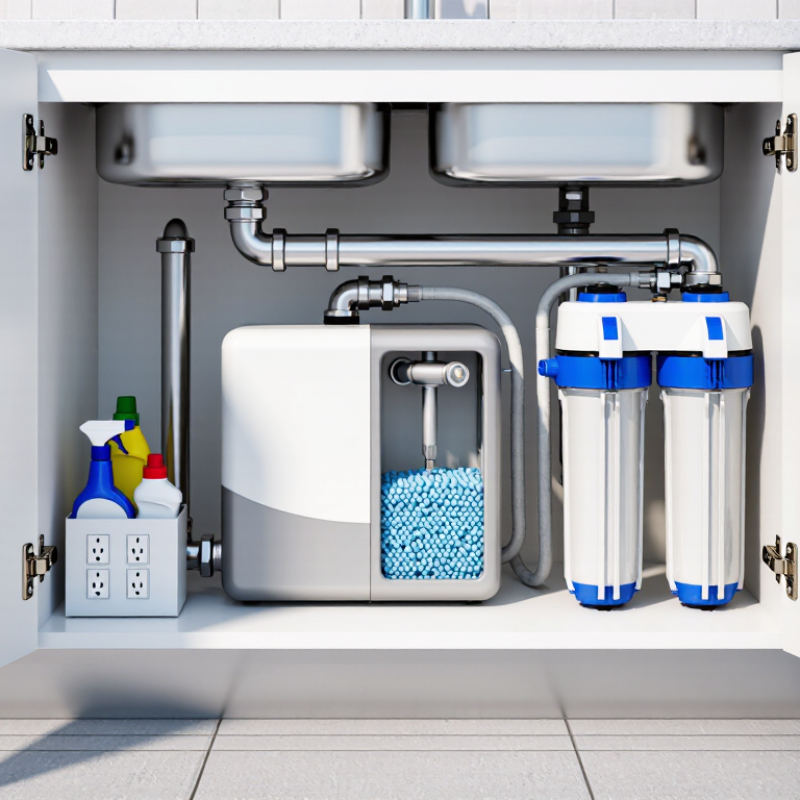
What Is an Under-Sink Water Softener?
An under-sink water softener is compact treatment equipment installed inside a kitchen cabinet. It reduces hardness before water reaches a dedicated faucet. Most models use ion-exchange resin. The resin captures calcium and magnesium ions, then releases sodium or potassium ions. This process can reduce scale on kettles, glassware, and small appliances. It is different from a normal carbon filter. Carbon mainly improves taste, odor, and some chemical impurities. It does not reliably soften hard water.
A suitable unit needs accurate water testing before purchase. Measure hardness, daily consumption, cabinet space, and available water pressure. The system may also require a drain connection for regeneration. Maintenance normally includes salt or regenerant checks, resin sanitation, and periodic performance testing. It does not remove every contaminant. It cannot replace disinfection equipment when microbial safety is a concern. Suppliers in China should provide material specifications, flow-rate data, installation instructions, and quality-control records. Independent testing is still wise. A common mistake is choosing by cabinet size alone. Resin capacity matters more than appearance. The design can look efficient, yet poor inlet pressure may reduce performance. I have seen compact systems become inconvenient when the regeneration cycle was ignored. Better planning leaves room for service, not just installation.
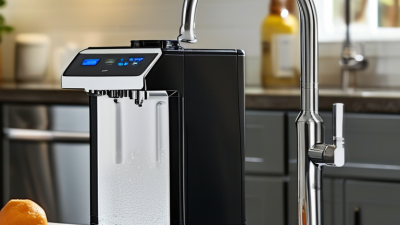
China Best Under Sink Water Softener Suppliers?
When evaluating China-based water softener suppliers, begin with the product’s actual specifications. Ask about resin volume, rated flow, regeneration method, inlet size, and cabinet dimensions. An under-sink unit must fit beside pipes and leave room for cartridge replacement. A supplier should explain hardness capacity in practical terms, not only quote impressive numbers. Request a sample and test it with your local water conditions. TDS alone does not measure hardness. This is an easy mistake.
Review manufacturing evidence carefully. Request recent test reports, material declarations, quality-control records, and clear certification details. Verify documents through the issuing organization whenever possible. Ask whether the resin, valves, seals, and connectors come from stable sources. Factory photographs help, but a live video inspection reveals more. Look for clean assembly areas, batch labels, pressure testing, and organized spare-parts storage. A reliable supplier answers technical questions directly, even when the answer is inconvenient.
Tips: Compare at least three suppliers using the same specification sheet. Confirm minimum order quantity, sample charges, lead time, packaging, warranty coverage, and replacement-part availability. Ask for a written response to leakage, low-flow, and regeneration complaints. Communication quality matters. Delayed replies may become costly after shipment. I sometimes focus too heavily on price, then notice missing installation guidance. A cheaper unit is not automatically a better purchase. Get everything important in writing.
A high-quality under-sink softener should solve a measured water problem, not simply look compact. Check its rated flow, hardness-removal capacity, and regeneration method. A clear capacity label helps households estimate service intervals accurately. The unit should fit beneath the cabinet without blocking the drain or filter access. Durable connectors and a secure bypass valve also reduce installation risks.
Material safety matters. Look for food-contact components, corrosion-resistant fittings, and test documents from independent laboratories. A reliable supplier should explain testing methods, operating limits, warranty terms, and replacement-part availability. Leak protection is valuable, especially near wooden cabinets and electrical outlets. Digital controls can help, but simple controls are often easier to maintain. More features do not always mean better performance.
Tips: Test hardness before ordering, then retest after installation. Measure cabinet height carefully. Ask for a real flow-rate chart, not only promotional claims. Check whether salt, resin, or cartridges are locally available. Keep a record of regeneration dates. Small details matter. I would also question unusually long service promises; household water quality changes, and actual performance may fall below laboratory conditions. Good suppliers welcome those questions and provide practical installation guidance rather than vague assurances.
| Evaluation Dimension | High-Quality Benchmark | Typical Under-Sink Range | Why It Matters | Supplier Verification Point |
|---|---|---|---|---|
| Softening Technology | Food-grade ion-exchange resin with controlled regeneration or a validated salt-free scale-control method | Ion-exchange systems are commonly used where actual hardness reduction is required | Ion exchange removes calcium and magnesium ions; scale-control devices may reduce deposits without removing hardness | Request the treatment principle, resin information, and independent performance test results |
| Hardness Reduction | Clearly stated capacity and verified reduction of calcium and magnesium under defined test conditions | Capacity is commonly expressed in grains or milligrams of CaCO3 removed | Capacity helps determine how often the unit must regenerate or be serviced | Check test water hardness, flow rate, capacity calculation, and end-of-life criteria |
| Rated Flow Rate | A published continuous flow rate that meets the intended faucet or appliance demand without excessive pressure loss | Many compact point-of-use units are designed for approximately 1.5–3.0 gallons per minute | Insufficient flow can cause weak faucet performance and unstable operation | Ask for pressure-drop data at the stated flow rate, not only the maximum instantaneous flow |
| Inlet and Outlet Connections | Standard connection sizes, durable fittings, and compatibility with local plumbing requirements | Common connection sizes include 3/8 inch and 1/2 inch, depending on the market | Correct fittings reduce installation time, leakage risk, and adapter requirements | Confirm thread type, tubing size, included adapters, shut-off valves, and drain requirements |
| Cabinet Fit and Dimensions | Compact housing with clearly documented width, depth, height, service clearance, and mounting orientation | The unit must fit beneath the sink while leaving room for plumbing, filter replacement, and leak inspection | A technically capable softener is unsuitable if it blocks storage or cannot be serviced safely | Request a dimensioned drawing and installation photo showing the required clearance |
| Materials and Food-Contact Safety | Corrosion-resistant wetted components and materials suitable for potable-water contact | Common materials include reinforced plastics, polypropylene, stainless steel, and certified elastomers | Safe materials help reduce contamination, corrosion, odor, and premature component failure | Request material declarations and applicable potable-water compliance documentation |
| Regeneration and Water Consumption | Demand-initiated control or a clearly defined service schedule with documented water and salt consumption | Consumption varies by resin volume, hardness, capacity setting, and regeneration method | Efficient regeneration lowers operating cost and reduces wastewater discharge | Compare salt dose, rinse-water volume, regeneration frequency, and recovery settings |
| Leak Protection | Reliable seals, secure quick-connects, pressure-rated housing, and an optional leak-detection or shut-off function | Protection features differ significantly between basic and advanced models | Under-sink leaks can damage cabinets, flooring, and nearby electrical equipment | Review pressure testing, burst testing, seal material, and alarm or automatic shut-off options |
| Operating Pressure and Temperature | Published minimum and maximum operating pressure and water-temperature limits suitable for residential plumbing | Limits vary by housing, valve, tubing, and seal design; the rating must be checked for each model | Operating outside the specified range may cause leaks, resin damage, or valve failure | Ask for the technical datasheet and verify compatibility with cold-water installation only |
| Maintenance Requirements | Simple resin, valve, cartridge, and brine-tank access with a documented maintenance schedule | Maintenance intervals depend on water hardness, sediment loading, usage, and regeneration design | Easy maintenance improves hygiene, performance, and total service life | Confirm replacement-part availability, cleaning instructions, and expected resin service life |
| Testing and Compliance | Traceable factory quality control, batch testing, pressure testing, and applicable potable-water documentation | Documentation may include material safety reports, test reports, and region-specific compliance evidence | Independent or traceable testing provides more confidence than marketing claims alone | Verify certificate scope, testing laboratory, report date, model number, and validity for the supplied configuration |
| Supplier Capability | Stable production, documented quality system, engineering support, spare parts, and clear warranty terms | Capability should be assessed through samples, factory audits, inspection records, and after-sales response | Supplier reliability affects product consistency, delivery risk, and long-term serviceability | Request sample approval, quality-control procedures, inspection plans, lead times, MOQ, and warranty coverage |
Note: Actual performance depends on incoming-water hardness, flow demand, pressure, temperature, usage, and installation conditions. Supplier specifications should be verified through model-specific technical documents and independent testing where required.
Comparing suppliers should start at the factory floor, not with a polished catalog. Ask for production photos, resin handling procedures, pressure testing records, and batch traceability. A useful factory visit should include assembly, leak testing, packaging, and warehouse controls. Check whether the supplier makes the valve and tank or only resells them. That difference affects consistency, lead time, and troubleshooting. Small details matter.
Certification requires careful checking. Request current certificates, test reports, and the exact model numbers covered. Verify the issuing laboratory independently. A certificate for a similar product is not enough. Review water-contact materials, pressure ratings, flow data, salt efficiency, and contaminant claims. Requirements vary by destination market. Do not accept vague phrases like “international standard.” I have found that document dates are often overlooked, even by experienced buyers.
Service reveals reliability after payment. Ask who handles installation questions, replacement parts, warranty claims, and technical drawings. Test response quality before ordering by asking about a leaking bypass valve. Measure reply time and accuracy. Spare seals, connectors, and manuals should remain available for years, not weeks. A written service process is stronger than a friendly promise. Even careful comparisons can miss hidden costs, especially custom packaging and after-sales labor. Build these risks into the quotation.
Selecting a supplier should begin with your water data, not a factory catalogue. The USGS classifies water above 120 mg/L as hard and above 180 mg/L as very hard, measured as calcium carbonate. Request a local water analysis before discussing capacity, resin volume, or replacement cycles. A compact unit may fit beneath a sink, yet regenerate too often in a high-hardness market. That is inconvenient.
Separate softening from filtration. The WHO/UNICEF Joint Monitoring Programme reported that 2.2 billion people lacked safely managed drinking water in 2022. This highlights a key point: softeners reduce hardness, but they do not guarantee microbiological safety. Ask suppliers for independent test results, material declarations, and clear claims for each contaminant. Avoid vague phrases such as “complete purification.”
For export evaluation, check compliance with NSF/ANSI 44 principles for residential cation-exchange softeners. Review rated capacity, salt efficiency, pressure loss, leakage testing, and performance after repeated regeneration. Ask for batch records, resin specifications, valve drawings, and a sample inspection before mass production. Under-sink cabinets often have limited drainage and power access, so confirm installation dimensions with a physical prototype. A reliable supplier should also provide manuals, spare valves, cartridge schedules, and response times for technical complaints. Price matters, but replacement seals may matter more. One weakness remains: laboratory results can look excellent while field installation performs poorly. Pilot testing in two or three representative homes is worth the delay.