Choosing the right hard water treatment system is not simply a matter of comparing prices. Calcium scale can cloud shower glass, restrict a kettle, and shorten the working life of heaters. In a busy hotel, these small deposits become expensive maintenance problems.
The U.S. Geological Survey classifies water above 120 milligrams per liter as calcium carbonate as hard, and above 180 milligrams as very hard. These thresholds offer a useful starting point for global buyers, although local water chemistry can be more complicated. The World Health Organization’s Hardness in Drinking-water report explains that hardness is mainly linked to calcium and magnesium, while health effects are not normally the primary concern. Dr. Joseph Cotruvo, a drinking-water quality expert and contributor to international guidance, stated, “Hardness is not a health concern at levels normally found in drinking-water.”
Performance still matters. A reliable system should match hardness, daily demand, pressure, salt preferences, drainage access, and regional service support. Ion-exchange softeners may control scale effectively, while template-assisted crystallization or filtration systems may suit buyers avoiding conventional salt regeneration. Results vary.
That is the uncomfortable part.
Some product claims sound more certain than the available evidence. The U.S. Environmental Protection Agency’s WaterSense resources also remind buyers to consider efficiency, installation, and maintenance rather than marketing language alone. This guide compares ten leading options for different climates, building sizes, and operating conditions. No single unit wins everywhere. A system that performs well in a Canadian home may disappoint in a coastal resort with high flow demand and irregular servicing.
Hard Water: A Worldwide Water Quality Challenge
Hard water contains dissolved calcium and magnesium, usually picked up as water moves through limestone or other mineral-rich rock. The U.S. Geological Survey classifies water above 180 milligrams per liter as very hard, measured as calcium carbonate. In a kitchen, this may appear as white kettle scale, cloudy shower glass, or stiff laundry. These signs are familiar, but hardness varies sharply between regions and even between neighboring wells.
The World Health Organization’s Hardness in Drinking-water background document reports no health-based guideline value for hardness. Calcium and magnesium can support normal nutrition, although they do not remove the practical problems of scale and soap waste. Hardness can reduce heater efficiency and restrict narrow pipes. The category is useful, but not flawless. A home’s actual risk depends on hardness, temperature, flow rate, and plumbing age.
For global buyers, a recent laboratory test matters more than a simple label. USGS data can provide regional context, while an accredited water analysis should confirm hardness, iron, manganese, and dissolved solids. A softening system may suit severe scale, but it can add sodium and discharge regeneration water. In other homes, a scale-control device or point-of-use filter may be more appropriate. The best choice is rarely the most powerful one. It is the system matched to local water chemistry, household demand, maintenance skills, and disposal conditions.
| No. | Treatment System | Primary Operating Principle | Typical Hardness Application | What It Removes or Controls | Typical Water Recovery or Waste | Energy Requirement | Best Use Case | Main Advantages | Important Limitations |
|---|---|---|---|---|---|---|---|---|---|
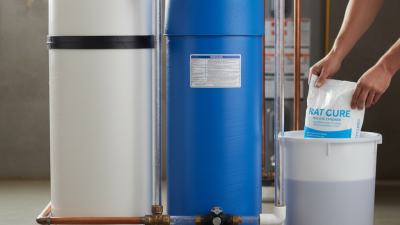
| 1 | Automatic Ion-Exchange Water Softener | Calcium and magnesium ions are exchanged for sodium or, in some systems, potassium ions using a regenerated resin. | Suitable for approximately 120–1,000+ mg/L as CaCO₃, when correctly sized and operated. | Removes hardness minerals that cause scale, soap curd, and reduced heating efficiency. | Regeneration commonly produces about 50–150 L of wastewater per 1,000 L of treated water, depending on design and settings. | Low; usually uses electricity for controls and valves. | Whole-house residential water, hotels, laundries, and many commercial buildings. | Most established option for true hardness removal; reliable and scalable. | Requires salt or potassium chloride, drainage for regeneration, and periodic servicing; adds sodium or potassium to the treated water. |
| 2 | Template-Assisted Crystallization Conditioner | A catalytic media encourages dissolved hardness to form microscopic crystals that remain suspended instead of adhering easily to surfaces. | Generally used for low-to-moderate hardness, often below approximately 500 mg/L as CaCO₃, subject to water chemistry. | Reduces the tendency of calcium carbonate scale to attach to plumbing and appliances; it does not remove hardness ions. | Normally no regeneration wastewater. | None or negligible. | Homes and facilities seeking scale control without salt, drain connections, or sodium addition. | Compact, low-maintenance, and water-efficient. | Does not produce soft water; performance depends strongly on pH, alkalinity, temperature, and hardness concentration. |
| 3 | Reverse Osmosis System | Pressurized water passes through a semipermeable membrane that rejects dissolved salts and many contaminants. | Highly effective for very hard water at point of use, especially after pretreatment. | Typically reduces hardness, total dissolved solids, many metals, and numerous dissolved contaminants. | Traditional point-of-use units may discharge about 2–4 L for every 1 L of permeate; efficient systems can use less. | Low to moderate pump energy, depending on pressure and system size. | Drinking and cooking water, laboratories, food service, and selected industrial processes. | Provides broad dissolved-contaminant reduction and very low-mineral product water. | Usually not the most economical whole-house solution; membranes need pretreatment and regular replacement. |
| 4 | Nanofiltration System | A pressure-driven membrane process that partially rejects divalent ions such as calcium and magnesium while allowing more monovalent salts to pass. | Useful for moderate-to-high hardness where partial demineralization is preferred. | Reduces hardness, color, organic matter, and selected dissolved contaminants; removal varies by membrane. | Common recovery is approximately 60–85%, depending on feed quality and system configuration. | Moderate; requires feed pressure and sometimes a booster pump. | Municipal treatment, hotels, food processing, and industrial water systems. | Often uses less energy and produces less concentrated reject water than reverse osmosis. | Does not remove all dissolved salts; scaling and fouling control are essential. |
| 5 | Electrodialysis or Electrodialysis Reversal | An electric field moves dissolved ions through alternating ion-selective membranes; reversal helps control scale and fouling. | Suitable for moderate salinity and hardness in centralized or industrial applications. | Removes selected ionic species, including hardness ions, with adjustable salt reduction. | Often achieves approximately 80–95% recovery, depending on feed water and design. | Moderate; energy use depends mainly on the amount and type of ions removed. | Large facilities, industrial reuse, and locations requiring adjustable desalination. | Can provide high water recovery and selective ion removal without continuous chemical regeneration. | Higher capital cost and greater technical complexity than household softeners. |
| 6 | Lime Softening | Lime raises pH so calcium carbonate and magnesium hydroxide precipitate and can be separated from the water. | Effective for high-hardness surface water and groundwater, particularly in municipal treatment. | Reduces carbonate hardness, some magnesium, suspended solids, and selected metals. | Produces sludge rather than membrane reject water; sludge handling is required. | Low electrical energy, but chemical handling and mixing are required. | Municipal plants and large industrial water-treatment facilities. | Handles high flow rates and can reduce several contaminants in one process. | Requires tanks, clarifiers, pH control, chemical storage, and skilled operation. |
| 7 | Pellet Softening | Hardness precipitates onto seed material in a fluidized reactor, forming reusable or disposable pellets. | Best for medium-to-high carbonate hardness in centralized or commercial systems. | Primarily reduces calcium hardness and alkalinity; performance depends on pH and water chemistry. | Produces solid pellets and generally little sludge compared with conventional precipitation. | Low to moderate, mainly for pumps and controls. | Commercial buildings, greenhouse operations, utilities, and industrial pretreatment. | Compact footprint and potentially lower chemical and sludge burden. | Usually needs careful pH control and is less suitable for small residential installations. |
| 8 | Weak-Acid Cation Exchange | A weak-acid resin exchanges hardness ions under suitable alkalinity conditions, often followed by downstream treatment. | Effective for carbonate hardness in industrial water with appropriate alkalinity. | Reduces calcium and magnesium associated with bicarbonate alkalinity; it is not a universal treatment for all hardness. | Requires periodic acid regeneration and produces acidic wastewater. | Low electrical energy; chemical consumption is the main operating input. | Industrial boiler feedwater and specialized process-water treatment. | Can use less regenerant than some strong-acid systems for suitable water chemistry. | Requires trained operation, chemical safety controls, and accurate water analysis. |
| 9 | Precipitative Soda-Ash Softening | Soda ash and, where needed, lime convert dissolved hardness into insoluble carbonate or hydroxide precipitates. | Useful for high non-carbonate hardness and industrial water-treatment applications. | Reduces calcium and selected magnesium hardness; it can also adjust alkalinity. | Produces chemical sludge that must be dewatered, handled, and disposed of appropriately. | Low electrical energy, with ongoing chemical demand. | Industrial facilities with high hardness and sufficient space for reaction and clarification. | Can treat hardness levels that are impractical for small cartridge-based systems. | Chemical dosing, solids separation, pH management, and sludge disposal increase operating complexity. |
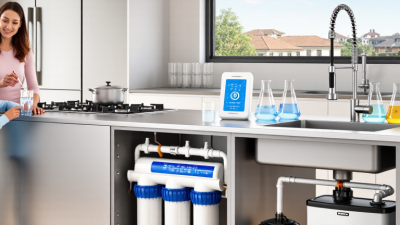
| 10 | Under-Sink RO with Carbon Pretreatment | Sediment and carbon filtration protect a membrane that reduces dissolved hardness at a dedicated drinking-water tap. | Suitable for household drinking water with moderate-to-very-high hardness. | Reduces hardness, total dissolved solids, chlorine, and many dissolved contaminants; exact removal varies by membrane. | Commonly around 2–4 L of concentrate per 1 L of treated water, although newer designs may be more efficient. | Usually low; some units operate using household water pressure, while others use a pump. | Apartments, rental properties, kitchens, and households needing better-tasting low-mineral drinking water. | Lower installation cost than whole-house treatment and strong point-of-use contaminant reduction. | Treats only a limited volume of water; filters and membranes require scheduled replacement and sanitation. |
Selection note: Hardness is commonly classified as soft below 60 mg/L, moderately hard at 61–120 mg/L, hard at 121–180 mg/L, and very hard above 180 mg/L as CaCO₃. Actual selection should also consider iron, manganese, silica, pH, alkalinity, total dissolved solids, microbial quality, water pressure, local discharge rules, and the intended end use.