What Is the Best Home Water Softener from China?

Choosing the best home water softener from China depends less on a label and more on your water, household size, and installation needs. A softener that works well in a small apartment may struggle in a busy family home. Hardness levels matter. So does daily water use.

Most conventional systems use ion exchange to reduce calcium and magnesium. When comparing models, check rated capacity, service flow rate, regeneration settings, and salt consumption. These figures help show whether a unit can keep up with showers, laundry, and kitchen use. Ask manufacturers for clear technical documents, warranty terms, and details about replacement parts. A polished product page is not enough.

Chinese manufacturers offer a wide range of designs and price points, but quality and support can vary. Request the exact model specifications, confirm which independent certifications apply in your market, and ask how local service is handled. If possible, test your water before choosing a capacity. A basic hardness test can prevent buying a system that is oversized or undersized. Small detail. Big difference.

This guide explains how to compare home water softener options from China, including performance, installation, maintenance, and supplier reliability. It does not assume that the cheapest unit is the best choice. Nor is the most advanced control panel automatically useful. The right system should match measured water conditions and fit your plumbing, budget, and maintenance habits. Some details can still be difficult to verify remotely, so cautious questions are part of a sound purchase.
What Is the Best Home Water Softener from China?

What a Home Water Softener Does and How It Treats Hard Water

A home water softener reduces hardness caused mainly by dissolved calcium and magnesium. These minerals can leave chalky rings on taps, stiffen laundry, and build scale inside a kettle. A softener treats the water before it reaches household fixtures. It does not remove every contaminant or replace a drinking-water filter.

Most household systems use ion-exchange resin. As hard water passes through the resin bed, calcium and magnesium ions are exchanged for sodium ions, or sometimes potassium ions. The softened water then flows through the plumbing. That is the process. Over time, the resin becomes loaded with hardness minerals. A regeneration cycle rinses it with brine, sending the collected minerals to a drain and preparing the resin for reuse.

Real-world performance depends on correct sizing and setup. A hardness test, household water use, and peak flow rate help determine the right capacity. Too small a unit may regenerate often; too large a unit may waste salt and water. Not magic. Softening can reduce scale, but it does not fix every water problem. Check the system’s maintenance needs, drain arrangement, and sodium level, especially if anyone in the home follows a sodium-restricted diet. A small detail matters: softened water may feel slippery, even when it is working as intended.
Types of Home Water Softeners Made in China

What Is the Best Home Water Softener from China?

Types of Home Water Softeners Made in China

China-made home water softeners commonly include cabinet-style ion-exchange units, twin-tank systems, and salt-free conditioners. Ion-exchange models replace calcium and magnesium ions with sodium or potassium ions, reducing water hardness. The U.S. Geological Survey classifies water as hard at 121–180 milligrams per liter and very hard above 180, measured as calcium carbonate. That gives buyers a useful starting point: test the water before choosing a system. Hardness varies by location and even between wells nearby.

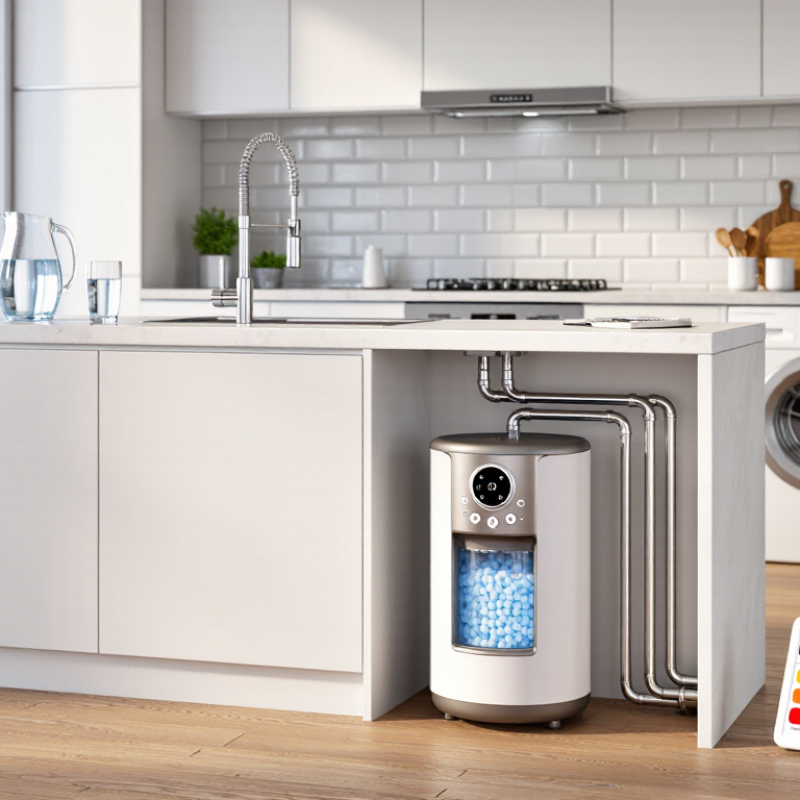
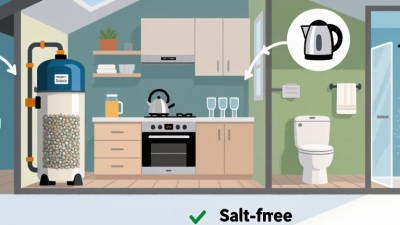
Cabinet units combine a resin tank and brine compartment in one appliance, saving floor space near a laundry sink. Twin-tank models can keep supplying softened water while one tank regenerates, but they need more room and careful setup. Salt-free conditioners use different processes and generally do not remove hardness minerals. Not all do. Check the product’s test results and rated capacity, rather than relying on broad claims. NSF/ANSI 44 provides performance and material requirements for residential cation-exchange softeners; certification details can help compare models. Still, installation quality matters, and a complicated system may be a poor fit for a small home. That deserves a second look.

What Is the Best Home Water Softener from China? – Types of Home Water Softeners Made in China

The best choice depends on whether you need to remove hardness minerals or simply reduce scale formation. Home water-treatment systems manufactured in China can use several different technologies; specifications and performance vary by model, so check the product documentation and test your water before choosing.

System Type How It Works Does It Remove Hardness? Typical Home Use Maintenance and Trade-Offs Best Fit
Sodium ion-exchange softener A resin exchanges calcium and magnesium ions for sodium ions. The resin is periodically regenerated with a salt solution. Yes. This is a conventional water-softening method and can reduce hardness when correctly sized and maintained. Point-of-entry treatment for household water, including water used for bathing, laundry, and appliances. Requires salt replenishment, regeneration, and a drain connection. Regeneration adds sodium to the treated water; people on a medically restricted sodium diet may wish to consult a healthcare professional. Best general choice when the goal is measured hardness removal throughout the home.
Potassium chloride ion-exchange softener Uses ion-exchange resin like a sodium system, but potassium chloride is used for regeneration. Yes. It exchanges hardness minerals in the same general way as a sodium-based system. Whole-home softening where a user prefers potassium chloride instead of sodium chloride for regeneration. Still needs salt-like regenerant, routine refilling, and proper system setup. Potassium chloride may cost more and may be less readily available than sodium chloride. Suitable when potassium chloride is preferred and its cost, availability, and water-use considerations are acceptable.
Template-assisted crystallization (TAC) conditioner A media surface encourages dissolved hardness minerals to form microscopic crystals that are less likely to attach to surfaces. No, not in the conventional sense. Calcium and magnesium generally remain in the water; the system is intended to reduce scale formation. Scale-management applications where the user does not require soft-water results or hardness removal. Usually does not require salt regeneration, but media has a service life and must be replaced as specified. Results depend on water chemistry and operating conditions. Consider when reducing scale is the priority and retaining the minerals in the water is acceptable.
Reverse-osmosis (RO) system Pressurized water passes through a semipermeable membrane that reduces many dissolved substances, including hardness minerals. Yes, for the treated stream. A typical under-sink RO unit treats water at a dedicated drinking-water tap, not every household outlet. Point-of-use drinking and cooking water. Whole-home RO requires specialized design and is not equivalent to a standard home softener. Requires filter and membrane replacement. Many systems discharge reject water; production rate and water use depend on the design and operating conditions. Best when the main goal is treated drinking water rather than whole-home softening.
Magnetic or electronic scale conditioner Applies a magnetic or electrical field around or in the water line. It does not use an ion-exchange resin to remove hardness minerals. No established hardness removal. It should not be treated as equivalent to a conventional softener unless independent testing demonstrates the claimed performance. Marketed for scale control, but performance can vary and is difficult to assess without controlled testing. Often avoids salt and regeneration, but claims should be evaluated carefully. Confirm results with independent, model-specific test data. Not the first choice when reliable hardness reduction is required.

Selection tip: For actual whole-home softening, start with a correctly sized ion-exchange system and a water test that measures hardness. Ask for the model’s rated capacity, flow rate, regeneration settings, installation requirements, and applicable independent certification. NSF/ANSI 44 applies to residential cation-exchange water softeners; certification should be verified for the exact model and claimed performance. Always follow the manufacturer’s installation and maintenance instructions.

Key Features to Compare When Choosing a Chinese Softener

Choosing a home water softener from China is less about origin than matching its specifications to your water and household use.

Start with a reliable water test for hardness, iron, and manganese; these values can affect resin selection and maintenance. Compare rated capacity with daily demand, not just the largest number in a product listing. A four-person home with hard water may need a different regeneration schedule than a small apartment. Check service flow, too. An undersized unit can leave showers weak when several taps run.

That matters.

Ask what resin is used and how often it may need replacement under your water conditions. Compare the control valve’s regeneration settings, metered operation, and availability of replacement parts. Salt use and wastewater volume deserve attention; low purchase cost does not necessarily mean low operating cost.

Request test reports for the stated capacity and flow rate, plus clear installation and maintenance instructions. A polished display is not proof of dependable performance. Specifications can still leave gaps, so ask how warranty service and spare parts are handled in your region. Check whether the seller can explain its figures in writing, not just through a sales call.

How to Match a Water Softener to Your Household

What Is the Best Home Water Softener from China?

How to Match a Water Softener to Your Household

The right softener depends on your water, daily use, and available space. Start with a recent water test, not a guess based on cloudy dishes or dry skin. Check hardness, usually reported in grains per gallon, and note any iron or manganese. These minerals can affect treatment needs. Measure, don’t guess.

Household size matters, but water habits matter too. A family with long showers and frequent laundry may use more water than its head count suggests. Compare the unit’s capacity with your estimated daily demand, and ask how often it regenerates under normal use. Also check installation space, drain access, power needs, and room for salt bags. Small details matter.

When comparing units made in China, review the stated test standards, warranty terms, replacement parts, and support availability. Ask for clear specifications rather than relying on a large capacity claim alone. A smaller system may suit a compact home, while a larger household may need more capacity or careful regeneration settings. I might be giving maintenance too much weight, but neglected salt levels can leave a well-sized system performing poorly. Water conditions vary, so local test results should guide the final choice.

Installation, Maintenance, and Long-Term Costs

A home water softener from China should fit your household’s water use, not just its purchase price. Before installation, test the water hardness and check the unit’s capacity against the number of people in your home. A qualified installer can confirm the inlet size, drainage access, and power requirements. Leave enough room to refill the salt tank and reach the bypass valve. One easy mistake is placing the unit where routine checks become awkward.

Tips: Keep the manual near the unit. Check salt monthly. Look for leaks after installation.

Long-term costs include salt, water used during regeneration, occasional cleaning, and possible part replacement. How often the system regenerates depends on water hardness and household use. Iron or sediment may increase maintenance needs, so ask whether pretreatment is recommended. Resin life varies; avoid assuming it will last a fixed number of years. Compare the full cost, including installation and replacement parts, and ask the supplier about warranty coverage and spare-part availability. A low purchase price can be less attractive if parts are difficult to source. Softened water does not guarantee lower utility bills, either. The real savings—and upkeep—depend on your water and habits.