Choosing a no salt water softener starts with a clear picture of your water, not a promise on a product label. A basic water test can show hardness, often measured in grains per gallon, along with iron or other minerals that may affect performance. Check your results before comparing devices. A kitchen faucet with white scale may tell part of the story, but it cannot measure hardness accurately.
The phrase no salt water softener often describes a conditioner, not a conventional softener. Many salt-free systems aim to reduce mineral scale without removing calcium and magnesium from the water. That distinction matters. If you expect softer-feeling water, easier soap lather, or lower hardness readings, confirm that the system is designed to deliver those results. Claims vary, and performance depends on water chemistry, flow rate, and installation. The label can be confusing. Look for independent test data, clear limitations, and maintenance requirements. Ask what happens when the system reaches its rated capacity.
A good choice fits your actual needs and your plumbing. Compare upfront cost, replacement parts, warranty terms, and the manufacturer’s evidence for your water conditions. Consider a certified installer when plumbing changes are required. Also ask whether a salt-free unit addresses your main concern or only reduces scale buildup. No single system suits every home. A careful comparison may take longer, but it can prevent paying for benefits you never needed.
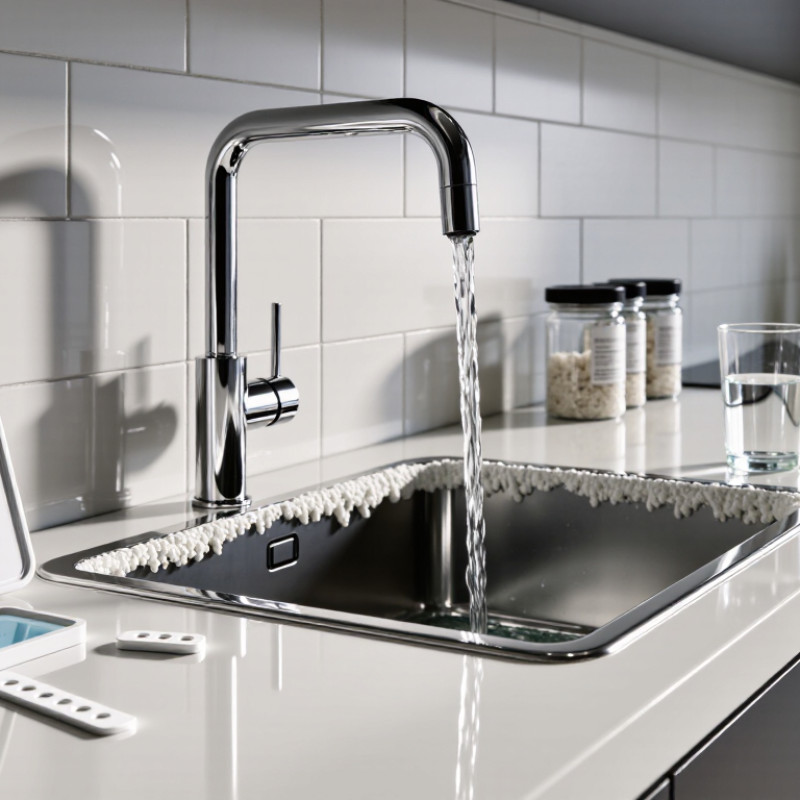
A no-salt water softener is usually a water conditioner, not a traditional softener. It does not remove calcium and magnesium, the minerals that cause hard water. Instead, some systems change how these minerals behave, making scale less likely to cling to pipes and heating surfaces. The exact process depends on the media inside the unit.
That distinction matters. Your water may still leave spots on glass, and a hardness test may show little change. Yet a kettle might collect less stubborn buildup over time. No brine tank, no salt bags. Some systems also avoid adding sodium through the treatment process, though the minerals already in the water remain. Results vary with water chemistry, flow rate, and maintenance; a conditioner is not a guaranteed fix for every home.
Before choosing one, test the water and identify the problem you want to solve. White crust around a tap suggests scale, while rust-colored staining may point to iron that needs separate treatment. Check the unit’s rated flow and service requirements, too. I’d be cautious about promises of “soft water” without a clear explanation of what the device removes. The wording can be confusing. A local water professional can help interpret test results, but even that advice should match your actual household needs.
| What to Compare | No-Salt Water Conditioner | Salt-Based Water Softener | Untreated Hard Water |
|---|---|---|---|
| How it works | Uses a conditioning method, such as template-assisted crystallization or another scale-control process. The method depends on the system design. | Uses ion exchange to replace calcium and magnesium ions with sodium or, in some systems, potassium ions. | No treatment is applied; minerals remain in the water. |
| Does it remove hardness minerals? | Usually no. Calcium and magnesium generally remain in the water, so a hardness test may show little or no reduction. | Yes. Ion exchange reduces dissolved calcium and magnesium when the system is correctly sized and maintained. | No. Calcium and magnesium remain present. |
| Scale control | May help reduce hard, adherent scale under suitable water conditions. Results vary by technology, water chemistry, and equipment. | Reduces scale formation by removing most hardness minerals from treated water. | Scale can form on plumbing, fixtures, and heating equipment; the amount depends on water chemistry and use. |
| Soap and cleaning | Because hardness minerals remain, soap use and lather may not change as they do with softened water. | Often improves soap lather and can reduce soap scum associated with hard water. | Hardness can make lathering more difficult and contribute to soap scum. |
| Sodium and mineral content | Does not add sodium through an ion-exchange softening process, and typically leaves calcium and magnesium in the water. | Adds some sodium during ion exchange; the amount depends partly on the incoming hardness and the softener settings. Potassium may be used instead. | No treatment-related sodium is added; the water retains its original mineral content. |
| Water discharge | Many systems do not use brine regeneration, but requirements depend on the specific technology and product. | Regenerates with salt brine and sends regeneration water to an approved drain or disposal route. | No treatment-related regeneration discharge. |
| Maintenance to consider | Follow the manufacturer’s service schedule; some systems require media replacement or periodic cleaning. | Replenish salt or potassium as needed and maintain the resin, control valve, and brine tank. | No treatment equipment to maintain. |
| A good fit when | You want to explore scale control while keeping hardness minerals in the water, and you understand that it does not provide conventional softening. | You want measurable hardness reduction and the associated changes in soap performance and scale formation. | You do not need treatment or prefer to assess water quality before choosing a system. |
| What to verify before choosing | Check the system’s tested performance claims, operating limits, flow rate, water-chemistry requirements, and service needs. Ask whether the claim is scale control or actual hardness removal. | Test water hardness, compare the system’s capacity and flow rate with household demand, and confirm installation and discharge requirements. | Test the water and identify the specific issue—such as hardness, iron, or sediment—before selecting treatment. |
Important: “No-salt water softener” is a common marketing term. Most salt-free systems condition water rather than remove hardness minerals, so check the product’s performance data and test your water before buying.