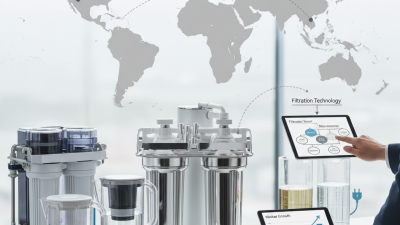
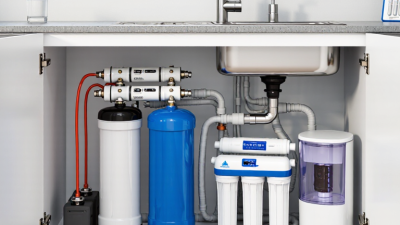
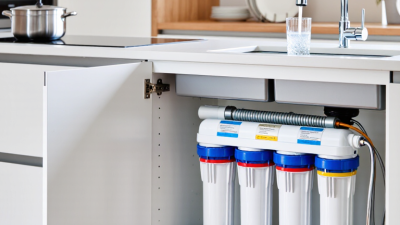
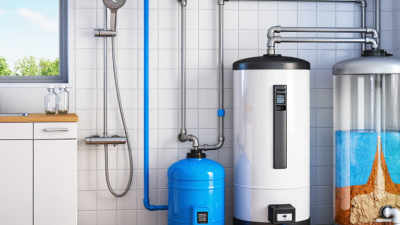
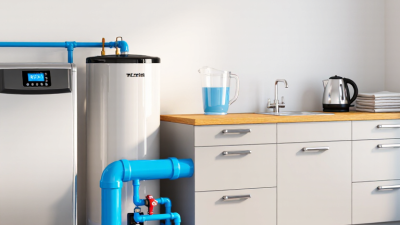
Choosing a reliable water system for home supplier in China requires more than comparing prices and product photos. Buyers should examine manufacturing experience, filtration technology, factory controls, and verified customer results. A supplier may offer whole-house filters, reverse osmosis units, water softeners, or smart monitoring systems. Each solution should match local water conditions, household size, and installation space.
Strong suppliers can explain filter media, flow rates, replacement schedules, and pressure limits in clear language. They should provide relevant testing reports, quality management records, and documented product specifications. Independent certifications may also support confidence, depending on the destination market. Factory audits, sample testing, and traceable batch information add practical reassurance. Ask how the supplier handles leaks, damaged parts, warranty claims, and technical support. Details matter.
A dependable partner does not simply promise clean water. It explains what the system can and cannot remove. It also recommends professional water testing before final selection. No supplier is perfect. Product pages may look impressive, while after-sales service remains uncertain. That risk deserves attention. Buyers should compare communication speed, spare-part availability, installation guidance, and long-term operating costs. A useful evaluation combines factory evidence with real user experience. This article explores leading Chinese suppliers, their product strengths, quality practices, customization options, and service capabilities. The goal is not to name a winner too quickly. It is to help households make a careful, informed decision based on performance, safety, transparency, and dependable support.
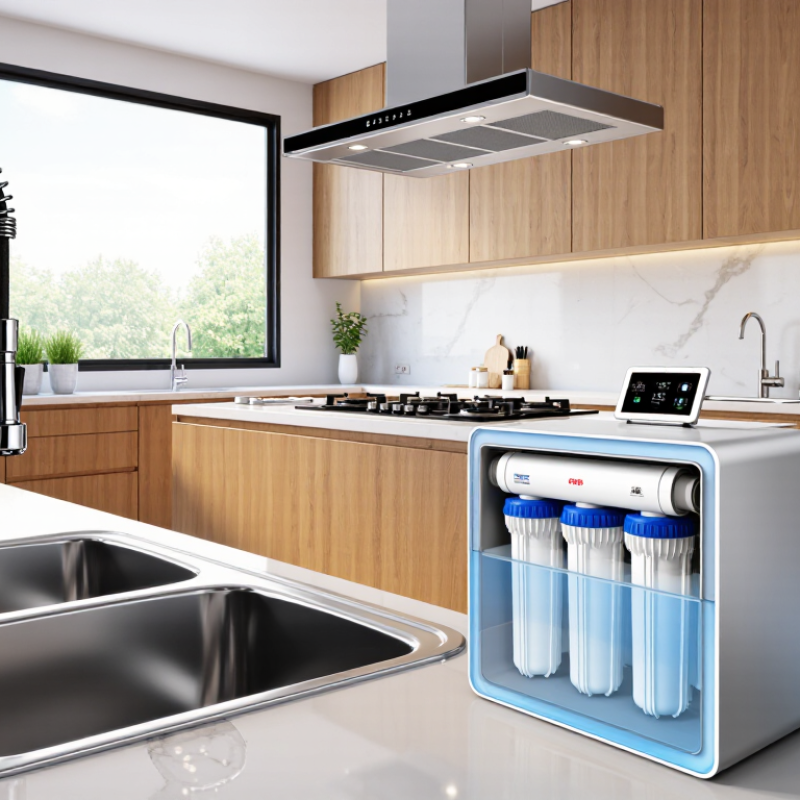
China Top Water System for Home Suppliers?
China’s home water-system market is expanding beyond simple drinking-water filters. It now includes under-sink purification, whole-house filtration, softening, and point-of-use hot-water units. China’s National Bureau of Statistics reported a 65.22% urbanization rate in 2022. That shift supports demand for compact systems in apartments, while rural households still need practical upgrades.
The global need remains substantial. According to the WHO and UNICEF Joint Monitoring Programme’s 2023 report, 2.2 billion people lacked safely managed drinking water in 2022. About 703 million people had no basic drinking-water service. These figures give China’s suppliers a wider market context, especially for systems that improve taste, microbial safety, and convenience at household level.
Performance needs evidence. Independent testing should verify flow rate, contaminant reduction, maintenance intervals, and wastewater volume. A clear replacement reminder matters in a small kitchen. So does stable performance during pressure changes. China-based suppliers can serve domestic and overseas buyers through flexible manufacturing and varied housing solutions. Yet market claims are sometimes too polished. Filter life may change with local water quality, and laboratory results may not match every home. Buyers should examine test methods, certification scope, service records, and actual operating costs before choosing a system.
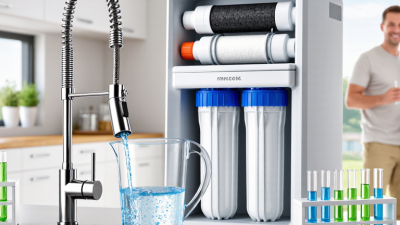
In 2022, approximately 73% of the global population used safely managed drinking-water services, while 19% used basic services. The remaining population relied on limited, unimproved, or surface-water sources. These figures provide a global demand context for household water-treatment, filtration, and delivery systems without ranking individual companies or brands.
Source: WHO/UNICEF Joint Monitoring Programme for Water Supply, Sanitation and Hygiene, 2023 update.
Choosing a home water system requires more than comparing flow rates or attractive prices. In practical evaluations, reverse osmosis (RO) removes many dissolved contaminants, making it suitable for drinking water. However, RO can waste water and reduce useful minerals. Ultrafiltration (UF) uses a larger membrane and usually keeps minerals while reducing sediment, bacteria, and some particles. It cannot handle every dissolved chemical.
Ultraviolet (UV) treatment can deactivate microorganisms without adding chemicals. It works best with clear water and needs reliable electricity. Carbon filters improve taste and reduce chlorine and odors, but their cartridges require regular replacement. Whole-house filtration protects showers, laundry, and plumbing from sediment or unpleasant smells. It may still need a separate drinking-water system. A perfect system on paper may disappoint when water pressure, maintenance, or local conditions are ignored. I would not choose equipment before testing the incoming water.
Tips: Ask suppliers for test data, replacement costs, installation requirements, and service procedures. Check whether independent laboratories verify performance claims. Measure water pressure at peak use. Keep a maintenance log. Small details matter. Also, avoid selecting RO only because it sounds more advanced; household needs are rarely identical. Reliable suppliers explain limitations clearly and provide readable manuals, warranty terms, and spare-part access.
When evaluating Chinese home water-system suppliers, I look beyond polished catalogs and factory photographs. In practical sourcing, documentation often reveals more than marketing language. A supplier should identify the exact filter model, intended use, flow rate, and replacement schedule. Small details matter. Ask for current test reports tied to that model, not generic laboratory certificates.
NSF/ANSI 42 usually addresses aesthetic concerns, such as chlorine, taste, and odor. NSF/ANSI 53 focuses on specific health-related contaminant claims. NSF/ANSI 58 applies mainly to reverse osmosis systems and their reduction performance.
These standards do not automatically cover every product or every contaminant. Check the certification scope, model number, production site, and validity date. ISO 9001 can demonstrate controlled quality processes, but it does not prove filtration performance. That distinction is frequently misunderstood.
I also request incoming-material records, batch traceability, pressure testing, and corrective-action reports. A factory audit can reveal inspection habits, worker training, and storage conditions near the assembly line. Samples should be tested independently when the application is important. I have learned not to trust one successful sample completely. Suppliers may change membranes, housings, or adhesives after approval. A written change-notification process is essential. I still find this step difficult because low prices can make weak evidence look attractive. Reliable evaluation requires patience, direct questions, and records that match the product delivered.
Reverse osmosis systems can reduce many dissolved contaminants by roughly 90–99% under suitable conditions. This range is not a guarantee. Feed-water chemistry, pressure, temperature, membrane age, and maintenance all affect performance. In practical testing, a handheld TDS meter may show a sharp reduction at the kitchen tap. However, TDS does not identify individual substances. It cannot confirm safety by itself.
A reliable home supplier should provide independent test data, clear membrane specifications, and replacement guidance. Ask which contaminants were tested, under what conditions, and at what recovery rate. A properly installed unit may improve water used for drinking, cooking, and ice. It also produces wastewater, which matters when comparing household efficiency. Keep the drain connection secure. Check for leaks after installation.
Small details matter. A filter changed too late can lower flow and distort confidence in the reading. I have seen users celebrate low TDS while ignoring taste, tank hygiene, or microbial control. That is an easy mistake. RO does not remove every risk, and performance can decline without visible warning. Suppliers serving homes in China should explain local water conditions, service intervals, and certification evidence clearly. Good claims need good records. Users should verify results periodically instead of trusting a sales figure forever.
Choosing a home water system requires more than checking flow rate and filter life. Residual chlorine is a practical safety indicator. The World Health Organization recommends at least 0.2 mg/L of free residual chlorine at the point of delivery. This level helps control microbial growth while water travels through pipes and household storage.
A reliable supplier should explain how its system affects chlorine levels. Activated carbon may reduce taste and odor, but it can also remove disinfectant protection. That change matters when water sits overnight in a warm tank. Ask for independent test reports, maintenance intervals, and clear sampling instructions. Test strips can provide a quick check, but laboratory testing gives stronger evidence. Use the same sampling point each time.
Small details matter.
A glass collected from the kitchen tap may differ from water inside the filter housing. Record the date, chlorine reading, filter age, and water temperature. In practice, readings can drift after heavy use or poor cartridge maintenance. I would not treat one favorable result as proof of long-term safety. Household plumbing, storage conditions, and local treatment practices still influence risk. A supplier with technical staff should discuss these limits openly, not promise perfect protection. WHO guidance supports risk-based monitoring, so chlorine should be considered alongside microbial testing and other water-quality checks.
| Evaluation Dimension | Reference Benchmark | Unit | Why It Matters for Home Systems | Supplier Evidence to Request |
|---|---|---|---|---|
| Free residual chlorine at the point of use | WHO commonly recommends maintaining approximately 0.2–0.5 mg/L of free chlorine in drinking-water distribution systems where chlorination is used; at least 0.2 mg/L helps preserve disinfectant protection. | mg/L | A home filter that removes chlorine may improve taste but can reduce the disinfectant residual. Post-filtration hygiene and timely cartridge replacement become essential. | Independent test reports before and after filtration, test method, sampling location, and operating conditions. |
| China drinking-water free chlorine requirement | Under China’s GB 5749-2022 standard, free chlorine is specified at not less than 0.3 mg/L at the treatment plant outlet and not less than 0.05 mg/L at the end of the distribution network. | mg/L | A household system should clearly state whether it is designed to retain, reduce, or completely remove chlorine residual. | Product test data against the intended operating range and a clear description of chlorine-removal performance. |
| Escherichia coli | No detectable E. coli should be present in a 100 mL drinking-water sample. | CFU/100 mL | Microbiological safety depends on source-water quality, disinfection, filter integrity, and prevention of bacterial growth inside housings and storage tanks. | Accredited laboratory microbiological reports and validation data for the complete assembled system. |
| Turbidity | WHO identifies turbidity below 1 NTU as desirable for effective disinfection; higher turbidity can shield microorganisms from disinfectants. | NTU | Lower turbidity improves appearance and supports more reliable disinfection and membrane performance. | Influent and effluent turbidity results, rated flow, pressure, and cartridge-life assumptions. |
| pH value | China’s GB 5749-2022 standard specifies a pH range of 6.5–8.5 for drinking water. | pH units | pH affects corrosion, chlorine effectiveness, membrane operation, and the stability of treated water. | Validated influent and effluent pH data across the stated operating temperature and pressure range. |
| Lead | WHO guideline value: not more than 0.01 mg/L in drinking water. | mg/L | Lead can enter water through plumbing components. Certified materials and validated reduction claims are important for point-of-use systems. | Material-safety declarations and accredited laboratory reduction testing using the complete product configuration. |
| Nitrate as NO₃⁻ | WHO guideline value: 50 mg/L as nitrate ion. | mg/L | Nitrate reduction generally requires a suitable membrane or ion-exchange process; activated carbon alone is not a reliable nitrate-removal method. | Influent concentration, treated-water result, recovery rate, and validated capacity before replacement. |
| Microbial protection after chlorine removal | No universal single numerical value replaces hygienic design, effective disinfection, and microbiological verification after treatment. | — | Systems that remove residual chlorine should minimize stagnant water, use sanitary connections, and prevent biofilm growth in filters and tanks. | Sanitation procedure, storage-tank design, stagnation-control instructions, and post-treatment microbial test results. |
| Filter replacement and maintenance | Replacement intervals must be determined by the specific filter design, treated volume, influent quality, and manufacturer validation; there is no universal interval for all systems. | Months / Litres | Overdue cartridges may lose treatment performance and can become a site for microbial growth. | Documented capacity, replacement indicator accuracy, maintenance schedule, and service records. |
| Independent conformity and testing | Test results should be traceable to an appropriately accredited laboratory and should identify the exact model, configuration, test conditions, and applicable standard. | — | A credible report helps distinguish complete-system performance from claims based only on individual filter media. | Complete reports, laboratory accreditation information, test dates, sample preparation, and applicable national or international standards. |